
Wildlife by habitat and season
Masai Mara Wildlife Guide
The Masai Mara supports varied wildlife across open plains, river corridors, woodland, and wetlands. This guide explains how habitat and season affect a search.
Habitat, visibility, and variety
The Masai Mara combines open grassland, river corridors, woodland, and seasonal wetlands. Those habitats support many of the large mammals and birds associated with the wider Mara-Serengeti ecosystem.
Open plains can provide long sight lines, while taller grass and riverine cover make some animals harder to locate. Recent rainfall, forage, animal movement, vehicle rules, and time in the field all affect what a traveller may observe.
Predator behaviour and migration crossings are natural events rather than scheduled attractions. See the seasonal guide to the Masai Mara for changing conditions and the Great Migration guide for the factors that influence herd movement.
The Big Five and Cheetah
African Lion
Panthera leo
Lion occupy territories across the reserve and surrounding conservancies. Early morning and late afternoon can offer better conditions for activity, but a sighting is never guaranteed.
 Illustration
Leopard
Panthera pardus
Leopard use riverine and wooded habitat across the ecosystem. They are elusive; patient searching and local guide knowledge can help without guaranteeing an encounter.

African Elephant
Loxodonta africana
Elephant move through several parts of the ecosystem. Group size and location change with water, forage, and recent movement.
 Illustration
Black Rhino
Diceros bicornis
Present in small numbers in the Mara Triangle and certain sections of the reserve. Sightings are rare and irregular. For dedicated rhino viewing in Kenya, Lewa or Ol Pejeta are significantly better options.
 Illustration
African Buffalo
Syncerus caffer
Buffalo use grassland and water-access areas across the ecosystem. Herd size and location vary; travellers must follow guide instructions around this potentially dangerous species.
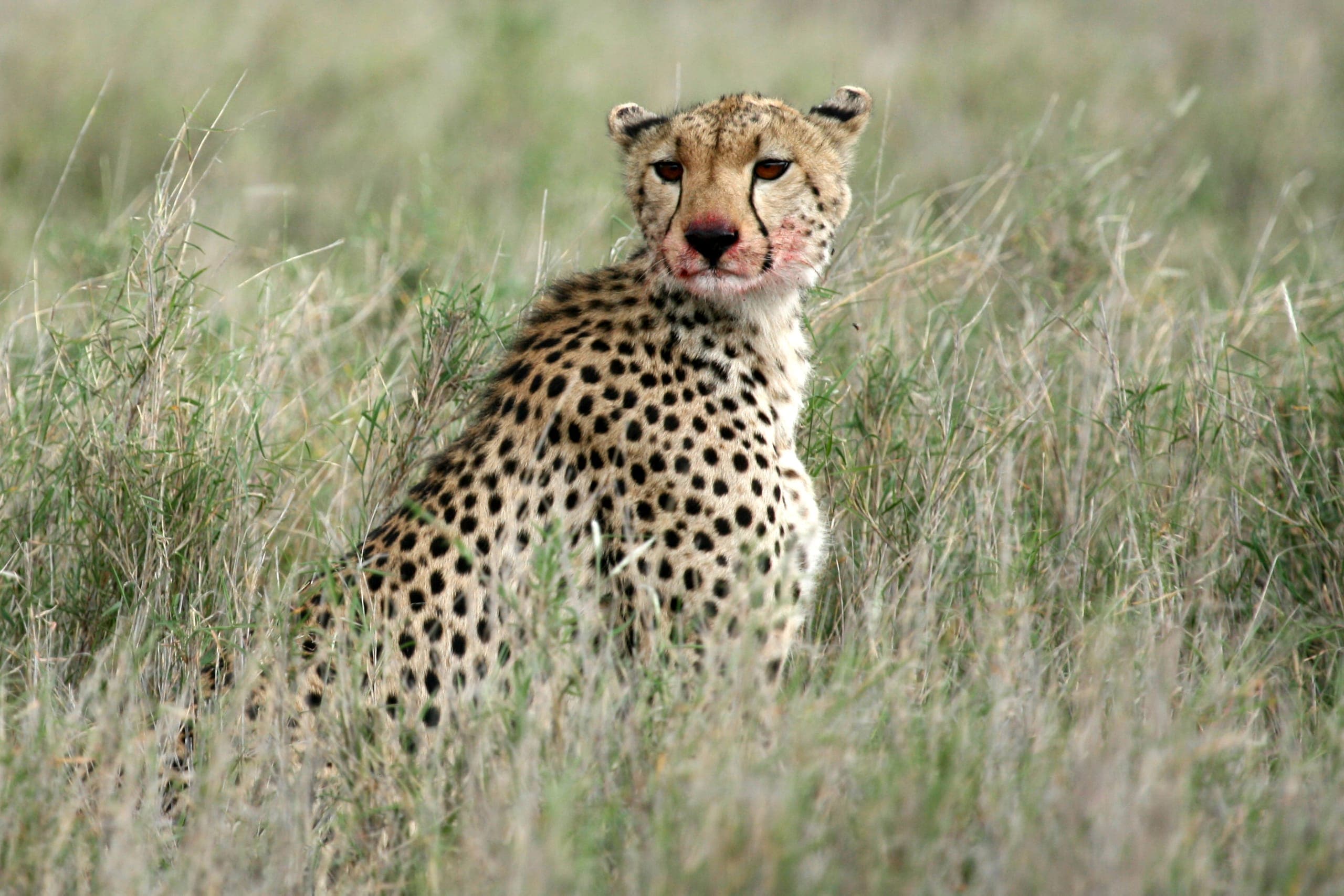
Cheetah
Acinonyx jubatus
Cheetah use open plains where visibility can help guides search across distance. Hunting behaviour and cub encounters are possible, not predictable.
Wildlife by Habitat
Open Short-Grass Plains
Open terrain can provide long sight lines, while grass height and weather still affect visibility.
Mara & Talek River Corridors
Riverine forest provides cover for leopard and a range of specialised bird species. Hippo pools along the river are worth visiting.
Acacia Woodland
Woodland fringes and acacia belts provide shade and ambush cover. Lion prides with cubs often rest in woodland during the heat of the day.
Mara Triangle & Western Wetlands
Grassland, wetlands, and river access support varied habitat. Wildlife presence changes with water, forage, and seasonal movement.
Predator habitat
How predator viewing works
Open plains and riverine cover support several predator species. Recent movement, habitat, weather, guiding, and time in the field determine what a traveller may observe.
Cheetah
Open-plains search
Cheetah use open grassland in several parts of the ecosystem. The terrain can provide long views, but hunts, cubs, and any particular individual remain unpredictable.
Lion
Multiple established prides
Lion occupy territories in the reserve and surrounding conservancies. Pride composition changes over time, and vehicle rules differ by area. A guide uses tracks, recent reports, and knowledge of habitat to search without promising an encounter.
Spotted Hyena
Large, active clans
Spotted hyena are resident in the ecosystem and may be active at different times of day. Social behaviour, scavenging, den activity, or hunting may be observed, but none should be presented as a scheduled event.
Leopard
Riverine specialist
Leopard use riverine vegetation, woodland fringes, and rocky cover across the ecosystem. They are elusive. A guide can use tracks, recent reports, and habitat knowledge to search, but frequency and timing remain unpredictable. Night drives are available only where local rules permit them.
Birdwatching
Birdlife in the Mara
The ecosystem's grassland, river, woodland, and wetland habitats support varied resident and migratory birdlife.
Species that may be encountered include secretary bird, lilac-breasted roller, kori bustard, African fish eagle, martial eagle, bateleur, ground hornbill, saddle-billed stork, and lappet-faced vulture. Migratory species add seasonal variation, but arrival and departure dates are not fixed.
For a dedicated birdwatching itinerary, ask for a specialist guide and a plan that includes several habitat types.
Lilac-Breasted Roller
Resident
Uses open woodland and perches from which it searches for prey.
Secretary Bird
Resident
A terrestrial raptor associated with open grassland.
Martial Eagle
Resident
A large raptor that may be seen soaring or perched.
Ground Hornbill
Resident
A ground-foraging species found in open woodland and grassland.
Saddle-Billed Stork
Resident
Associated with rivers, pools, and shallow wetland habitat.
European Bee-Eater
Seasonal migrant
A migratory species whose timing varies between years.
Wildlife Questions
When might cheetah be easier to find in the Masai Mara?
Cheetah are resident, but visibility changes with grass height, weather, recent movement, and the area visited. Open terrain can help guides search across distance. Hunting behaviour may be observed, but it cannot be scheduled or guaranteed.
Is it possible to see all of the Big Five in the Masai Mara?
All five species occur in the wider ecosystem, but no itinerary can promise all five. Rhino sightings are rare and irregular. Travellers whose primary interest is rhino should discuss other Kenyan conservation areas, including Lewa Conservancy and Ol Pejeta, with a specialist.
Are wild dog found in the Masai Mara?
Wild dog sightings do occur, but they are rare and cannot be planned for. Travellers with a particular interest in the species should ask a specialist about recent field reports and alternative ecosystems before deciding where to travel.
How many game drives does it take to see a lion kill?
There is no reliable answer. A kill is an unscheduled natural event, and it may not occur during a visit. Guides use tracks, habitat, recent reports, and animal behaviour to search responsibly without promising a particular encounter.
Do I need a specialist birding guide in the Mara?
For casual bird interest, the general camp guides at the better properties are adequate. For serious birdwatching (particularly wanting to maximise a species count or identify specific migrants) a dedicated ornithological guide adds considerable depth. Several camps can arrange specialist birding vehicles on request.

Plan Your Wildlife Journey
Tell us what wildlife encounters matter most to you. We will build the right itinerary and find the right camp.
Enquire Now