Our approach
The region that suits your travel window
Start with the dates you genuinely have. The Serengeti and Maasai Mara should be considered in relation to that window, not as fixed substitutes.
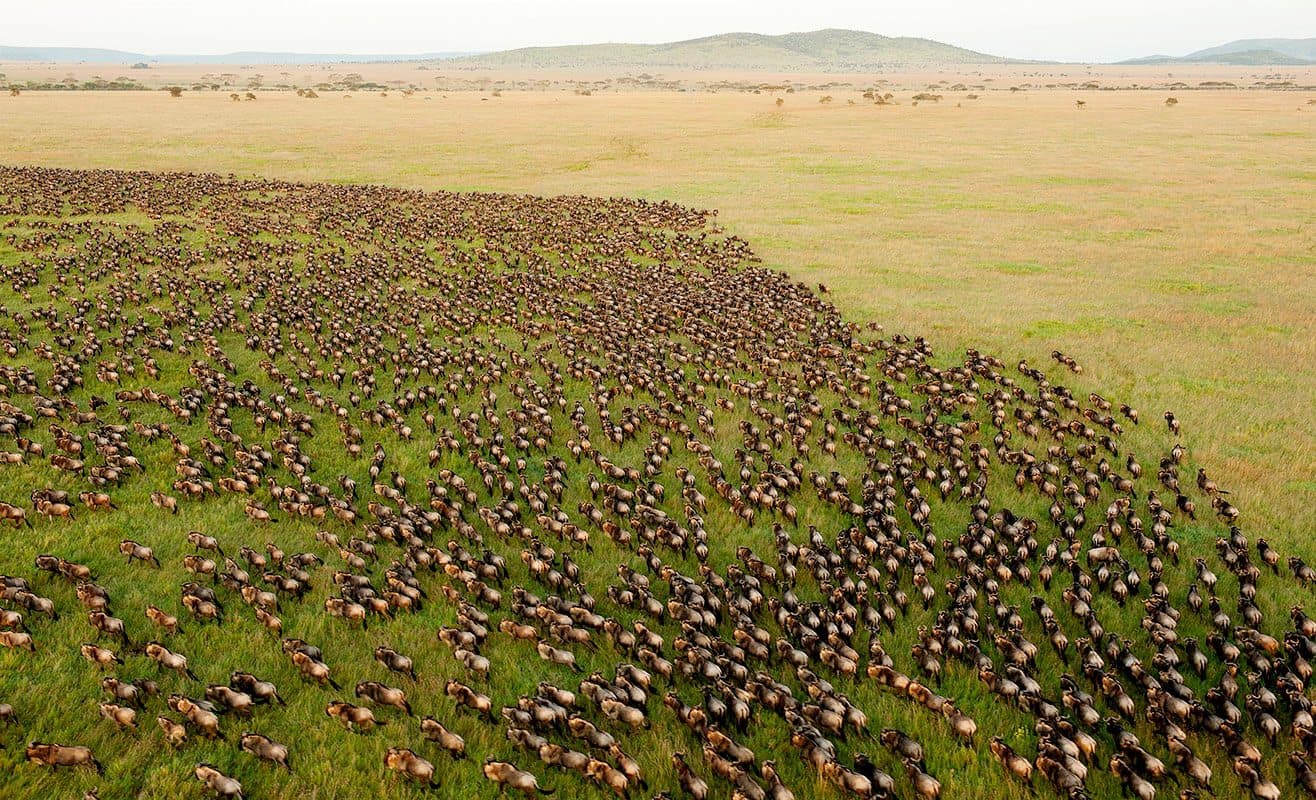
The Great Migration is not one moment on a calendar. It is a changing movement across a large ecosystem, shaped by rainfall, grazing and the position of the herds. Good planning starts with the month you can travel, then works outward from there.
Our expertise
The aim is to put a Journey in the right part of the ecosystem for its dates, while leaving room for nature to be variable. Our team takes care of these details when shaping your tailor-made Journey.
Our approach
Start with the dates you genuinely have. The Serengeti and Maasai Mara should be considered in relation to that window, not as fixed substitutes.
Our approach
Migration planning is stronger when the itinerary lets guiding and local conditions shape the days rather than requiring constant long moves.
Our approach
Calving, river crossings, broad herd movement and resident wildlife create different Journeys. A useful plan names the priority instead of treating them as the same event.
Our approach
Wildlife movement cannot be scheduled. A route should be judged by its logic for the season, not by a guaranteed spectacle.
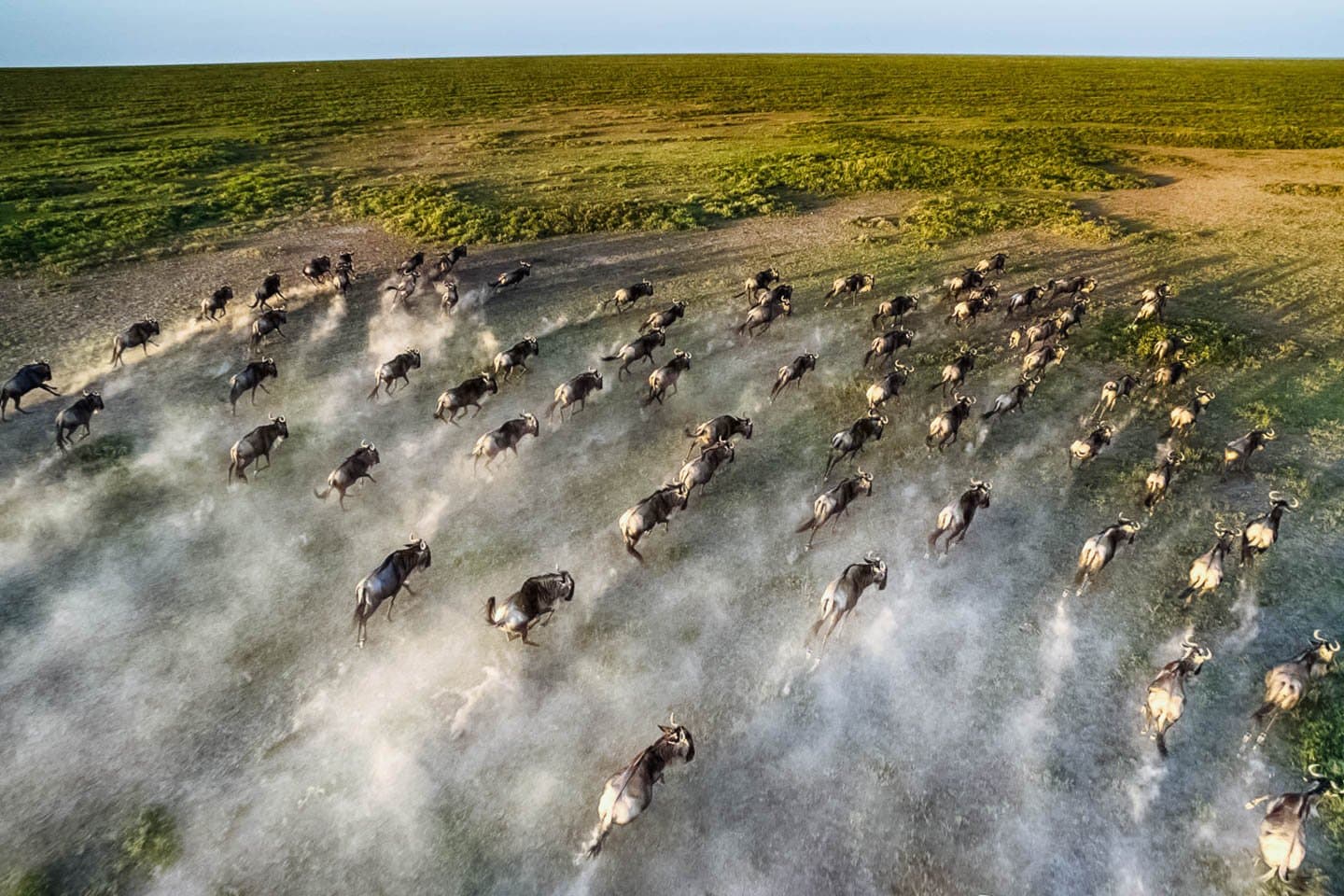
The herds follow a broadly clockwise route from the southern Serengeti into the western corridor, north to the Mara River, across into Kenya's Maasai Mara, and back south again. The timing shifts from year to year with the rains, so a Journey should be planned around a seasonal window rather than a guaranteed event date.

THE YEAR-ROUND MOVEMENT
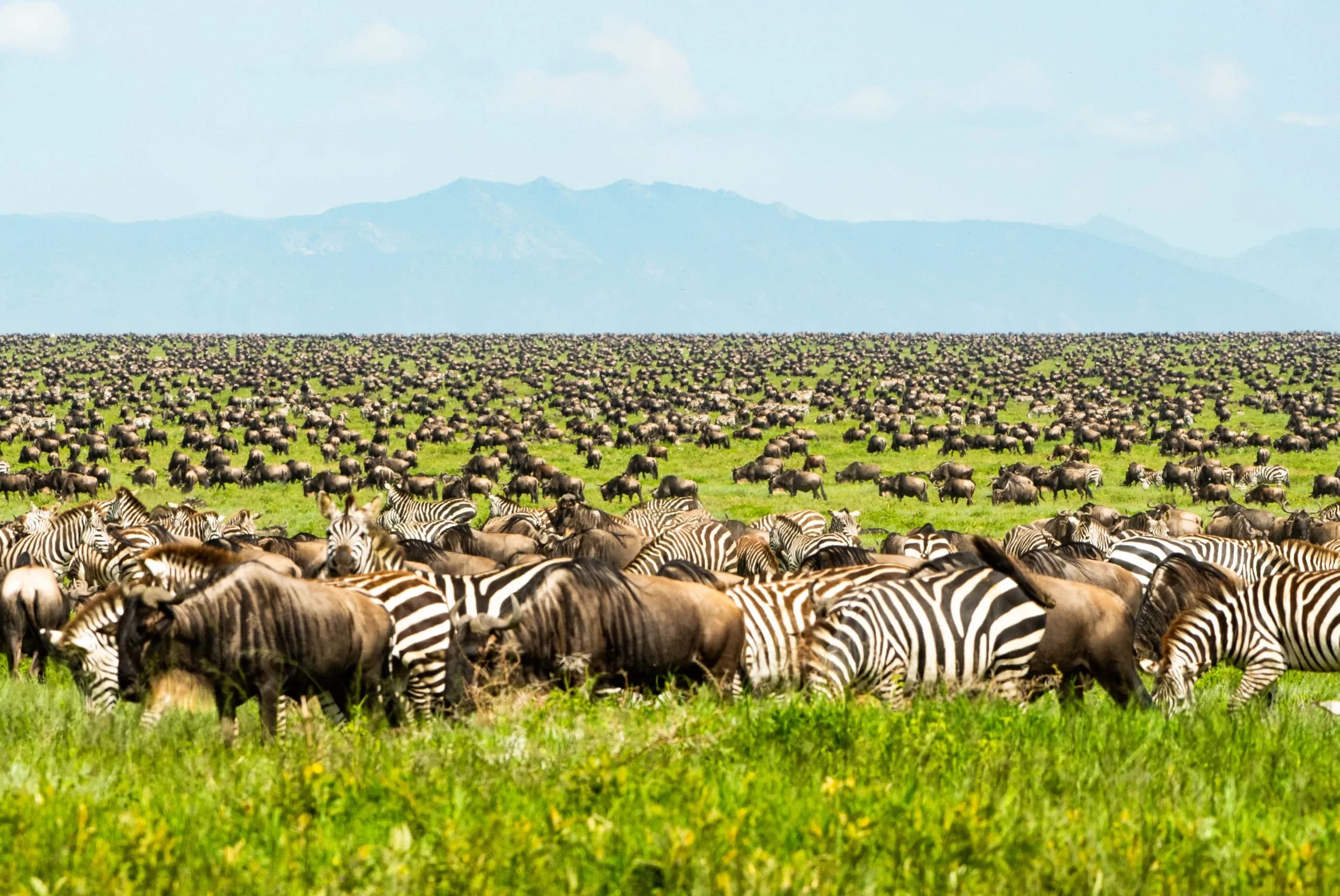
The herds broadly concentrate on the short-grass plains around the Ndutu area in the southern Serengeti and Ngorongoro Conservation Area. Calving is concentrated within this seasonal window, and predators may be active around the herds. Rainfall and grass conditions influence the timing and location each year.
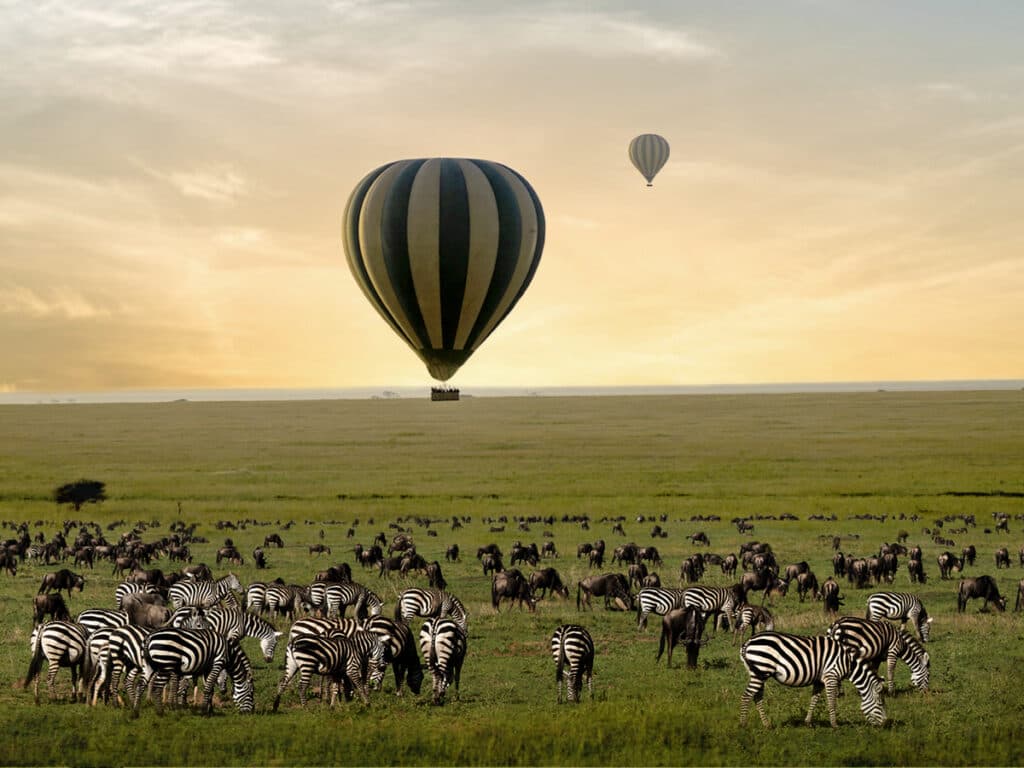
This is one of the most underrated times to visit the Serengeti. The spectacle of calving season rivals river crossing season for visual drama, without the concentration of visitors that July to October brings.
As the long rains arrive, the herds push westwards through the central Serengeti and into the western corridor, where the Grumeti River provides the first significant water crossing of the year. Grumeti crossings are less predictable than the Mara crossings further north and often overlooked, but they are genuinely dramatic and typically far less crowded.
April and May fall within Tanzania's broad long-rains period and often bring fewer visitors. Rates vary by property and year, while access and road conditions need to be checked for the proposed area.
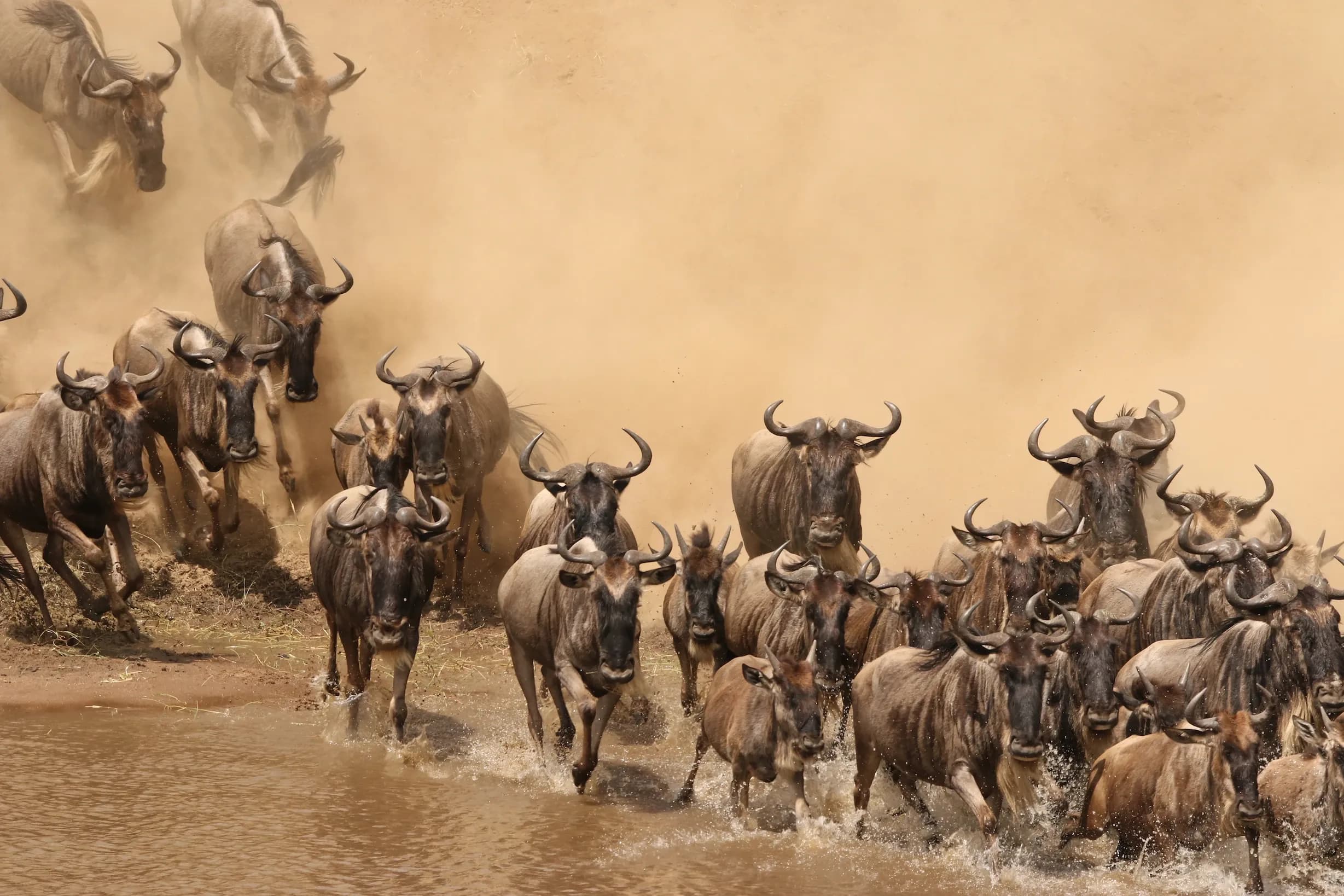
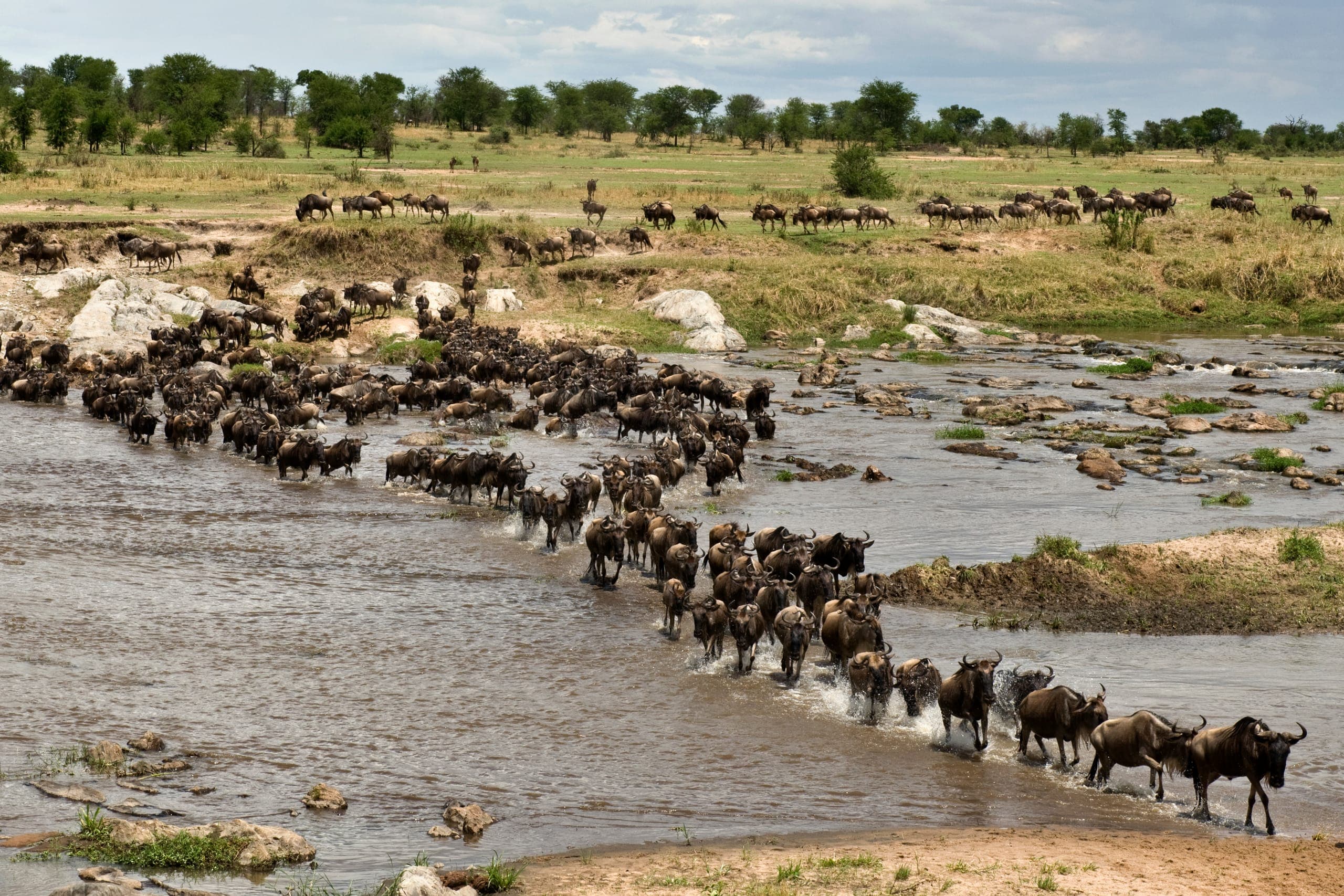
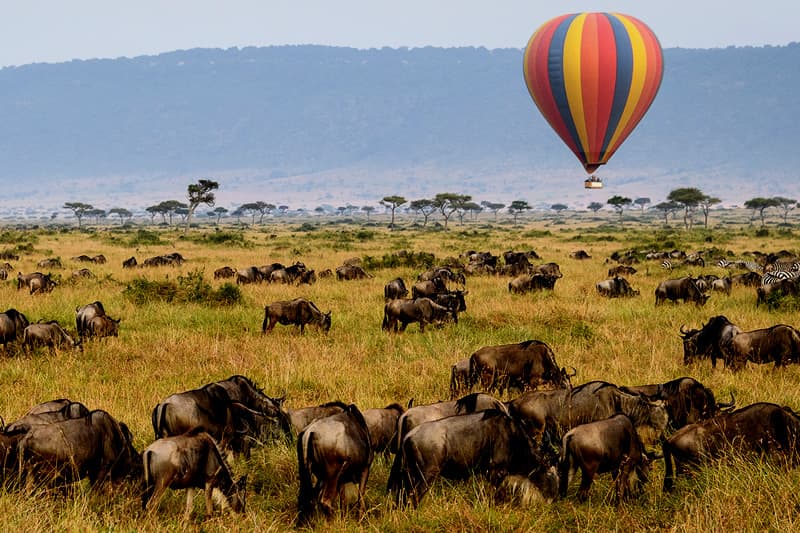
This is the most visited phase of the migration. The herds accumulate on the banks of the Mara River, in the northern Serengeti at Kogatende and Lamai, and in Kenya's Maasai Mara, and may attempt to cross. The timing and location remain unpredictable.
Crossings are unpredictable. Herds can wait on the bank for days before something triggers the move. Being camped nearby and able to respond quickly is the only reliable strategy. Mobile tented camps that position according to herd movements give the best access. Permanent lodges require longer drives.
Peak-season camps in the northern Serengeti and Maasai Mara fill well ahead of the main travel window, so flexibility on location and dates is valuable.
As the short rains arrive, the herds begin moving south and east through the Lobo area of the eastern Serengeti. November is a quieter period for travellers who want to follow the movement without the peak-season concentration.
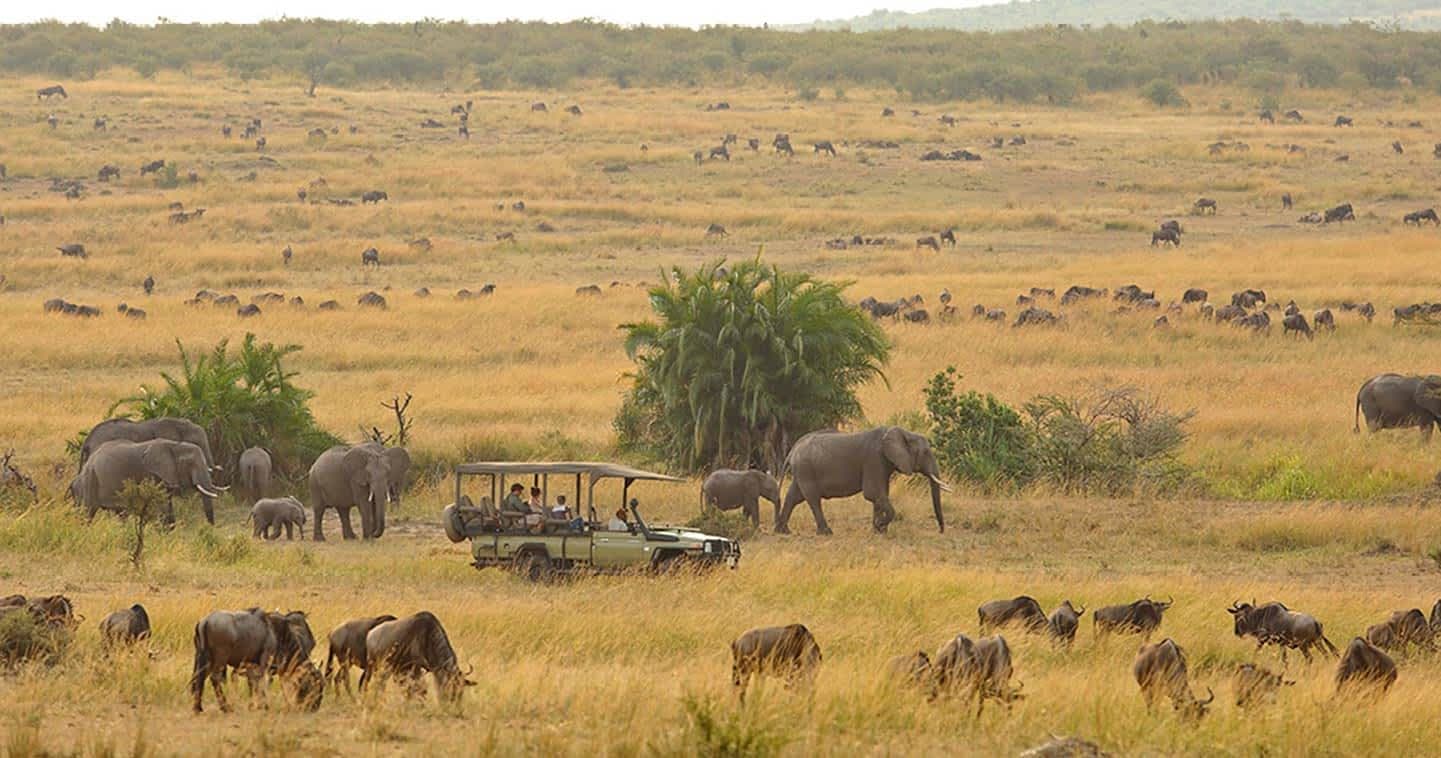
Both sit within the same ecosystem and during peak crossing season (July to October), the herds move between the two. The decision of where to base yourself is about logistics, experience type, and budget rather than one location being categorically better.
The northern Serengeti gives access to the Tanzanian side of the Mara River and fits naturally into a wider Tanzania circuit. The Maasai Mara offers faster access from Nairobi and the option to combine with conservancy camps where walking and night drives may be available under local rules.
A cross-border migration Journey can move between the northern Serengeti and the Maasai Mara, but it requires domestic flights, border planning, and flexibility when the herds change position.
The right questions before committing to a migration journey are not about which lodge has the best reviews.
The right questions before committing to a migration journey are not about which lodge has the best reviews. They are: When are you traveling? What are you most interested in, calving season, river crossings, or the movement itself? How much flexibility do you have to wait for a crossing to happen? Are you prepared to fly between camps if the herds move unexpectedly?
Zorani plans migration journeys around these practical realities rather than around a fixed itinerary that leaves clients in the wrong location at the wrong time.
Tell us what interests you. Our safari specialists will create a tailor-made Journey and take care of every detail.
Start planning a migration JourneyA small selection of published Journeys that use this experience as part of their route.