Wildlife Photography
Masai Mara Wildlife Photography Guide
Light · Seasons · Equipment · Ethics
Why the Mara Works for Photographers
The Masai Mara is one of the world's most photographed wildlife destinations. Resident wildlife and open terrain can create accessible viewing conditions without guaranteeing a sighting. Short-grass plains, migration crossing drama, and clean early morning light can reward both serious photographers and casual shooters.
This guide is practical rather than promotional. It covers what equipment matters and why, how light and season affect the work, how to approach specific subjects, and some of the ethical questions that come with wildlife photography at a busy destination. Check the best time to visit the Masai Mara for seasonal conditions and the Great Migration guide if river crossings are a priority.
Related Guides
Why the Mara Works for Photography
Open-sided vehicles allow unrestricted shooting in any direction without windows or roof struts to work around. Rolling short-grass plains, occasional acacia, and a meandering river provide natural composition elements with good sight lines. Many animals are habituated to vehicles, though guides control the approach. Predators sometimes hunt in daylight on open ground rather than retreating into dense bush.
The combination of these factors is not common. In many of Africa's best wildlife areas, the bush is thicker, the light more obstructed, and the animals more elusive. The Mara consistently produces photographic opportunities that are difficult to replicate elsewhere on the continent.
Seasonal Conditions
Dry Season (July to October)
The classic photography window. Golden grass, clear skies, concentrated wildlife at water sources, migration herds filling the plains.
Pros: Consistent light, maximum wildlife density, crossing action. Cons: Dust in significant amounts. Camera equipment needs protection. Busy season means more vehicles at sightings, which complicates composition and background.
January to February
Often the cleanest conditions for open-plain predator photography. Short grass from the preceding dry season, clear air, excellent visibility. Cheetah photography can benefit from open terrain, possible daylight hunting, and good light on the plains in this window.
This is also a quieter season, which means fewer vehicles in your frame when you need a clean background.
Green Season (November to May)
The saturated colours of the green season produce a different visual palette. Deep greens, storm skies, wildflower textures. Long grass makes certain subjects harder to find and isolate, but the backgrounds are richer.
November is particularly interesting: dramatic storm-light, short grass from recent dry conditions transitioning into early rain growth, migratory birds arriving, predator activity strong.
April and May are challenging because of long grass, unpredictable rain, and many camps operating in low-maintenance mode. Serious photography work in the green season is best targeted at November, January, and February.
Equipment
Camera Bodies
Any modern mirrorless or DSLR body with good autofocus performance and a reasonable frames-per-second rate is suitable for wildlife photography. Subjects such as fast-moving cats and crossing wildebeest benefit from high burst rates and reliable subject tracking. Dual-card slot bodies are advisable for redundancy in the field.
Sensor quality matters less than autofocus performance for fast-action sequences. Two bodies, one telephoto and one wider, are the practical standard for a trip that includes both close animal work and landscape.
Lenses
400-500mm: The workhouse focal length for wildlife portraiture. Big enough for isolation of individual animals at distance; not so heavy as to be impractical in a moving vehicle. A 500mm f/4 produces exceptional images but is a significant weight commitment. A 100-500mm zoom gives flexibility at the cost of some maximum aperture.
200-400mm zoom: Useful for migration crossings where the dynamic scene requires variable framing, from a wide view of the crossing to individual animals.
70-200mm or equivalent: Useful for larger landscape subjects, elephants at close range, and the bush breakfast or camp scenes that break up a portfolio.
Wide angle: For landscape, dawn skies, and balloon photography. Captures the scale that telephoto cannot convey.
Other Equipment
A beanbag is more practical than a tripod in a moving vehicle. Most camps can provide beanbags, but bringing your own avoids dependence on camp supply. A window mount is more stable than a beanbag if your vehicle has side panels.
A rain cover for your longest lens is worth having regardless of season. Dust is the bigger concern in the dry season, so bring a sealed bag or dedicated housing for transport between sightings.
Extra batteries. Charging in the Mara can be intermittent. Bring at least two spares per body, three if your battery life under heavy burst shooting is limited. A small portable power bank covers off-grid charging.
A vest or chest rig for keeping cards, batteries, and a secondary lens close during active sequences is more practical than a bag in the cramped space of a safari vehicle.
Light Conditions
Golden Hour
The Mara's most photogenic light is in the first and last hour of the day. Pre-dawn game drives can position you in the field at first light, when the light is warm and low and mist may cling to valley floors. These conditions cannot be replicated at any other time of day.
In dry season, the combination of early light, long shadows across the grass, and the warm colour cast of the rising sun creates images that are almost impossible to achieve in midday conditions. Build your game drive schedule around this window.
Midday
Harsh contrast, deep shadows, bleached colours. Most wildlife photographers do not work productively in the two to three hours around midday. The exception is overcast days, which provide soft, even, directionless light that suits certain subjects, particularly cats in long grass where background separation is already challenging.
Afternoon and Sunset
The late afternoon drive offers another golden window as the sun drops. The direction changes relative to morning, creating different shadow angles and colour temperatures. Backlit subjects in long grass can produce strong silhouettes with some practice.
Wildlife Photography: Subject-Specific Tips
Cheetah
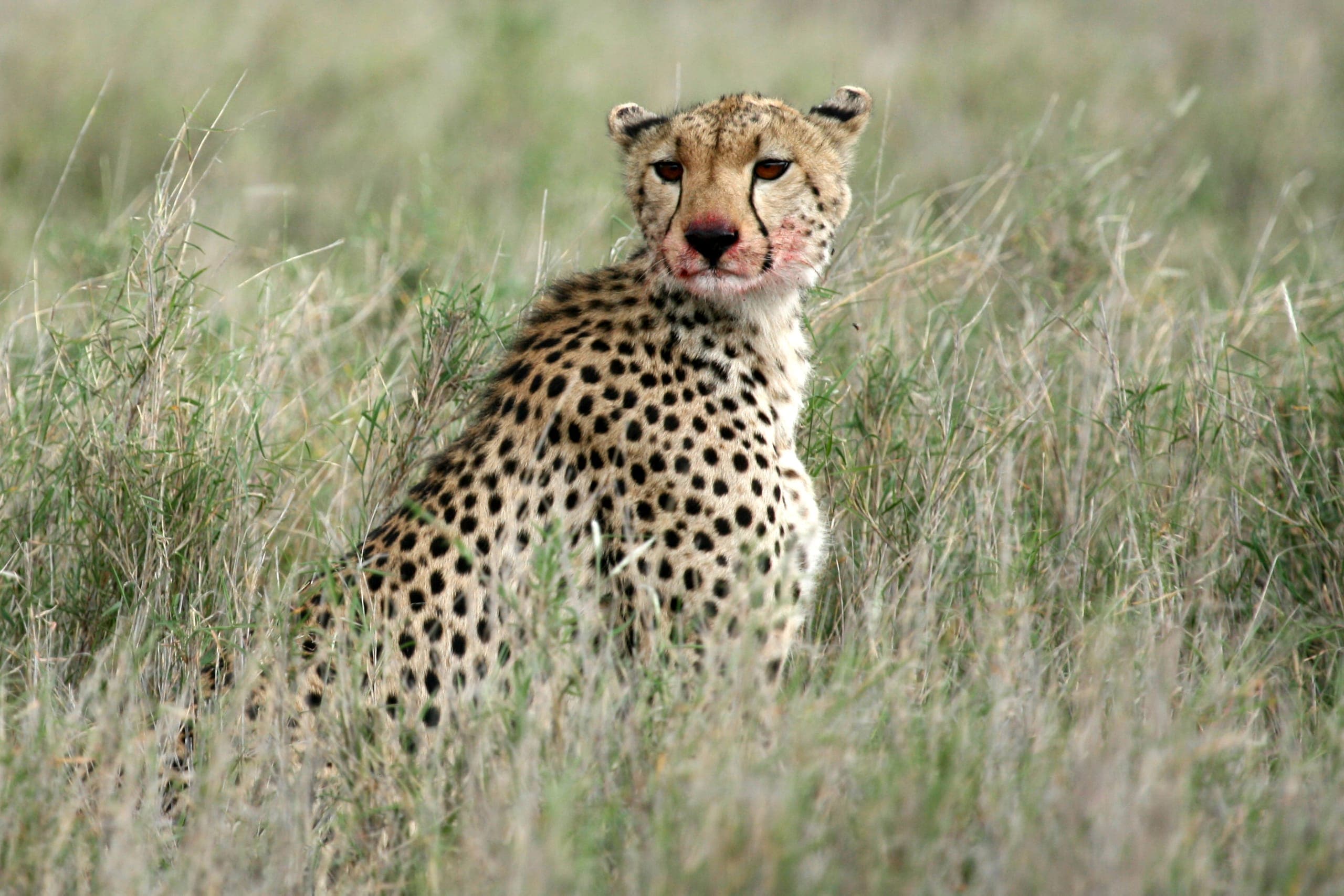
Cheetah can provide strong daylight-action subjects. Position the vehicle down-sun to get clean light on the animal's face. During pre-hunt behaviour, a cheetah may scan, raise its head, and begin moving with deliberate purpose. This is the moment to engage autofocus tracking. Bursts during the hunt itself capture the action; a single frame of the animal in full extension is the target. Stay in the vehicle. Any movement outside the vehicle in a cheetah's presence disrupts the hunt.
Lions
Lions are usually more static but can offer excellent portraiture opportunities. Early morning provides better conditions for activity before they settle into midday heat. Cubs at play can be engaging subjects. Position for eye level by lowering your seat, leaning the camera over the window, and shooting as close to the animal's eye height as the terrain allows. Low angles make a dramatic difference.
Leopard
Patience and early starts matter. Leopard in riverine forest are often partially obscured by branches, so use this rather than fighting it. Dappled light through acacia trees on a resting leopard can create a compelling image if you work with the natural frame rather than seeking a "clean" shot.
Migration Crossings
Crossings benefit from multiple shooting strategies in the same morning: wide views of the mass movement, mid-range tracking of groups in the water, tight frames of individual animals and crocodile interactions. If you are committing a morning to the crossing, bring two bodies mounted with different focal lengths and alternate as the scene changes.
Position matters enormously. A downstream position from the main crossing point allows the animals to approach into light (sun behind you) and produces cleaner images than shooting into shadow on the opposite bank. Getting into position early, before the herd commits, gives the choice of spot.
Birds
A 500mm or longer is useful for the smaller bird species. The secretary bird and kori bustard are large and often at ground level on the plains, so they can be photographed with shorter lenses. The lilac-breasted roller is widespread and often tolerates a close vehicle approach. For raptors in flight, a 500-600mm and fast autofocus tracking is the requirement.
Protecting Equipment
Dust
Dry season dust is the primary equipment hazard. Red laterite dust from the roads gets into everything. Transport lenses in sealed bags. Use a dust blower and lens cloth at every stopping point. Consider a sealed camera housing cover during road sections. Check your sensor for dust specks at the end of each day.
Rain
A waterproof cover for the entire kit is useful from November through May. Quick-dry covers that can be deployed in seconds are more practical than elaborate rain-protection setups.
Heat and Condensation
Moving from an air-conditioned vehicle into field temperatures can cause temporary condensation on cold glass. Allow equipment to acclimatise gradually if coming from a chilled environment.
Ethical Photography
The Mara's photography traffic creates genuine ethical pressures, and they are worth taking seriously.
Vehicle positioning at crossings: The temptation to position as close as possible to a crossing point compromises the crossing itself. Wildebeest scan the banks before committing. A vehicle parked very close to the intended entry point can deter a crossing attempt. Rangers have documented aborted crossings that correlate with vehicle crowding. Ethical photographers position at a reasonable distance and use longer focal lengths rather than demanding closer access.
Off-road driving to approach animals: In conservancies, off-road driving is a legitimate activity within managed limits. It is not a licence to position wherever you want regardless of impact on vegetation or the animal. A guide who understands responsible off-road approach is the safeguard here.
Staying in the vehicle: Standing on seats or roof hatches breaks the profile of the vehicle that habituated animals recognise as safe. It can trigger flight or defensive responses. Shooting from a seated or kneeling position inside the vehicle is more sustainable and often produces better images by forcing lower angles.
Not making noise to animate subjects: Clapping, hissing, or otherwise disturbing animals to elicit a reaction conflicts with Narok County's instruction to observe without disturbing wildlife. Conservancies apply their own codes and ranger directions. Images produced by disturbing animals are not ethical wildlife photographs.
Planning for a Photography-Focused Visit
For clients whose primary motivation is photography:
A private vehicle is essential. Sharing with non-photographers who want to stop elsewhere or return to camp at different times significantly limits photographic output.
A guide who understands photography is worth specifying at booking. Not all guides have developed a working understanding of light, angle, and the specific requirements of photographic clients. The best camps have guides who have worked alongside serious photographers for years and understand the difference.
Minimum five nights gives meaningful time in the field. Photography takes patience and repetition. A three-night visit can produce good images if conditions cooperate, but five nights allows for multiple attempts at the same subject in different light conditions.
Consider splitting between two camps if migration and predator photography are both priorities. Use one camp near the river for crossing access and one on the open plains for cheetah and lion habitat.
Frequently Asked Questions
What camera should I bring to the Masai Mara? Any modern mirrorless or DSLR body with reliable autofocus will produce excellent results. The camera matters less than the lens and the quality of opportunity your guide creates. A 100-500mm zoom on a capable body covers most situations effectively.
Do I need a telephoto to photograph in the Mara? For most wildlife subjects, yes. A telephoto in the 300-500mm range is the minimum for quality wildlife portraiture. For landscape and environmental shots, wider lenses are useful. A trip without telephoto will produce images that feel visually distant from the animals.
Should I rent or buy lenses for the Mara? If the trip is a one-time occasion, renting a high-quality telephoto for the duration is financially sensible and produces excellent results. If you visit regularly, ownership justifies itself. Many cities have specialist camera rental companies that cater to wildlife photographers.
Zorani Expeditions
Experience the Masai Mara
Every Zorani journey is tailored to the specific client. Let us build the right itinerary around your preferences.
Enquire Now