Mara Triangle Guide
Mara Triangle Safari Guide
Western reserve · Better-managed grassland · River access
A Different Corner of the Reserve
The Mara Triangle is the western section of the Masai Mara National Reserve. Narok County is responsible for the reserve as a whole, while the Kenyan non-profit Mara Conservancy has carried out day-to-day management of the Triangle on the County's behalf since 2001. Its responsibilities include security, tourism management, revenue collection and distribution, and infrastructure maintenance.
For clients who want the main reserve experience without the congestion of the eastern section, the Mara Triangle is the most practical option. Compare it with the wider Masai Mara conservancies guide and use the Great Migration guide to plan around river-crossing season.
Related Guides
Geography and Landscape
The Mara Triangle is bounded by the Mara River on the east and north (which forms the boundary with Mara North Conservancy), the Tanzania border on the south, and the Siria Escarpment on the west. The escarpment is a defining visual feature: a long, dark ridge rising above the plains, with open savannah below and forest above.
The landscape is varied: open grassland plains, acacia woodland, and the Mara River with its hippo pools, riverine forest, and reed-lined banks. The Mara Conservancy uses planned burning and track maintenance as management tools. Conditions and wildlife visibility still vary with rainfall, grazing, and the timing of management work.
Wildlife
The Triangle holds the same wildlife species as the broader Mara ecosystem. Lions, elephant, buffalo, leopard, and cheetah are all present and regularly seen.
Black rhino: Black rhino are present in the Triangle, but the reserve management plan describes the wider reserve population as small and vulnerable. Sightings are uncommon and should not be promised. Rhino can also occur elsewhere in the reserve, so the Triangle is not the only possible area.
Hippo pools: Hippo use pools along the Mara River. Group size and visibility vary, so no numerical range should be promised.
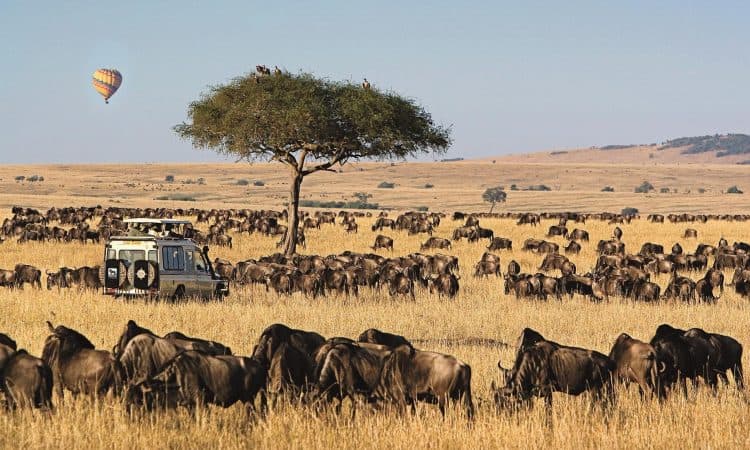
Migration crossings: The Mara River crossings accessible from the Triangle are among the most rewarding in the ecosystem during July-October. The western bank in particular is accessible from Triangle camps without the vehicle congestion typical of the eastern reserve crossing points. Crossings here often have fewer vehicles in attendance.
The Mara Conservancy Model
The Mara Conservancy manages the Triangle under an agreement with Narok County. It publishes monthly operational reports covering roads, security, tourism, revenue, and ecological work. Those reports support claims about the work performed; comparisons with the central reserve should be made against current evidence rather than a blanket quality statement.
The Mara Conservancy publishes how Triangle fees are collected and distributed under its County agreement. Revenue supports County and Conservancy responsibilities and the contracted collection service; it does not go to Kenya Wildlife Service.
Access
Purungat Bridge connects the central reserve with the Triangle, and Oloololo Gate serves the western road approach. Air access depends on the selected camp and the airline's operating airstrip. Confirm the strip before ticketing rather than assuming Serena is always the correct arrival point.
Some visitors combine a Triangle stay with time in the eastern reserve or a conservancy by crossing the Mara Bridge as part of a day drive. This is a natural way to cover both sides of the reserve on a longer stay.
Accommodation
A small number of lodges and camps operate within and adjacent to the Mara Triangle. Most are positioned for river access or escarpment views. The Mara Serena Safari Lodge sits near the Triangle's eastern boundary; smaller tented camps offer more intimate options within the Triangle's boundaries.
The Triangle vs the Eastern Reserve: Summary
| Factor | Mara Triangle | Eastern Reserve | |--------|-------------|-----------------| | Vehicle numbers | Lower | Higher (peak season) | | Road quality | Better maintained | Variable | | Grass management | More controlled | Variable | | Activities | Mara Conservancy rules within the County reserve framework | Narok County reserve rules | | Black rhino | Present, uncommon | Possible elsewhere in the reserve, uncommon | | Migration crossings | Access to western crossing areas; activity and crowding vary | Access to central and eastern crossing areas; activity and crowding vary | | Camp variety | Smaller selection | Broader selection |
Zorani Expeditions
Experience the Masai Mara
Every Zorani journey is tailored to the specific client. Let us build the right itinerary around your preferences.
Enquire Now