TANZANIA · EAST AFRICA
Ngorongoro
A steep-walled caldera with resident wildlife and high-altitude grassland
TANZANIA · EAST AFRICA
Wildlife Within a Volcanic Caldera
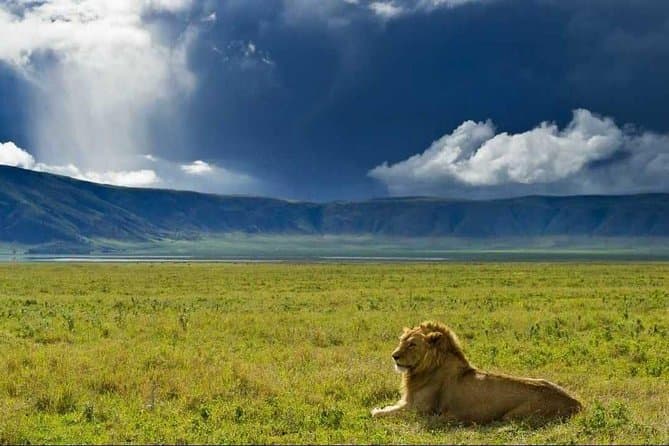
Ngorongoro Conservation Area sits in northern Tanzania, roughly three hours west of Arusha, and contains one of the most concentrated wildlife habitats on earth. At its centre is the Ngorongoro Crater, the world's largest intact volcanic caldera, which drops roughly 600 metres from its rim to a self-contained ecosystem of open grassland, swamp, forest, and a soda lake covering the crater floor.
Most travelers who visit the northern Tanzania circuit include Ngorongoro on itinerary. Few leave questioning that decision. The crater holds permanent populations of nearly all the major species found in the Serengeti, including one of Tanzania's last viable black rhino populations, in a confined and relatively accessible space. Wildlife density on the crater floor during the dry months is extraordinary, and game drives here operate differently to open-savannah parks because the crater walls create a natural enclosure that keeps large numbers of animals within daily viewing range.
Ngorongoro is also a working conservation area, not just a national park. Maasai communities have grazed cattle within its boundaries for decades, giving the landscape a cultural dimension that adds to rather than detracts from the experience.
Safari Experiences
The Case For Ngorongoro
Why Visit Ngorongoro
The crater works because of its geography. The enclosed walls mean that the animals that live on the crater floor stay year-round, creating reliable wildlife viewing regardless of season. In most East African parks, dry-season concentrations shift and dissolve as rains arrive. At Ngorongoro, populations remain stable because there is no incentive to migrate beyond the rim.
Black rhino are the standout draw. Tanzania's population has been under severe pressure from poaching for decades, and the Ngorongoro Crater now holds one of the more viable and visible concentrations remaining in the country. Sightings are not guaranteed but are more likely here than in most places across the region.
The combination of habitat types within a single day-drive area is also notable. Open short-grass plains hold the grazers and predators. The Lerai Forest supports leopard and elephant. The Gorigor Swamp and Lake Magadi attract hippo, flamingo, and wading birds. You move between these zones in an hour, without leaving the crater.
Safaris Through Ngorongoro
Terrain & Ecosystem
Landscape & Environment
The Ngorongoro Crater was formed approximately two to three million years ago when a large volcano collapsed inward. The resulting caldera is roughly 19 kilometres across at its widest point, with walls rising between 400 and 600 metres above the floor. The scale only becomes apparent from the rim: the crater floor looks small from above, but once you descend, the distances expand considerably.
The crater floor is divided between short-grass plains, the alkaline Lake Magadi (also known as Lerai Swamp), the Lerai Forest, and the Gorigor Swamp. Beyond the crater, the wider conservation area covers the Ngorongoro Highlands, the Empakaai Crater, the Olmoti Crater, and the early hominid fossil sites at Olduvai Gorge. Olduvai is one of the most important paleontological sites in Africa, and a short detour there adds useful context to any journey through this region.
Altitude on the rim sits between 2,200 and 2,400 metres. Mornings are cool and can be cold in June and July. The crater floor is warmer, but mist frequently sits along the walls in the early morning, which affects light for photography but can create dramatic visual conditions.
Fauna
Wildlife Highlights
Flagship species: Black rhino. The crater holds an estimated 20 to 30 black rhino, one of Tanzania's most significant remaining populations. Sightings tend to occur in the short-grass plains or around the Lerai Forest. They are rarely guaranteed but are more consistent here than in any open-savannah park in the country.
Predators. Lion prides on the crater floor are well-established and relatively accustomed to vehicles. Spotted hyena are extremely abundant, operating in large clans, and are often seen hunting independently rather than solely as scavengers. Leopard are present, most reliably seen along the Lerai Forest margins.
Elephants. The crater holds a resident elephant population, though numbers are relatively small. Individuals are notably large-tusked compared to Serengeti populations, likely reflecting reduced poaching pressure inside the caldera.
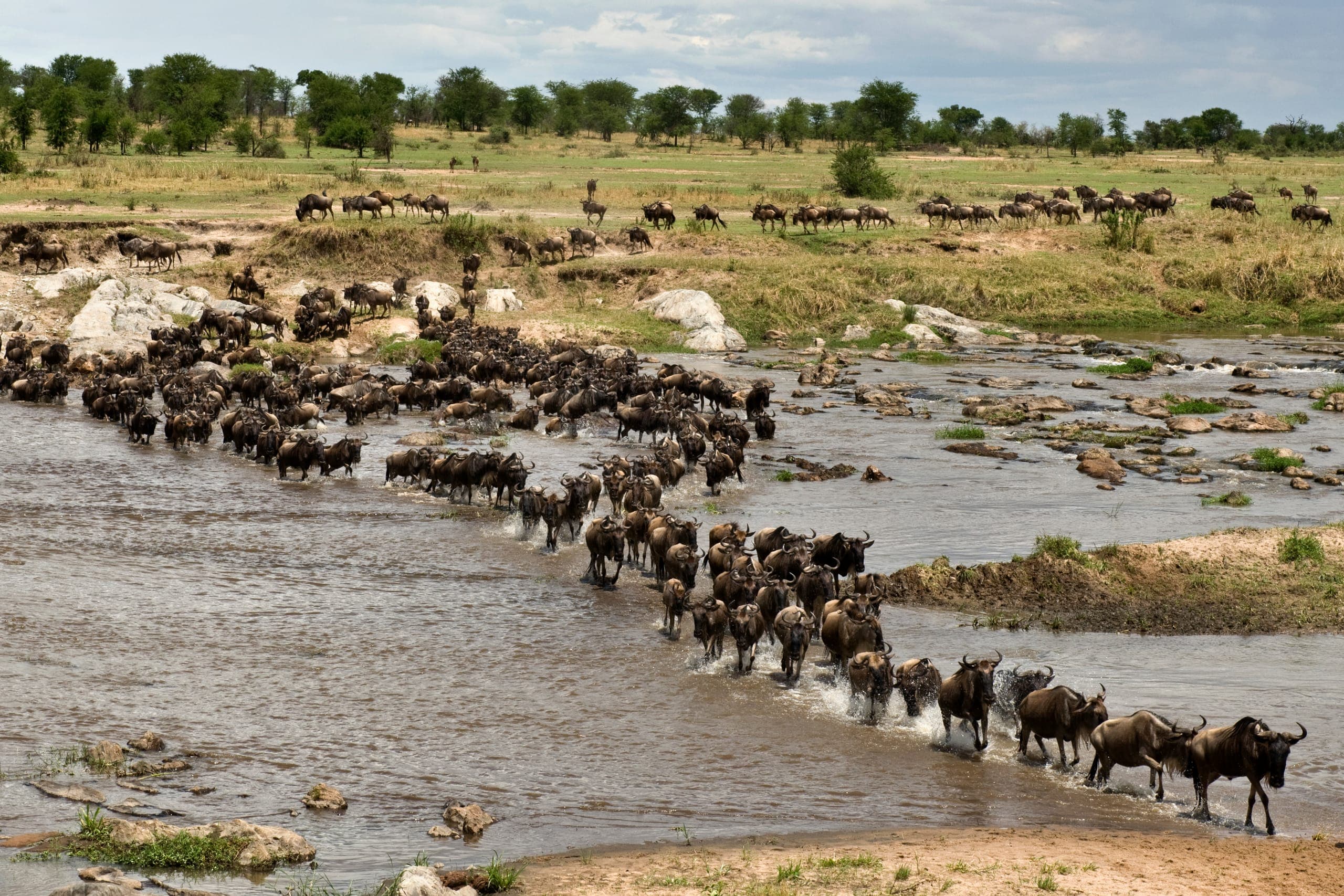
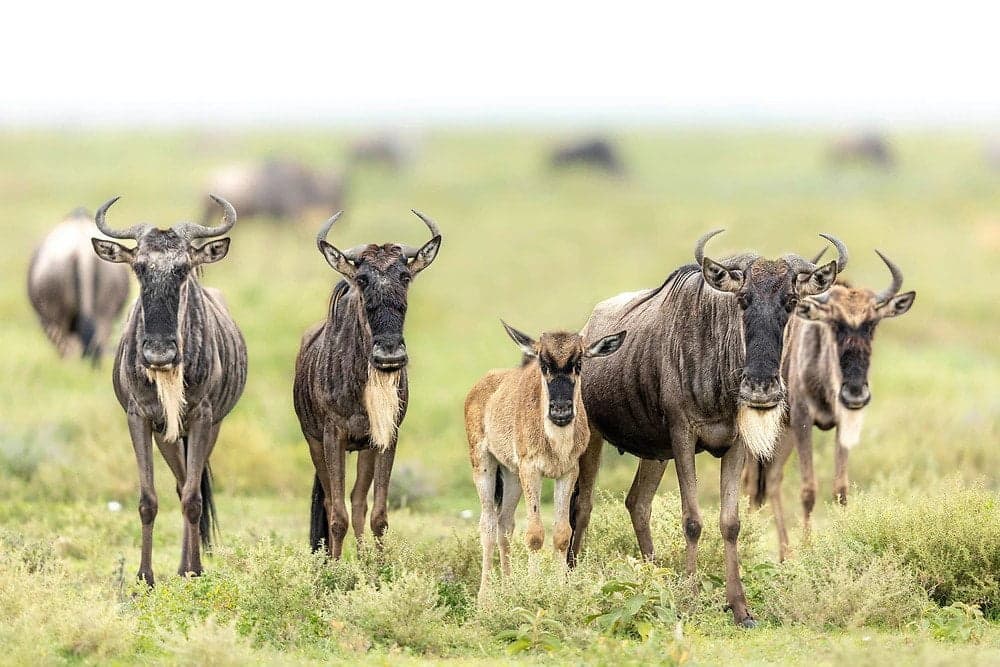
Grazers and plains game. Wildebeest, zebra, and Thomson's gazelle graze across the short-grass plains throughout the year. Blue wildebeest do not migrate out of the crater, unlike the Serengeti populations. Buffalo herds are large and consistent, particularly around the swamp margins.
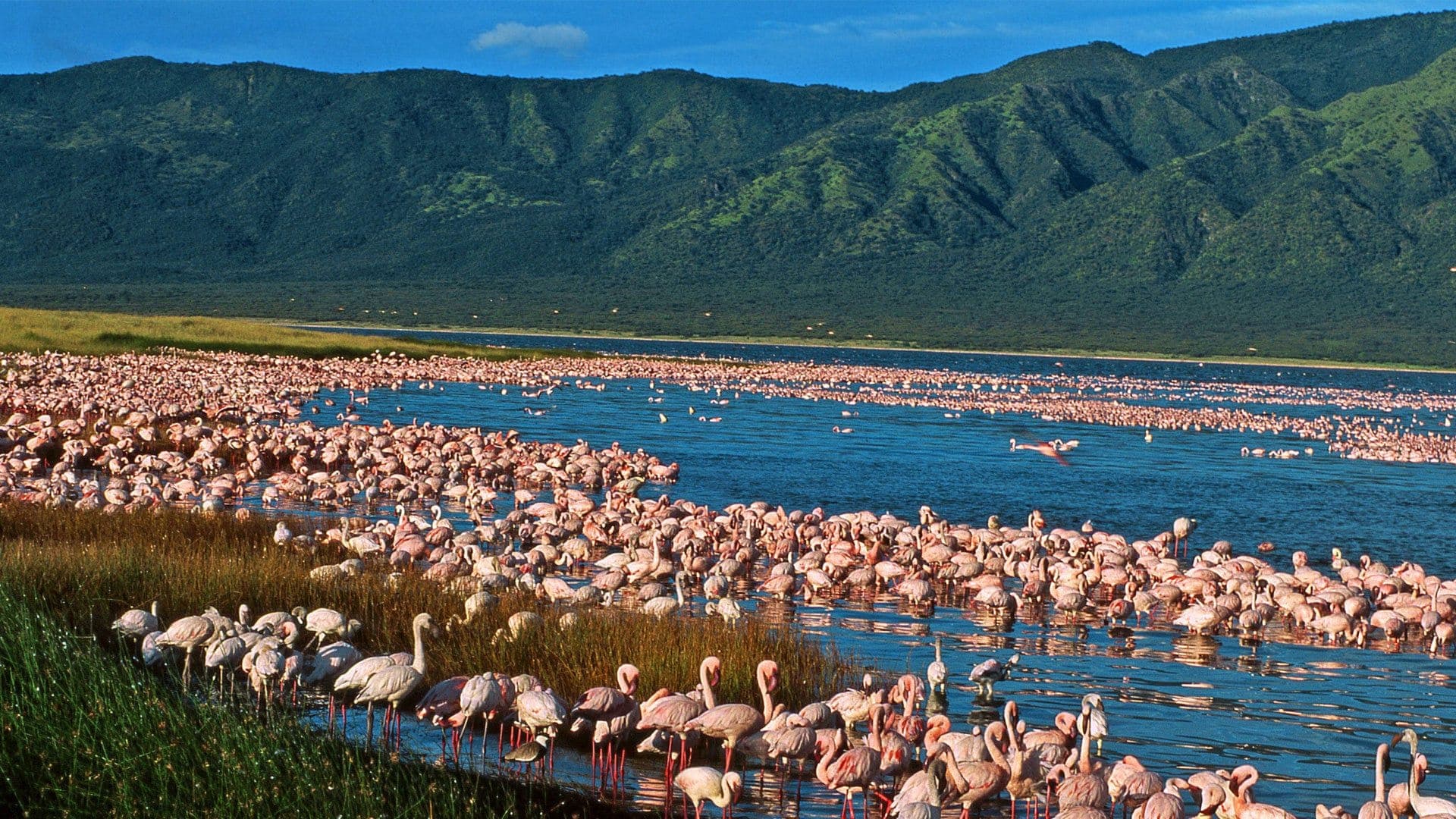
Flamingo. The alkaline Lake Magadi supports flamingo populations that fluctuate with lake levels and rainfall. During good years the lake edge turns pink at a distance. Numbers are unpredictable and depend on water conditions.
Birdlife. The crater supports over 500 species. Kori bustard, the world's heaviest flying bird, is frequently seen on the plains. The swamps hold Egyptian goose, various herons, and spoonbill. Martial eagle, augur buzzard, and Verreaux's eagle inhabit the rim forest.
On the Ground
Safari Experiences
Game drives on the crater floor. This is the core activity. Game drives typically last five to seven hours and descend via one of two roads at the crater wall, taking roughly 20 minutes each way. Vehicles must be registered for crater access. Only 4WD vehicles are permitted. The crater has its own traffic management system limiting vehicle numbers at any one time, so a degree of vehicle concentration is normal during peak season.
Walking at Empakaai Crater. Guided walks are available at Empakaai, a smaller crater lake to the northeast of Ngorongoro. The flamingo-dotted lake and forest setting make this a worthwhile addition for those spending three or more nights in the area.
Olduvai Gorge visit. A 45-minute drive from the crater rim takes you to Olduvai, where the Leakey family's excavations over the 20th century uncovered evidence of human ancestors dating back approximately 1.8 million years. The on-site museum is straightforward and informative.
Cultural visits. Maasai community visits in the conservation area are available through several operators. These vary considerably in quality; those arranged through reputable camps tend to be more substantive than roadside encounters.
Olmoti Crater walk. Guided walking is available to the Olmoti Crater and its waterfall. This is a less-visited alternative to Empakaai and offers a quieter forest and highland experience.
Regions of the Park
Ngorongoro Crater floor. The primary visitor focus. All game drives operate here and the crater floor holds the highest wildlife concentrations. Access is restricted to registered 4WD vehicles and descent/ascent is via designated roads. Accommodation is available both on the rim and, in limited form, on the crater floor itself (at the Ngorongoro Wildlife Lodge, which has a dated feel but an unmatched position).
Ngorongoro Highlands and rim. The majority of lodges and camps sit on or near the rim, between 2,200 and 2,400 metres. The rim forest is beautiful and wildlife including leopard, elephant, and buffalo move through at night. Views across the caldera from the rim at sunrise are worth setting an early alarm for.
Empakaai and Olmoti. The remote craters to the northeast are accessible from the main conservation area but require additional planning. They are included on walking-safari itineraries and multi-day Crater Highlands treks, which cross this area en route to the Serengeti through Maasai territory.
Olduvai Gorge. On the western edge of the conservation area, en route between Ngorongoro and the Serengeti. Best visited as part of a Serengeti connection rather than as a standalone day trip.
Planning Your Visit
Best Time to Visit
June to October (dry season). The best period for wildlife viewing on the crater floor. Vegetation is shorter, water sources concentrate animals, and the crater visibility is clearest. Mornings can be cold and misty at the rim but the crater floor warms quickly. This is peak season across northern Tanzania and crater access can feel busy.
January and February (short dry season). Excellent conditions on the crater floor. Coincides with the calving season in the broader Serengeti-Ngorongoro ecosystem, when thousands of wildebeest calves are born in a short window, creating intense predator activity. A good time to visit both Ngorongoro and the southern Serengeti together.
November. The short rains arrive and wildlife disperses slightly on the crater floor, but visitor numbers drop and the landscape turns green. Photography conditions can be good with dramatic storm light.
Getting There
By air. Kilimanjaro International Airport (KIA) near Arusha is the primary arrival point for international travelers. From Arusha, road transfers to the Ngorongoro rim take approximately three hours via Karatu. Light aircraft connections to Manyara airstrip reduce the drive slightly.
By road. The main road from Arusha passes through the Ngorongoro gate at Lodoare, then climbs to the rim. Road surfaces vary seasonally; the route is accessible year-round in a suitable vehicle. Most operators include this as part of a broader northern Tanzania circuit, often combining Tarangire, Manyara, Ngorongoro, and the Serengeti.
Connection to other parks. Ngorongoro connects naturally with the Serengeti to the west (1.5 to 2 hours to the eastern Seronera area), Tarangire to the east (approximately 2 hours from Lodoare gate), and Lake Manyara (1.5 hours). Most northern Tanzania itineraries use Ngorongoro as either a midpoint or final stop before returning to KIA.
How Many Nights
Two nights minimum. This allows two full days in the crater, with time for an Olduvai Gorge detour or an afternoon at Empakaai. Two days is the standard allocation for most northern Tanzania itineraries.
Three nights. Provides time for a crater walk, more relaxed game drives, and a cultural visit to a Maasai community. Three nights makes particular sense for photographers who want multiple early-morning crater descents or those who want to include a highland walk.
Four nights or more. Justifiable if a Crater Highlands walking safari is included, combining Empakaai, Olmoti, and a section of the Maasai steppe. This is a niche but compelling addition for active travelers.
Where to Stay
Accommodation is concentrated on the crater rim and nearby in the Karatu area, with one option on the crater floor. The rim and highland camps offer the best balance of access and atmosphere.
Luxury Lodges and Camps
The rim and highland camps represent the strongest options in the area. Several offer direct crater-view positions from terrace or suite. The most distinctive properties sit along the southern rim and combine forest setting with caldera views. Camps in the Karatu highlands, about 45 minutes from the crater, offer a quieter and often more affordable alternative while still providing good access.
Midrange Lodges and Camps
Several well-established midrange lodges operate on the rim and in the Karatu area. Karatu in particular has expanded its lodge inventory significantly, and several properties here offer a good standard at reduced cost compared to rim-side options. The trade-off is a slightly longer drive to the crater descent road each morning.
Combining With Other Destinations
Serengeti National Park. The standard combination. The western Ngorongoro gate connects directly to the Serengeti, and most itineraries include three to five nights in the Serengeti alongside Ngorongoro. Timing the Serengeti component around the wildebeest migration requires careful planning.
Tarangire National Park. A natural addition to any northern Tanzania circuit. Two nights at Tarangire, two at Lake Manyara, and two to three at Ngorongoro is a solid baseline before extending into the Serengeti.
Lake Manyara National Park. Usually included as a first or last park on the northern circuit. The drive from Arusha through Manyara to Ngorongoro is the standard opening to the region.
Zanzibar. Many clients extend a Tanzania wildlife journey with four to five nights on Zanzibar's northern or eastern coast. The flight from KIA or Kilimanjaro connects to Zanzibar with a brief hop.
Photography
Best light on the crater floor comes in the early morning, within the first two hours after descent. The crater rim diffuses direct light and creates soft conditions, though mist can reduce visibility in the short-grass plains during June and July.
The rim itself offers strong compositional opportunities at sunrise and sunset, with the caldera as a backdrop to silhouette shots. Carry extra batteries: cold mornings at altitude drain charge faster than at lower elevations.
Black rhino photography requires patience and luck. They are visible but cautious. Use a long lens and stay in the vehicle. The flat terrain of the crater floor offers unobstructed sightlines once you are positioned.
Ngorongoro Questions
How many animals live inside the Ngorongoro Crater?
Approximately 25,000 to 30,000 large mammals reside permanently inside the crater: one of the highest concentrations of large wildlife per square kilometre anywhere on Earth. The population includes an estimated 70 to 100 black rhino, around 1,500 wildebeest, 4,000 zebra, 500 elephants (though most spend only part of the year on the floor), substantial buffalo herds, and a well-documented lion population of around 60 individuals. The permanent water source of Lake Magadi ensures wildlife is present year-round.
How likely am I to see black rhino in the Ngorongoro Crater?
Black rhino sighting probability at Ngorongoro is among the highest of any wildlife destination in East Africa. The resident population of 70 to 100 individuals is in a protected, enclosed area where rangers track their movements. An experienced guide who knows where the rhino have been observed in recent days will locate them on the majority of visits. Early morning game drives improve the probability. If black rhino is a priority on your safari, Ngorongoro is the single strongest destination in Tanzania.
What are the dimensions of the crater?
The Ngorongoro Crater is approximately 19 to 21 kilometres in diameter and covers around 260 square kilometres on its floor. The walls rise between 400 and 600 metres from the crater floor to the rim. It is the world's largest intact and unflooded volcanic caldera: a collapsed volcano that formed approximately two to three million years ago and has never been filled by later eruptions. The rim elevation averages around 2,300 metres above sea level, which means the rim area is noticeably cooler than the crater floor.
Can visitors stay overnight inside the crater?
No. Overnight stays on the crater floor are not permitted for tourists. All accommodation is on the crater rim or outside the conservation area. This means game drives on the crater floor are day trips: descent is typically around 6:30 to 7:00 AM and vehicles must exit by 6:00 PM. The rim lodges (Ngorongoro Serena, Ngorongoro Crater Lodge, The Manor at Ngorongoro, and others) sit at the rim edge and offer views into the crater from above. Descent and ascent use designated roads on opposite sides of the crater.
Is Ngorongoro a national park?
No. Ngorongoro is a Conservation Area (the Ngorongoro Conservation Area (NCA)) managed by the Ngorongoro Conservation Area Authority (NCAA), a separate body from Tanzania National Parks (TANAPA). The key distinction is that the NCA was originally designated as a multiple-use area where Maasai pastoralists could continue to graze their cattle alongside wildlife. However, following significant controversy over land rights and relocation pressure, the situation has evolved considerably. The NCA is a UNESCO World Heritage Site and was awarded dual status as both a Natural and Cultural World Heritage Site.
What is the Ngorongoro Conservation Area (NCA)?
The NCA is a 8,292-square-kilometre protected area in northern Tanzania that encompasses the crater itself, the surrounding Crater Highlands (including the Olmoti and Empakaai craters and the Ndutu area), and vast open savannah. The crater floor is the most visited component but the broader NCA contains significant wildlife including wildebeest calving in the Ndutu area between January and March, Empakaai Crater for flamingo, and important archaeological sites including Olduvai Gorge.
How does Ngorongoro compare to the Serengeti?
The experiences are complementary rather than comparable. The crater is enclosed and wildlife is permanently concentrated: it is reliable, predictable, and compressed. The Serengeti is vast and open, with wildlife that shifts seasonally across enormous distances. The crater excels at rhino, reliable predator encounters (lion and hyena especially), and the dramatic visual impact of the caldera geography. The Serengeti excels at scale, the Great Migration, cheetah, and a wilderness quality that the crater, with its vehicle traffic on busy days, cannot match. Nearly all northern Tanzania itineraries combine both.
Is the Ngorongoro Crater crowded?
Peak season (July to October and December to January) can be busy, particularly at lion kills and rhino sightings where multiple vehicles congregate. The crater floor has improved its traffic management in recent years but it is not a quiet wilderness experience on the busiest days. Early morning (arriving at the descent road as it opens) is the most effective way to get ahead of the majority of vehicles. The experience is still exceptional regardless, but managing expectations around vehicle density is worthwhile for travellers seeking complete solitude.
What is the best time to visit the Ngorongoro Crater?
The crater is excellent year-round. The dry season from June to October offers the best predator action and clearest skies. January to March sees wildebeest calving in the Ndutu section of the NCA, outside the crater itself. The short rains of November and the long rains of April and May are manageable: the crater floor drains well, vegetation is lush, and predator activity around calving prey can be intense. The crater is genuinely one of the few African wildlife destinations that justifies a visit in any month.
How do I combine Ngorongoro with the Serengeti?
The standard northern Tanzania circuit connects them naturally. Most itineraries drive from the Ngorongoro rim into the Serengeti via the Naabi Hill Gate, which takes approximately two to three hours. On this route it is common to spend half a day on game drive inside the Ngorongoro Crater en route to the Serengeti, arriving at a Serengeti camp by late afternoon. Alternatively, the Ndutu area on the NCA-Serengeti boundary is used as a separate overnight stop during calving season (January to March) to cover both ecosystems simultaneously.
Zorani Expeditions
Plan Your Ngorongoro Safari
Every Journey we design is built around your goals, not a standard route.
Speak to a Specialist