Accommodation Planning
Where to Stay in the Masai Mara
Tented camps · Lodges · Conservancy properties
The Guide Selection
Accommodation in the Masai Mara ecosystem ranges from large, lodge-style resorts to intimate fly camps with fewer than ten guests. The price difference between the bottom and top of the range can be tenfold. But what matters more than the headline price is whether the property is in the right location, has the right activities, employs guides of the right calibre, and is sized correctly for the kind of experience you want.
This guide does not list every property in the ecosystem. It explains how to choose correctly, what to look for, and what trade-offs exist between different accommodation types and locations. Compare Masai Mara conservancies before selecting a location, and use the safari cost guide to understand the main price drivers. Zorani's portfolio covers Luxury and Midrange properties across the Mara. A travel specialist can make specific recommendations based on your dates, priorities, and group composition.
The Single Most Important Variable: Your Guide
Before considering camp location, tent quality, cuisine, or design, consider guiding.
More than any other factor, the knowledge, passion, and expertise of your guide determines the quality of your wildlife experience. A guide who has spent years in the same terrain will know where the cheetah coalition was seen yesterday, which lion pride is likely to have cubs at this time of year, and which crossing point is worth positioning at before dawn. This produces a fundamentally different experience from a guide following radio calls to wherever twenty other vehicles are already parked.
The better conservancy camps hire and retain guides long-term. Some have guides who have worked in the same patch of the Mara ecosystem for ten or fifteen years. That local knowledge is irreplaceable and is not something that camp design or five-star bath products can substitute for.
When comparing camps, ask: Are guides camp-specific and long-term? Is each group assigned a dedicated guide, or are guides shared between multiple vehicles? Does the camp run its own guide training programme?
Reserve vs Conservancy: The Location Decision
See the Masai Mara Conservancies guide for full detail. In brief:
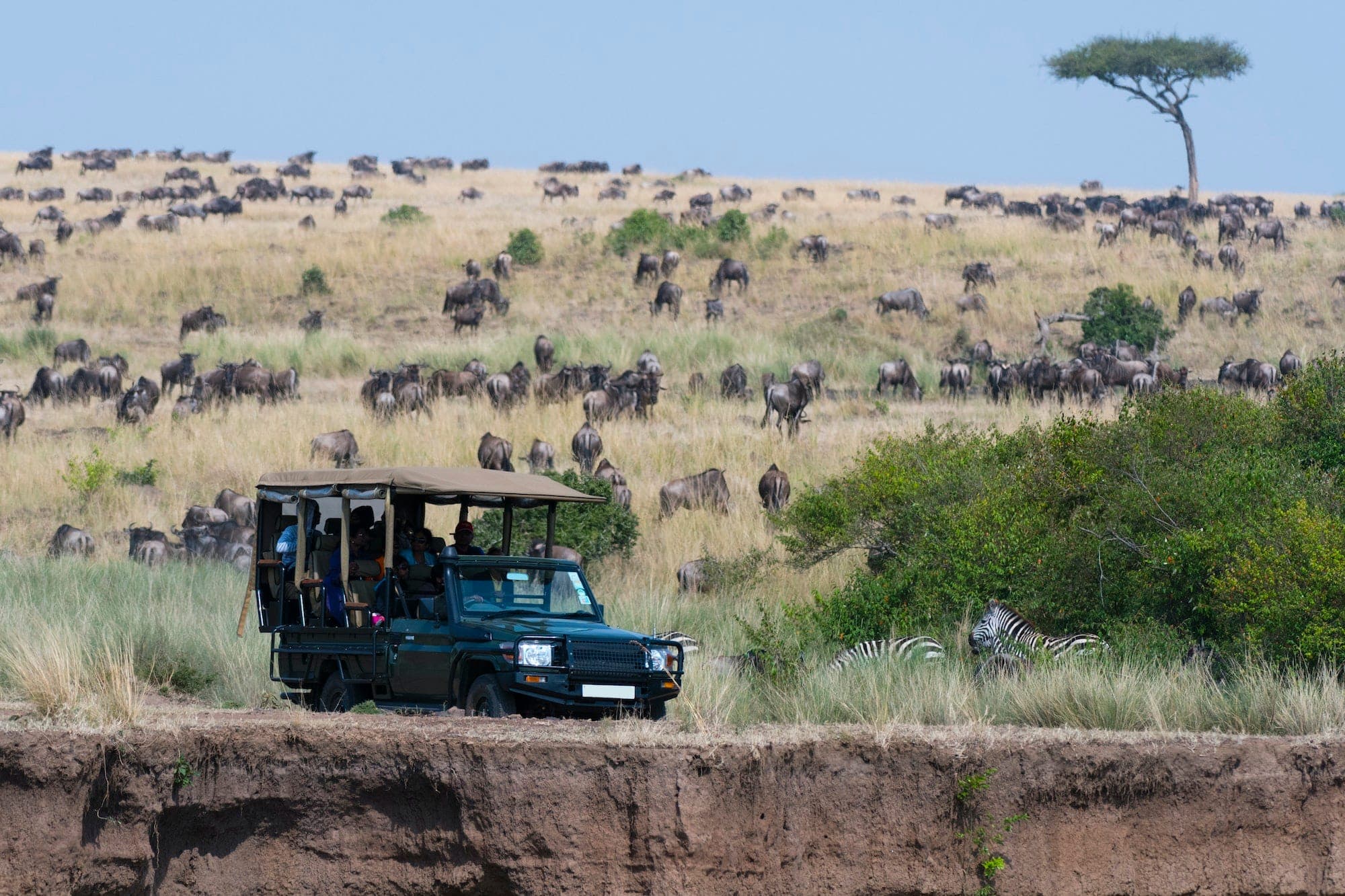
Main reserve camps are accessible to any licensed operator, have no night drives or walking safaris, and share the reserve with a large and variable number of vehicles. In peak season, main reserve camps near active sighting areas can involve vehicle congestion at kills and crossings. The upside is lower cost and easier access from Nairobi.
Conservancy camps are situated on private or community-managed land where activity regulations are different and visitor numbers are controlled. They typically include night drives, walking safaris, and off-road vehicle use. They cost more, partly because conservancy fees are included. They deliver a more exclusive and more active experience.
For a Luxury Journey, Zorani would generally consider a conservancy base, subject to the traveller's activity priorities and the property's actual access rights.
Camp Size
Camp size has a significant impact on experience quality. Smaller camps produce a better experience for most clients, for several reasons:
- ›Fewer guests per vehicle means more personalised guiding
- ›Fewer vehicles in the field from the same camp means less competition at sightings
- ›Smaller dining and communal areas feel more personal and less like a hotel
- ›Staff-to-guest ratios are typically higher in smaller camps
- ›Activity scheduling is more flexible when accommodating small groups
What counts as small? In the Mara context, a camp with eight to twelve guests at capacity is considered intimate. Camps with twenty to thirty guests can still be well-managed, but the experience is less personal. Large lodges with sixty or more guests are closer to a hotel model and carry the trade-offs of that scale.
A small camp does not guarantee quality. Poorly managed small camps exist, and some larger lodges run excellent operations. But as a general heuristic, size matters.
Accommodation Types
Luxury Tented Camps
Much of the Luxury accommodation in the Mara ecosystem takes the form of tented camps. These are permanent structures with canvas walls, wooden or stone foundations, en-suite bathrooms, and furnished interiors. The format connects guests to the natural environment without sacrificing comfort or privacy.
Quality varies considerably. At the top end, tented camps have large, purpose-designed interiors with full en-suite plumbing, outdoor showers in some cases, and communal areas designed around the landscape. At the lower end, "tented camps" can mean canvas sheeting over concrete platforms with shared facilities.
Zorani uses two accommodation tiers: Luxury and Midrange. The distinction is based on the complete stay, including location, guiding, privacy, service, and comfort, rather than canvas alone.
Luxury Lodges
Some properties in the Mara ecosystem are constructed as permanent lodges rather than tented camps, typically with stone or brick buildings, larger rooms, and more hotel-like communal spaces. These can offer excellent experiences, particularly where the location and guiding are strong, but the canvas-and-bush aesthetic of the tented camp is generally preferred by clients seeking an immersive feel.
Large lodge resorts with high bed counts are common in the main reserve (particularly the Mara Serena area) and suit clients who want comfort and convenience with flexibility on game drive timing. They are less suited to clients who want an exclusive, personalised wildlife experience.
Mobile and Seasonal Camps
Several operators in the Mara run seasonal camps. Their opening dates and locations vary, and a seasonal label does not prove current proximity to the herds or a river crossing. Confirm the camp's exact operating period, map position, and transfer time for the intended dates.
Fly Camps and Bush Camping
Some conservancy camps offer overnight fly camp experiences. This is a simplified bush camp, typically one or two hours' walk or drive from the main camp, with minimal infrastructure, a fire, a mattress for sleeping under the stars, and basic facilities. This is not for everyone, but for the right client it is one of the most compelling experiences the Mara offers.
Seasonal Availability
The Mara has a seasonal accommodation cycle. Some camps close during the long rains (typically April and May) for maintenance, deep cleaning, and repairs. This is worth confirming at the planning stage because arriving to find a camp in low-key maintenance mode is not the experience being paid for.
Operating dates and service levels vary by property. Confirm them directly for the intended stay, especially during the long rains.
Family Suitability
Most camps in the Mara can accommodate families, but suitability varies. Key considerations:
Minimum age policies: There is no Mara-wide standard. Each property sets its own accommodation rules, and walking, night-drive, and balloon operators may apply separate age or height requirements. Confirm every relevant policy before booking.
Interconnecting tents or family rooms: These are essential for families with younger children. Not every camp has them, so confirm at the planning stage.
Child-specific programming: The better family-oriented camps run dedicated activities for children, including wildlife education, nature walks, and simple tracking sessions. These require both the right camp and the right guide.
Vehicle composition: Some camps allow dedicated family vehicles; others mix guests from different parties. A dedicated vehicle means the family can set its own pace and the guide can pitch natural history at the right level.
See the Masai Mara for Families guide for specific guidance.
Honeymoon Suitability
The Mara works well for honeymoons because the combination of dramatic wildlife, remote camps, and the natural privacy of a tent in the bush is well suited to the purpose.
What to look for in a honeymoon property:
- ›Private tent placement (ideally not directly overlooking other tents)
- ›In-tent or outdoor bathing facilities
- ›Plunge pool or private outdoor space at the tent
- ›Private dining options (bush dinners, in-tent dining, private fire)
- ›Flexible scheduling so honeymoon clients are not locked into rigid meal and game-drive times
The Mara is often combined with a Zanzibar coast stay for a beach-and-bush honeymoon combination that works extremely well. See the Masai Mara for Honeymoon guide and the beach extension options for more.
Photography-Oriented Properties
For photographers, the right camp means specific things:
- ›Dedicated vehicles (no sharing with non-photographers who may want a different pace)
- ›Vehicles with beanbag or window-mount compatibility
- ›Guides who understand light and timing, not just species identification
- ›Flexible timing, with the ability to stay at a sighting past the standard return time
- ›Positioning close to open plains for cheetah and cat activity, and to the Mara River for migration access
Several camps in the ecosystem offer dedicated photography vehicles and photography-specific guiding. These properties are worth specifying at the planning stage if photography is a primary motivation.
What All-Inclusive Means in the Mara
Most tented camps and lodges in the Mara operate on an all-inclusive basis. This typically covers accommodation, all meals, house wines and spirits, laundry, and standard game drives.
What is typically excluded from the all-inclusive rate:
- ›Balloon safari, usually booked and paid separately; use the current operator quote and identify any landing fee or community levy
- ›Premium and rare spirits or wine
- ›Curio shop purchases
- ›Spa services where available
- ›Community or cultural village visits where charged separately
- ›Inter-camp transfers
- ›Conservancy fees at some properties; other properties include them
Conservancy fees may be included or itemised separately. Clarifying this before booking avoids surprises. Participating landowners can receive lease payments through the conservancy model, but a guest fee should not be described as a direct community payment unless the operator's current distribution mechanism has been verified.
Choosing Between Luxury and Midrange
Zorani's accommodation portfolio distinguishes between Luxury and Midrange properties. Both should meet the route's core requirements for location, safety, and sound guiding.
Luxury properties justify the higher rate through a stronger combination of guiding depth, camp management, location, privacy, flexibility, service, and appropriate comfort. The reason for the classification should be stated property by property.
Midrange properties provide sound fundamentals at a more accessible rate. The compromise may be a larger camp, shared vehicle, simpler room, narrower activity programme, or less convenient location. It should be made explicit rather than treated as a generic downgrade.
The right tier depends on which compromises matter to the traveller. A well-located Midrange camp can be a better decision than a more elaborate Luxury property with weaker access to the intended experience.
A Zorani travel specialist can walk through specific property recommendations based on your dates and priorities.
Frequently Asked Questions
Should I stay in one camp or move between two? For stays of four nights or fewer, one camp is generally better because moving takes time and money and reduces the depth of your experience in any one place. For five nights or more, two camps are worth considering, particularly if they are in different parts of the ecosystem (for example, Mara North and the Mara Triangle). Moving once is rarely disruptive if the logistics are well managed.
Is there internet access in Mara camps? Most camps offer some form of connectivity, typically Wi-Fi in communal areas and variable signal in tents. Connectivity is not reliable. For most clients, this is part of the point because the Mara is not the place to be managing email. Plan for limited connectivity and communicate this to whoever needs to reach you.
Are camps safe in terms of wildlife? Yes, within the appropriate protocols. Camps with unfenced perimeters are common and require guest compliance with escort procedures after dark. This is standard in the Mara and adds to the experience rather than detracting from it. Camps brief guests thoroughly on arrival.
What is the best way to find the right camp? A travel specialist with genuine Mara experience and knowledge of the specific properties can make better-informed recommendations than a booking platform. The differences between camps are significant, and they are not always visible from a hotel profile page. Zorani's team can make specific, date-accurate recommendations.
Related Guides
Speak to a Zorani travel specialist for specific accommodation recommendations.
Zorani Expeditions
Experience the Masai Mara
Every Zorani journey is tailored to the specific client. Let us build the right itinerary around your preferences.
Enquire Now