Seasonal Planning
Best Time to Visit the Masai Mara
Month by month · Dry season · Migration timing
When to Visit the Mara
There is no month in which you cannot have a strong experience in the Masai Mara. Wildlife is present year-round. The plains hold large numbers of resident predators and herbivores regardless of season, and the surrounding conservancies maintain consistently good wildlife across the calendar.
What changes is the character of the experience. The migration, the crowds, the price, the landscape colour, the birdlife, and the reliability of the roads all shift month by month. Choosing when to visit is really a question of what you want to prioritise.
This guide breaks it down honestly, without overstating any particular season. If migration timing is your priority, see the Masai Mara Great Migration guide; for a stay that suits your dates, compare Masai Mara accommodation options.
Climate Overview
The Masai Mara sits at approximately 1,500 metres above sea level in southwestern Kenya. The altitude moderates temperatures, making it considerably more comfortable than lower-altitude parks in the region.
Days are generally mild to warm, while pre-dawn and early-morning game drives can feel cold, especially in the cooler months. Pack layers regardless of travel month and use a current forecast for the final clothing decision.
The Mara has two wet seasons and two dry seasons.
Long rains: March through May. These are the most significant rains, with sustained daily rainfall across much of the region. The reserve's murram roads can become impassable. Some camps close for maintenance during this period.
Short rains: Late October through November into early December. Shorter, more intermittent rainfall. Less disruptive than the long rains, though some days can be consistently wet.
Long dry season: June through October. The most stable period climatically. Vegetation dries and thins, concentrating wildlife at water sources and making animals easier to find and observe.
Short dry season: January through February, often extending into early March. A genuinely underrated window. Clear skies, short vegetation, and a significant drop in visitor numbers compared to the July-October peak.
The Dry Season: July to October
This is the Mara's high season, and the pricing and booking levels reflect it. It is also, genuinely, one of the best periods to visit.
The dry conditions thin the grass and reduce vegetation cover, making wildlife easier to spot. Dust replaces mud on the roads. The Mara River levels drop and become more fordable, which paradoxically concentrates wildebeest crossing attempts at specific points. Predator activity increases because prey is more concentrated.
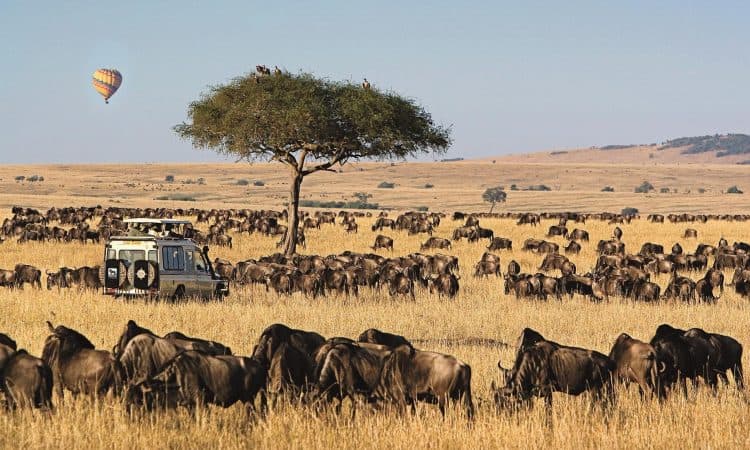
And then there is the migration. The wildebeest arrive in the Mara from the Serengeti generally between late June and early July, with peak numbers through August and September. The river crossings, when they happen, are among the most intense wildlife events on the planet.
What to expect in peak season:
- ›Higher accommodation rates, often 30-50% above green season prices at many camps
- ›Advance booking is essential because good conservancy camps book out six to twelve months ahead
- ›Vehicle congestion at crossing points and active predator sightings in the main reserve
- ›Exceptional wildlife density and predator activity
- ›Cooler temperatures than much of the year, particularly in June and July
A note on the crossings: River crossings cannot be predicted. They happen when the wildebeest decide to cross, which can be multiple times in one day or not at all for several days. Clients who arrive expecting a guaranteed crossing on a specific day will sometimes be disappointed. Those who commit to at least five nights and manage their expectations have more opportunities to observe a crossing.
January and February
January and February are, in Zorani's view, one of the most underappreciated windows in the Mara calendar.
The short dry season between the short rains (ending around December) and the long rains (starting around March) produces excellent conditions. The grass is short. Visibility is good. The sky is often clear. Predator activity is strong because prey such as zebra, topi, and Thomson's gazelle is numerous and concentrated on the cropped, open plains.
Visitor numbers are substantially lower than July-October. Many of the best conservancy camps have availability. Green-season rates are often still in effect. A client who wants a high-quality, immersive wildlife experience without the vehicle congestion of peak season will often have the best overall experience in this window.
Cheetah sightings are particularly good in January and February. Lionesses with cubs born in the second half of the previous year are often active and visible. Leopard sightings in the riverine forest are reliable for patient observers.
The one caveat: the wildebeest and zebra migration herds are in Tanzania's Serengeti during this period, moving through the calving grounds of the southern plains. The spectacular river crossings of peak season are not available. But the resident wildlife more than compensates for clients whose primary interest is predator behaviour.
March to May: Long Rains
This is the most complex period for planning.
The long rains bring sustained rainfall, often daily and sometimes heavy. The Mara's murram tracks, built for dry conditions, deteriorate significantly. Some sections become impassable without specialist vehicles. Parts of the reserve become effectively inaccessible. Wildlife is harder to find because long grass conceals animals that would be immediately visible in the dry season, and herds disperse widely when water and grazing are abundant.
Some camps close for maintenance and deep repairs during March to May, particularly in April and early May. This is when infrastructure gets fixed and camp expansions happen.
That said, the green season has its advocates and its genuine appeal. The landscape is lush and visually dramatic, with deep green plains against stormy skies and wildflowers across the ground level. Birdwatching reaches its annual peak, with large numbers of migratory birds still present through April. The calving wildebeest are in Tanzania during this period, but photographic opportunities in the Mara itself can be exceptional.
For a first visit, Zorani would generally steer clients away from April and early May unless they have a specific reason for this window, such as price, a birdwatching focus, or prior Mara experience and a desire to see it in a different state. For return visitors who know the Mara and want a more private, different experience, the green season has real value.
Late May is transitional. The rains ease. Grass begins to dry. Camps reopen. Wildlife becomes more concentrated again. A late May visit can work well for clients who want the green landscape but with improving conditions.
June
June is a useful transition month. The long rains are usually over or tapering off by early to mid-June. The landscape retains some green from the recent rains while the grass begins to thin. Game viewing improves steadily as the month progresses.
By late June, the first wildebeest herds are beginning to move north from the Serengeti towards the Mara. The main body of the migration typically arrives in July, but advance scouts can appear in late June. Camps that were running green season rates often transition to high season pricing during this month.
June is a reasonable choice for clients who want good wildlife, transitional landscape photography (the Mara looks exceptional in this green-to-golden transition), and slightly lower prices than full high season.
November: Short Rains
November is interesting. The migration herds begin to move back south into Tanzania through October and early November. The wildebeest are largely gone from the Mara by November, though the process is gradual and overlapping.
The short rains arrive, and the landscape changes quickly. The plains green up again. Migratory bird species arrive from Europe and northern Africa, including rollers, bee-eaters, and storks. The birding quality in November is excellent.
Resident predators remain highly active. The breeding season of many antelope species falls in this period, and the resulting newborns draw predator attention. Impala lambing in November creates intense predator activity across the ecosystem.
Visitor numbers drop noticeably after October. Camps often revert to green season rates. November is a genuine sweet spot for clients who care less about the migration and more about predators, birds, and a quieter, less crowded experience.
The weather can be inconsistent. Heavy storms are possible on some days, and the roads in the main reserve can become muddy. Conservancy camps with better road infrastructure handle November more gracefully than the main reserve.
December
December is variable. The short rains often ease by mid-December, producing a drier latter half of the month. The festive period brings an influx of visitors, and the week between Christmas and New Year is one of the busiest and most expensive periods in the Mara calendar.
A December visit outside the festive surge can work well, particularly during the first two weeks of the month. Wildlife is good, visitor numbers are moderate, and the transition from short rains towards the January dry spell produces decent conditions. Festive period December (22 December to 3 January) commands premium rates and requires advance booking.
Month-by-Month Summary
January: Excellent. Dry conditions, short grass, good predator activity. Low visitor numbers. Underrated. February: Excellent. As above, with strong cheetah and lion sightings. Good value relative to peak season. March: Transitional. Long rains begin, usually mid-month. Conditions deteriorate through the month. April: Difficult. Peak long rains. Roads poor, wildlife dispersed, some camps closed. Not recommended as a first visit. May: Improving from mid-month. Rains easing. Green landscape, good birding. Roads recovering. June: Good. Transition month. Improving conditions. First migration arrivals late in the month. July: High season begins. Migration herds building. River crossings possible. Dry, clear conditions. August: Peak migration. River crossings at highest frequency. Maximum wildlife density. Busiest and most expensive month. September: Excellent. Migration herds still present. Crossings continue. Slightly fewer visitors than August. October: Good to very good. Migration beginning to move south. Strong resident wildlife and predator activity. Crowding eases. November: Very good for birdwatching and predators. Rains begin. Quiet and good value. Not migration season. December: Variable. Early December good; festive period expensive and busy; late December improving.
Wildlife Throughout the Year
Lions: Present and visible year-round. Cub activity is most visible roughly six months after the peak wet season, so both mid-year and early-year periods often show active cubs. Lion sightings are reliable in every month.
Cheetah: Best in the dry season on short-grass plains. January-February and June-October are strongest. Harder to find in long grass during and after the rains.
Leopard: Present year-round in riverine vegetation and woodland. Sightings are possible in any month but require patience and a good guide.
Hyena: Active year-round. Most dramatically seen in large clan groupings during the migration period, when prey is most abundant.
Elephants: Resident and seen year-round, with herds often moving between the conservancies and the reserve. More widely dispersed in the wet season.
Wildebeest and migration: In the Mara from approximately late June through October; in Tanzania's Serengeti for the remainder of the year.
Birdwatching Seasons
The Mara holds over 450 recorded bird species. Resident species are present year-round, including secretary bird, lilac-breasted roller, kori bustard, fish eagle, and numerous raptors such as martial eagle, bateleur, and long-crested eagle.
The best birdwatching window is November through April, when Palaearctic migrants are present. European and Central Asian species arrive from September-October and remain through to March-April, dramatically expanding the species count. November and April are peak migration periods when both northbound and southbound passages overlap with good resident populations.
Photography: Seasonal Considerations
Dry season (July-October): Golden grass, clear skies, concentrated wildlife, dramatic crossing action. High-contrast light conditions. Dust can affect lens performance, so a sealed housing or dust-protective bag is advisable.
Green season (November-May): Dramatic skies, saturated colours, lush backgrounds. Harder to find and separate animals from vegetation in long grass. Storm-light photography opportunities in November and April can be exceptional.
January-February: Short grass, clear air, excellent open-plain photography. Often ideal for cheetah sequences given their reliance on open terrain.
Travel Tips for Different Trip Types
First-time visitors: August or September gives the best combination of migration access, dry conditions, and strong wildlife density. January or February is the next best choice if July-October dates are unavailable or beyond the planned spend.
Return visitors: November, February, or a June shoulder-season visit offers a different character from peak season, with fewer vehicles, lower prices, and a more personal experience of the ecosystem.
Families with children: School-holiday timing, camp age policies, drive length, and room configuration matter more than a promise of dramatic sightings. Drier periods can make road conditions easier, while quieter months may offer a calmer pace. Match the month to the family's priorities rather than relying on a single best window.
Birdwatchers: November through April, with November and March as the strongest months for both Palaearctic migrants and resident species.
Photographers: The crossings in August and September for action; January and February for clean, open-plain cheetah and lion work; November for dramatic light and saturated landscape.
Value-conscious clients: January-February, late May, or November offer the best value. Green-season rates at many camps can be 30-40% below peak prices.
Frequently Asked Questions
Is August always the best month to visit? August has the highest probability of river crossing action and peak wildlife density. But it is also the most crowded and most expensive month. January and February often produce better individual experiences for clients whose priority is predator behaviour rather than the crossing spectacle.
Can the migration timing be predicted in advance? Broadly, but not precisely. The general arrival window in the Mara is late June to early July, with peak numbers in August. Year-to-year variation means the herds can be early or late by several weeks. Planning for a July arrival and staying through to mid-August gives a strong probability of migration access without depending on a specific week.
What should I pack for a July or August visit? Bring warm layers for early morning drives because temperatures before sunrise can be 10-12°C. Pack light clothing for afternoon drives and camp, a lightweight waterproof jacket in case of isolated showers, and neutral colours throughout.
How far in advance should I book for peak season? For August travel, Zorani recommends booking six to twelve months in advance. The best conservancy camps are small and fill early. Waiting until four months before travel in August means meaningful limitations on camp choice.
Related Guides
Speak to a Zorani travel specialist to find the right time for your journey.
Zorani Expeditions
Experience the Masai Mara
Every Zorani journey is tailored to the specific client. Let us build the right itinerary around your preferences.
Enquire Now