East Africa
Rwanda
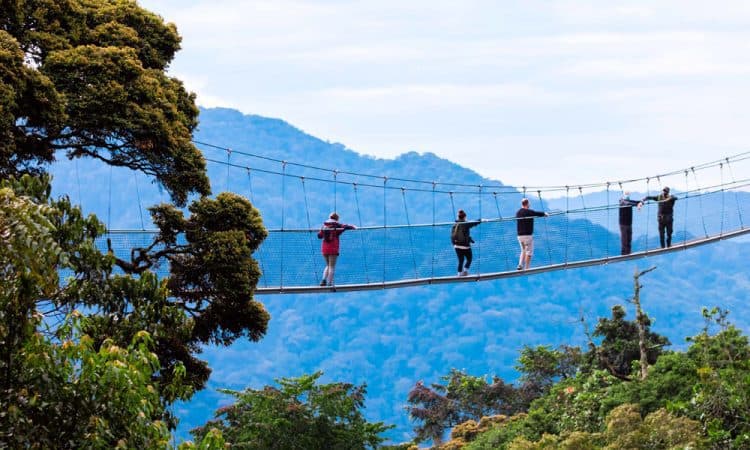
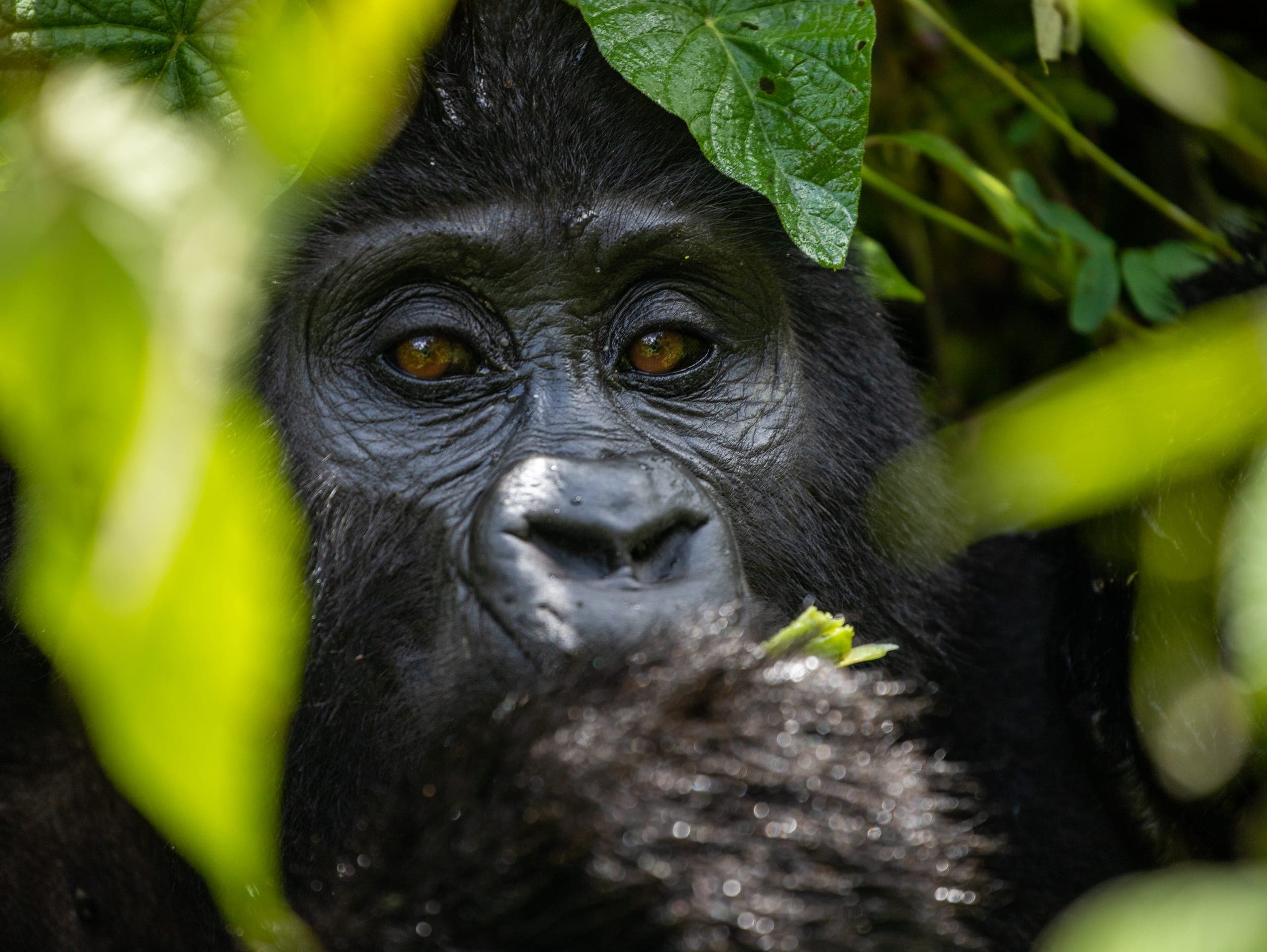
Mountain gorillas in the Virunga volcanoes. Chimpanzees and colobus monkeys in Nyungwe's ancient forest. Buffalo, elephant, and lion returning to Akagera after decades of absence. Rwanda covers three very different ecosystems in a country smaller than the state of Maryland — and the infrastructure connecting them is, by regional standards, unusually efficient.
Precision in Steep Terrain
Rwanda is compact, steep, and controlled by elevation.
Volcanoes National Park defines the core experience. Gorilla trekking takes place in dense bamboo and volcanic slopes where every step is dictated by terrain. Distances are short. Effort is constant.
Outside the forest, the country remains structured. Short transfers, consistent roads, and lodges that sit within a tightly managed system. Nothing drifts. Everything holds shape.

ZORANI EXPEDITIONS
Plan your Rwanda safari
Start planning your Rwanda safari with expert guidance on when to go, what it costs, where to stay, and how to build the perfect itinerary across the country.
Why visit
Rwanda
Rwanda holds Volcanoes National Park's mountain gorillas, Nyungwe's chimpanzees and canopy walkway, and Akagera's recovering Big Five savannah. Africa's most compact primate destination, with serious wildlife across three distinct ecosystems.
Rwanda key facts
Rwanda is a small, landlocked country in Central-East Africa bordered by Uganda to the north, Tanzania to the east, Burundi to the south, and the Democratic Republic of Congo to the west. It sits on a high-altitude plateau with elevations averaging over 1,500 metres across most of the country, earning it the description "land of a thousand hills" — which refers accurately to the terrain. Lake Kivu forms the western border with the DRC and is the sixth-largest lake in Africa by volume.
Seasonal Calendar
The Regions
Explore Rwanda

Volcanoes National Park
Volcanoes National Park covers 160 km² of montane forest and bamboo zone on Rwanda's northern border, protecting five of the eight Virunga volcanoes — Karisimbi, Bisoke, Muhabura, Gahinga, and Sabyinyo. The park is the Rwandan section of a transboundary conservation area shared with Uganda's Mgahinga and the DRC's Virunga National Park. The mountain gorilla families that move through this landscape do not recognise those borders; the park management does, and the Rwandan side holds the largest number of habituated families available for trekking.
Ten gorilla families are currently open for daily visits, each limited to eight permits. The standard permit costs $1,500 per person and allows one hour with the family once located. That hour is the anchor of most Rwanda itineraries and the reason most people visit the country. The encounters are close — gorillas in the Virunga families are thoroughly habituated and go about their activity largely indifferent to the presence of visitors. What varies is the physical effort required to reach them. Some mornings the family is found within an hour of the trailhead; others require a four to five-hour push through steep, densely vegetated terrain at altitude. There is no way to predict this in advance. Porters are available at the trailhead and are genuinely useful — not simply a tourism add-on — on days when the trek is long.
The Bisoke volcano crater hike and the Dian Fossey research camp trail are available as separate activities for travelers staying multiple nights in the area. Neither is necessary for a standard gorilla visit, but they suit clients who want more time in the Virunga landscape beyond the gorilla permit.
The base for most Volcanoes Park visits is Musanze town, roughly two and a half hours by road from Kigali. The better lodges sit on the park boundary itself, with views of the volcanoes on clear mornings. Two nights in the north is the standard for a single gorilla trek; three nights allows for golden monkey tracking on a separate day or a second gorilla permit if the family allocation permits.
Essential Information
How Long to Stay
A focused Rwanda journey covering Volcanoes National Park and Kigali takes four to five days and suits travelers adding Rwanda as an extension to a Kenya or Tanzania itinerary. It is a functional minimum but leaves no room for anything beyond a single gorilla trek and transit days.
A complete Rwanda circuit — Volcanoes, Nyungwe, and Akagera — takes eight to ten days and is the right framework for travelers making Rwanda the primary destination. This allows two nights per park plus Kigali time and a Lake Kivu stop if wanted. Trying to cover all three parks in five days results in a journey spent mostly driving.
For gorilla-specific travel, two to three nights at Volcanoes Park is the standard — enough for one gorilla permit, a golden monkey tracking morning, and time in the landscape without rushing. Clients wanting two gorilla permits on the same trip should allow three nights and book permits well in advance given allocation limits per family.
Rwanda combines efficiently with Uganda for a longer primate journey. Volcanoes shares the Virunga ecosystem with Uganda's Mgahinga and is roughly four hours by road from Bwindi's Nkuringo sector via the Kyanika border crossing. This cross-border circuit — gorillas in both countries across two permits — is a strong itinerary for serious primate travelers and requires a minimum of eight days for the primate section alone.


Accommodation
Volcanoes National Park has the widest and best-developed selection of accommodation in Rwanda. Properties on the park boundary combine the practical advantage of early morning access to the trailheads with views of the volcanoes. The range runs from mid-tier lodges with reliable standards to a small number of higher-end properties with good food and well-briefed guides. The distinction at the top end is guiding quality and the attention given to pre-trek briefing and logistics.
Nyungwe has a smaller selection, though standards have improved significantly over the past five years. The best-positioned properties sit at forest elevation with direct trail access. Accommodation here is more limited in choice than Volcanoes; booking early is important for the better options during peak months.
Akagera has two well-run lodge options within the park, both managed to a consistent standard. The choice between them is largely a matter of position — one sits above the lake chain, the other closer to the northern game drive area. Either works as a base for a two-night visit.
Kigali has a strong range of city hotels including several international brands and a growing number of well-designed independent properties. For a single night at the end of a circuit, a city hotel close to the airport makes practical sense. For a longer Kigali stay, the Nyamirambo neighbourhood properties offer more character.
Frequently Asked Questions
How do I get around Rwanda on a safari?
Rwanda is small enough that private road transfers are practical for most circuit legs. Kigali to Volcanoes is two and a half to three hours on paved road. Kigali to Nyungwe is four to five hours. Kigali to Akagera is two to three hours. A full circuit by road is manageable over eight to ten days without domestic flights. For travelers combining with Uganda, road transfer via the Cyanika or Katuna border crossings is standard and straightforward.
How do gorilla permits work in Rwanda?
Permits are $1,500 per person, issued through the Rwanda Development Board or licensed operators. They must be booked in advance — availability during June to September and December is limited and should be treated as the first logistical constraint when planning, not the last. Cancellation policies are strict.
What are the health and vaccination requirements?
Yellow fever vaccination is required for travelers arriving from or transiting through yellow fever-endemic countries. Malaria prophylaxis is recommended for Akagera and lower-altitude regions. The Virunga highlands and Nyungwe are at higher altitude with lower but not absent malaria risk. Medical advice from a qualified clinic before travel is standard.
What currency should I bring?
The Rwandan franc is the local currency. US dollars are accepted at lodges and most tourist-facing businesses. Credit cards are accepted at the better properties and in Kigali. Carry cash for smaller transactions and tips.
Do I need a visa for Rwanda?
Rwanda operates a visa-on-arrival system for most nationalities, though e-visa applications in advance are available and straightforward. Citizens of the African Union member states do not require a visa. The East Africa Tourist Visa — covering Rwanda, Kenya, and Uganda — is worth considering for multi-country journeys. Requirements should be confirmed at the time of booking.
Will altitude affect my gorilla trekking?
Volcanoes National Park trailheads sit between 2,400 and 2,600 metres. Gorilla treks ascend further. Travelers with cardiovascular or respiratory conditions should discuss the trekking altitude with their doctor before planning. A degree of breathlessness on the climb is normal; it should not be confused with altitude sickness, which is uncommon at these elevations but possible in sensitive individuals.

Plan Your Rwanda Journey
We plan Rwanda routes around permit availability, park sequencing, and the right balance between gorilla trekking in the north, forest time in Nyungwe, and savannah in Akagera — so the circuit makes sense on the ground and nothing is left to a rushed half-day.
Speak to a travel specialist