TANZANIA · EAST AFRICA
Arusha
Mount Meru, seasonal flamingos, and colobus monkeys within practical reach of Arusha
TANZANIA · EAST AFRICA
The Gateway Park of Northern Tanzania
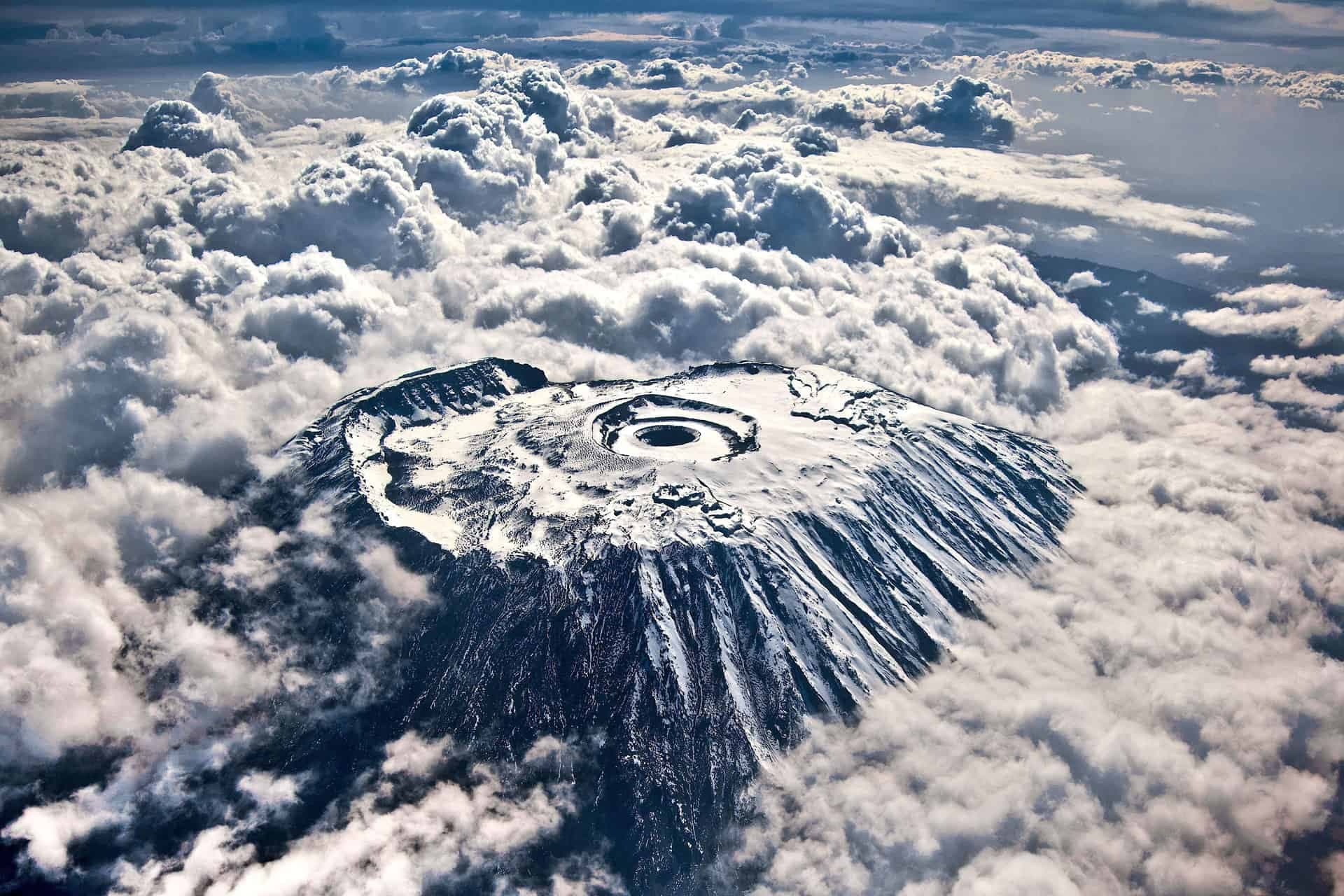
Arusha National Park sits 25 kilometres east of Arusha town, within easy reach of Kilimanjaro International Airport, and offers a compact and distinctive set of experiences that the northern circuit parks further afield cannot replicate in the same way. It is not primarily a big-game park; the species list does not include lion or buffalo, and it is rarely included on standard wildlife itineraries. What it offers instead is walking, canoeing, the Momella Lakes bird system, and access to Mount Meru, Africa's fifth-highest mountain.
Mount Meru at 4,566 metres is a significant mountaineering objective in its own right, and the four-day ascent through the park's montane forest, heath, and moorland zones is considered excellent preparation for Kilimanjaro. The mountain is far less crowded than Kilimanjaro and the route includes a substantial wildlife encounter in the lower forest sections.
For travelers arriving in or departing from Arusha, a half-day or single-night visit to the park adds a different layer to a northern Tanzania journey. For those with time and physical condition, a Mount Meru trek is one of the most rewarding mountain experiences in Tanzania.
Safari Experiences
The Case For Arusha
Why Visit Arusha
The park's value is most clear for travelers who are in Arusha at the start or end of a longer northern Tanzania journey. A morning walk in the Ngurdoto Crater rim forest or a canoe trip on the Momella Lakes adds a different dimension that the vehicle-based game parks further west do not provide.
Mount Meru is the deeper case for visiting. The 4-day circuit trek is technically demanding but accessible to fit walkers without technical climbing experience. The lower forest sections are excellent for close encounters with buffalo and elephant on foot. The upper moorland and the crater rim circuit have a stark, high-altitude character that is rare in the region. On a clear day the summit offers views across to Kilimanjaro that are genuinely extraordinary.
The park also contains one of Tanzania's better sites for black-and-white colobus monkey, which are regularly seen in the montane forest sections near the Ngurdoto Crater and along the lower Meru approach route.
Safaris Through Arusha

Terrain & Ecosystem
Landscape & Environment
The park's terrain spans a significant altitude range, from the Momella Lakes sitting at approximately 1,500 metres, through the forest and heath zones on the Meru flanks, to the summit at 4,566 metres. Each zone has a distinct character.
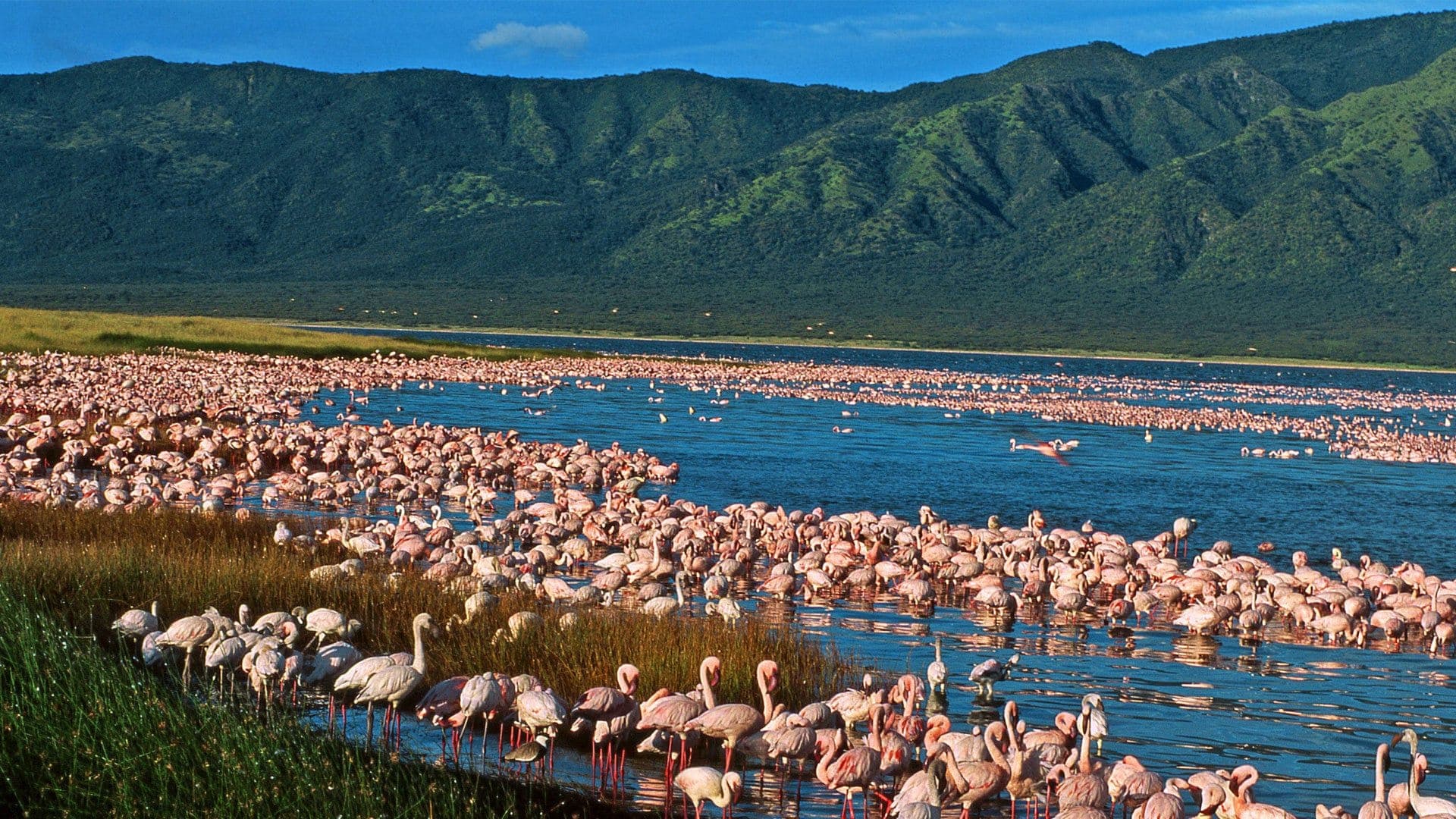
The Momella Lakes are a series of alkaline and freshwater crater lakes fed by underground springs. Each lake has slightly different chemistry and supports different algae types, which draws different flamingo and waterbird species to individual lakes. The variation between adjacent lakes is noticeable and makes canoeing between them a genuinely educational activity.
The Ngurdoto Crater is a small extinct volcanic caldera in the southeast of the park, now forested. Access to the crater floor is not permitted, preserving it as an undisturbed wildlife sanctuary. The rim provides walking trails with views into the forested floor below.
The montane forest on the Meru approach contains a mix of olive, podocarpus, and fig trees, transitioning to heath and giant heather above 2,800 metres and then to alpine desert near the summit.
Fauna
Wildlife Highlights
Giraffe and zebra. The open grassland sections of the park support reliable giraffe populations, visible from the road and on walks. Zebra graze in the Momella Lakes area and the grassland zones.
Colobus monkey. The montane forest sections hold good populations of black-and-white colobus, one of Tanzania's most distinctive primates. They are reliably found in the forest along the Meru approach and around the Ngurdoto Crater rim.
Buffalo. Large buffalo herds live within Ngurdoto Crater, visible from the rim trails. Access to the crater floor is restricted, so buffalo here are a viewing-from-above experience rather than a close encounter.
Elephant and buffalo on Meru. The lower forest sections of the Mount Meru trek pass through elephant and buffalo territory, and armed ranger accompaniment is mandatory. Wildlife encounters on the lower trail are a genuine feature of the trek.
Flamingo. The alkaline Momella Lakes support both lesser and greater flamingo. Numbers fluctuate but the visual of flamingo against the Mount Meru backdrop is consistently good.
Birdlife. Over 400 species recorded. The forest sections hold a rich diversity including silvery-cheeked hornbill, Hartlaub's turaco, and various sunbirds. The lakes hold African fish eagle, saddle-billed stork, and a large variety of wading species.
On the Ground
Safari Experiences
Walking safaris. The park is one of the few in Tanzania where walking is a primary rather than supplementary activity. Guided walks explore the Ngurdoto Crater rim, the Momella Lakes shore, and the montane forest sections. All walks are with an armed ranger. The terrain is manageable and accessible to a wide range of fitness levels.
Canoeing on the Momella Lakes. A genuine standout activity. Canoe trips operate on the lakes and allow wildlife viewing from water level, with flamingo, hippo (in some sections), and waterbirds accessible at very close range. This is one of the most distinctive activities available in any Tanzanian national park.
Mount Meru trek. The four-day ascent follows the Momella Gate route via Miraukamba (Hut 1) and Saddle Hut (Hut 2) to the summit. It requires a reasonable level of fitness and appropriate gear for cold summit conditions. Armed ranger accompaniment is mandatory throughout. The trek provides excellent preparation for Kilimanjaro and is worthwhile as a standalone objective.
Game drives. Vehicle game drives are available in the grassland zones around the Momella Lakes and are the appropriate format for families with young children. The drives are more relaxed and less wildlife-intensive than the northern circuit parks but offer genuine access to giraffe, zebra, and warthog.
Regions of the Park
Momella Lakes area. The core accessible zone for day visits, half-day trips, and family visits. Canoeing, vehicle game drives, and short walks are all based here. The gate at Momella is the main entrance.
Ngurdoto Crater rim. Forest walking along the rim of the forested caldera. Good for colobus monkey and forest bird species. Views into the crater are the primary draw.
Mount Meru trek zone. The south-facing slopes and upper mountain form the trek zone. Miraukamba Hut at approximately 2,500 metres and Saddle Hut at approximately 3,600 metres are the overnight positions. The summit attempt departs Saddle Hut before dawn.
Planning Your Visit
Best Time to Visit
June to February. The clearest period for Mount Meru summit conditions. The dry season from June to October is the most predictable. December and January, the short dry spell, is also good. Views from the summit to Kilimanjaro are most reliable during these months.
March to May (long rains). Summit conditions become unreliable and forest trails are wet and muddy. Not recommended for the Meru trek, though shorter lower-altitude activities remain possible.
Year-round for day visits. The Momella Lakes and lower walking areas are accessible year-round, though the wet months make conditions muddier.
Getting There
By road from Arusha. The park is approximately 25 kilometres east of Arusha, roughly 30 to 40 minutes by road. The Momella Gate is the main access point. No air connection is required or available.
From Kilimanjaro International Airport. Approximately 45 minutes by road. The park is positioned directly between KIA and Arusha, making a half-day or full-day visit practical on arrival or departure days.
As a circuit addition. Arusha National Park works as an add-on at the start or end of a northern Tanzania circuit without requiring separate logistics. Clients arriving from KIA can stop at the park in the morning before continuing to Tarangire or Manyara in the afternoon.
How Many Nights
Half-day. Sufficient for a canoe trip on the Momella Lakes or a short forest walk. A practical addition for travelers transiting through Arusha.
One full day. Allows a morning canoe and an afternoon walk to the Ngurdoto Crater rim, or a more extended lake circuit with a picnic lunch in the park.
Four days for Mount Meru. The standard trek duration. Two nights at mountain huts, a summit night, and a descent day. This is a dedicated trekking itinerary rather than a game-viewing addition.
Where to Stay
Accommodation options within or near the park are limited. The focus is on Arusha-based lodges used as staging accommodation for the northern circuit, rather than the park itself as a primary lodge destination.
Luxury Lodges and Camps
Hatari Lodge, situated on the park boundary, is one of the most distinctive properties in the Arusha area, combining a strong architectural character with direct park access and a history connected to John Wayne and Howard Hawks' 1962 film of the same name. It offers game drives and walks within the park from its own boundary.
Midrange Lodges and Camps
Several midrange Arusha hotels and lodges position themselves as pre-circuit staging properties. These are functional stays rather than safari destinations in their own right.
Combining With Other Destinations
As a pre-circuit arrival activity. The most natural use. Clients arriving at KIA and spending the first night in Arusha can visit the park on arrival day or the following morning before heading west to Tarangire or Manyara.
With Mount Kilimanjaro. Arusha is the standard staging town for Kilimanjaro climbs. Clients completing a northern Tanzania circuit can add a Kilimanjaro or Meru trek through Arusha.
Northern Tanzania circuit. Tarangire, Manyara, Ngorongoro, and the Serengeti can all be reached from Arusha, with the park as a day-1 or final-day addition.
Photography
The Momella Lakes canoe trips provide unusual photographic conditions: water-level flamingo at close range, reflections on calm alkaline water, and the Mount Meru backdrop. Early morning departures produce the best light and the calmest lake surfaces.
Forest photography along the Ngurdoto rim is rewarding for colobus monkey, with animals sometimes at arm's reach in the canopy above the trail. The filter of montane forest light makes for atmospheric shots with a 50 to 100mm focal length.
Summit photography on Mount Meru at dawn, with Kilimanjaro visible on the horizon in clear conditions, is one of the most distinctive images available in Tanzania.
Arusha Questions
Can you climb Mount Meru in Arusha National Park?
Yes. Mount Meru at 4,566 metres is Tanzania's second-highest peak and a serious mountaineering objective accessible from within the park. The standard route is a four-day ascent via Momella Gate, passing through montane forest, heath zone, and the high moorland to the crater rim. An armed ranger accompaniment is mandatory throughout the climb. The route requires good fitness but no technical climbing skill on the standard path.
How does climbing Mount Meru compare to Kilimanjaro?
Meru is lower (4,566m vs 5,895m) but the ascent involves sections of narrower ridge and crater rim scrambling that Kilimanjaro's standard routes do not require. It is significantly less crowded (Meru receives a fraction of Kilimanjaro's visitor numbers) and the wildlife encounters in the lower forest are a genuine addition to the experience. Many climbers regard Meru as a superior mountain experience precisely because of its wildness. It is widely recommended as acclimatisation preparation before Kilimanjaro, though it stands well on its own.
Are walking safaris available in Arusha National Park?
Yes. Arusha is one of the few national parks in Tanzania where walking safari is a primary activity rather than a supplement to game drives. Guided walks explore the Ngurdoto Crater rim, the Momella Lakes shore, and the montane forest sections. All walks are accompanied by an armed ranger. The terrain is accessible to a wide range of fitness levels and provides a fundamentally different perspective from vehicle-based safaris: giraffe at close range on foot in the acacia woodland is a highlight.
Is Arusha National Park worth a day trip?
Yes, particularly for travellers passing through Arusha between flights or at the start or end of a longer safari. A half-day canoe trip on the Momella Lakes and a short forest walk can be accomplished in a morning. The park is 25 kilometres east of Arusha town and easily reached without an overnight stay. It adds a genuine wildlife dimension to what would otherwise be a transit day: the lake canoe trip especially is an experience not replicated anywhere else on the northern Tanzania circuit.
What wildlife does Arusha National Park have? Are there big cats?
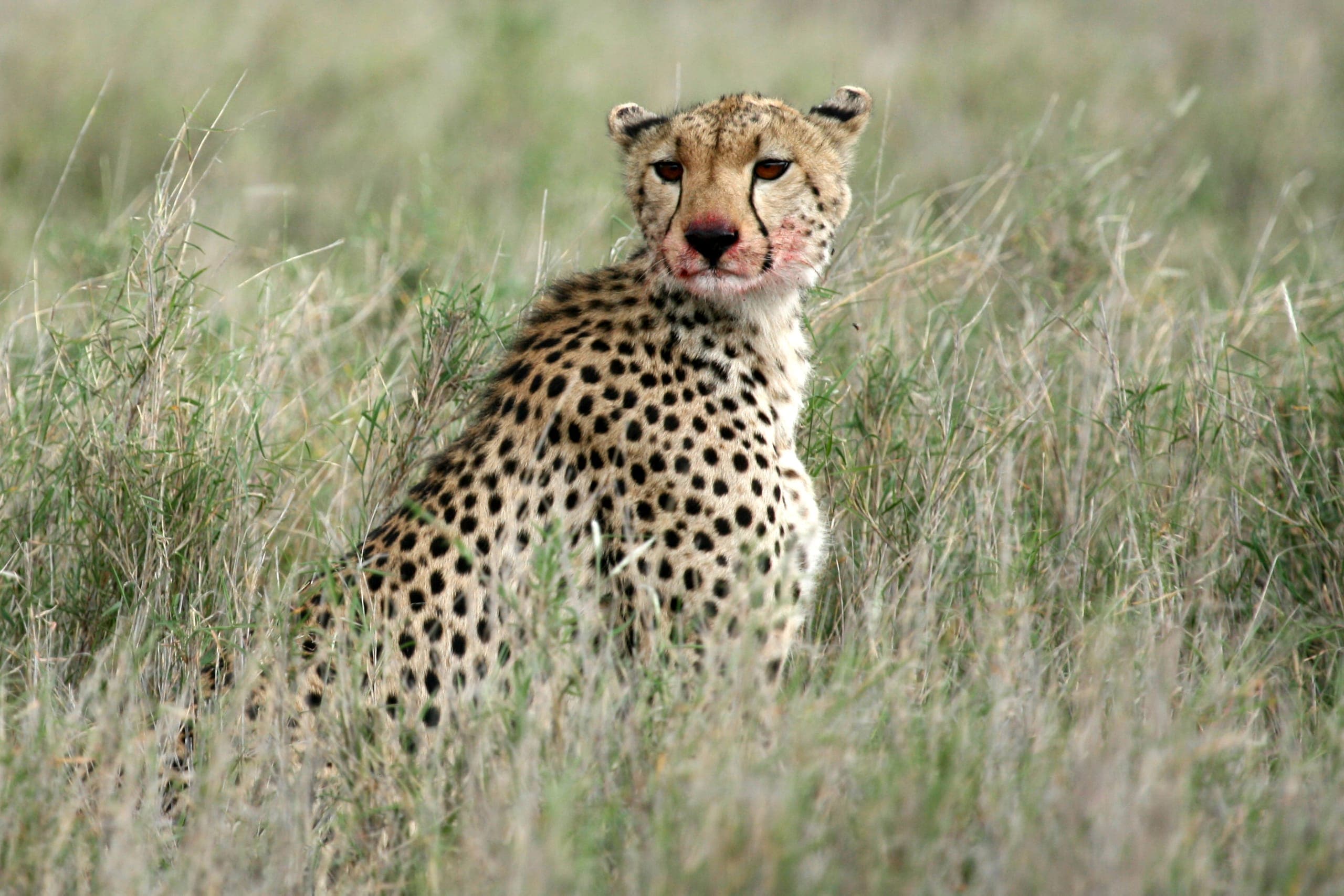
Lion are absent from Arusha National Park. The wildlife list is dominated by giraffe, zebra (in the Momella Lakes grassland areas), buffalo (concentrated in Ngurdoto Crater, accessible from the rim), colobus monkey in the forest, and elephant on the montane forest slopes of Meru. Flamingo use the Momella Lakes and are reliably present in some numbers. The absence of big predators is precisely why walking safari is permitted here: it is a safe walking environment in a way that the Serengeti or Tarangire are not.
How does Arusha National Park fit into the northern Tanzania circuit?
Arusha National Park sits at the very beginning or end of the standard northern Tanzania circuit (Arusha → Tarangire → Ngorongoro → Serengeti). It is not typically a central part of a wildlife-focused itinerary because it lacks big predators and the density of game seen further on the circuit. Its value is as a half-day or overnight addition around Arusha arrival or departure, or as the starting point for a Mount Meru climb before the circuit begins. For travellers with specific interest in montane forest, birdwatching, or walking safaris, it deserves more dedicated time.
What is the best time to visit Arusha National Park?
The dry season from June to October is the most comfortable period, with clear skies and well-maintained trails. The Momella Lakes flamingo numbers fluctuate throughout the year. The park sits at relatively high altitude and is greener than most Tanzanian parks year-round; even in the dry months it does not have the dust and bare-earth quality of lower-altitude savannah parks. The short rains of November and the long rains of April are workable but less comfortable for walking.
Zorani Expeditions
Plan Your Arusha Safari
Every Journey we design is built around your goals, not a standard route.
Speak to a Specialist