
TANZANIA · EAST AFRICA
Tarangire
Dry-season elephant concentrations along the Tarangire River and old baobab groves
TANZANIA · EAST AFRICA
Baobabs, Elephants, and the Dry Season
Tarangire National Park sits in northern Tanzania, roughly two hours southwest of Arusha, and operates on a logic that most parks do not: its wildlife is seasonal and concentrated, and the dry-season version of Tarangire is categorically different from the park outside those months.
From June through October, the Tarangire River becomes one of the few permanent water sources across a wide region of dry savannah. Animals converge on it from the surrounding Maasai steppe and Manyara basin in significant numbers. Elephant herds gather in concentrations that are among the most impressive in Africa, and the landscape they move through, dominated by ancient baobab trees and open grassland, creates a visual context that is distinct from the Serengeti or the crater.
Tarangire is not always included on northern Tanzania itineraries, and that is a mistake worth correcting. For travelers who want substantive wildlife and a landscape character of its own, Tarangire warrants two to three nights, particularly between July and October.
Safari Experiences
The Case For Tarangire
Why Visit Tarangire
The elephant factor is the starting point. During the dry season, Tarangire holds what is widely regarded as one of the highest elephant concentrations in Africa, with herds of 50 to 100 animals not unusual along the river. The combination of scale and setting, baobabs and open ground, river and sand, creates a visual quality that holds up well against any park in Tanzania.
The baobab landscape matters in its own right. Tarangire has ancient specimens that frame game drives in a way that is specific to this park. You will not see this particular combination of tree and terrain anywhere else in the northern circuit.
Tarangire also consistently produces a wide range of species. Oryx, greater kudu, and fringe-eared oryx occur here with more reliability than in other northern Tanzania parks. Wild dog are present in the broader ecosystem and sightings are possible, particularly in the dry season.
The park is less visited than the Serengeti or Ngorongoro, and the game drives feel calmer for it. Two or three nights here before moving south or west tends to set the tone well for a broader Tanzania journey.
Safaris Through Tarangire

Terrain & Ecosystem
Landscape & Environment
The Tarangire River is the defining feature. It runs roughly north to south through the park, flanked by riverine woodland, open grassland, and the large baobab specimens that Tarangire is most recognisable for. The river shrinks to pools and channels during the dry season, concentrating wildlife along its banks.
Away from the river, the landscape opens into semi-arid savannah with red dust soils, scattered acacia, and the Silale and Gurusi swamps. These swamps hold permanent water and support hippo and large bird populations year-round.
The southern areas of the park are more remote and less visited, transitioning toward the wider Tarangire-Manyara ecosystem, which includes private conservancies and the Maasai steppe to the south. Some operators run fly-camping or walking safaris in these southern sectors, which are wilder and considerably quieter than the northern areas near the main gate.
The park sits at roughly 1,000 metres above sea level. Temperatures are warm to hot during the dry season but drop to comfortable levels at night. The landscape looks and feels different from other northern Tanzania parks, less manicured, more textured, with the character of a working semi-arid ecosystem rather than an open-plains showpiece.
Fauna
Wildlife Highlights
Elephants. The primary draw during the dry season. Tarangire's elephant population is large, and the convergence of herds along the Tarangire River between June and October produces some of the most impressive elephant viewing in Africa. Family groups, young bulls, and the occasional large-tusked patriarch are all regularly encountered. The elephants are relaxed around vehicles, allowing close and prolonged observation.
Lion. Several prides occupy the park year-round. Tree-climbing behaviour has been documented in Tarangire, particularly around the larger baobabs in the central and southern areas, though this is less consistent than the tree-climbing lions of Uganda's Ishasha sector or Lake Manyara.
Wild dog. The pack structure in the Tarangire-Manyara ecosystem is active, and sightings within the park are possible, particularly during the denning season from May to July. Not guaranteed but worth noting as a possibility distinct from other northern Tanzania parks.
Leopard. Present throughout the riverine woodland and more commonly seen at dusk or during early morning drives close to the river. Sightings are less frequent than in open-country parks but the terrain is productive.
Greater kudu. Tarangire is one of the more reliable places in Tanzania for kudu. They occupy the rocky, brushy terrain along the river margins and in the southern sections of the park. Males with long spiral horns are occasionally visible on rocky outcrops.
Oryx. Common on the open grasslands east of the river. Fringe-eared oryx, the subspecies found in this region, are distinctive and add a species dimension missing from several other northern Tanzania parks.
Birdlife. Over 500 species recorded. The park is one of the best single sites in Tanzania for large raptors, including Martial eagle and Bateleur. Kori bustard, Southern ground hornbill, and various bee-eaters are consistent dry-season sightings. The swamps support large concentrations of wading birds.
On the Ground
Safari Experiences
Game drives. The core activity. The northern park circuit runs through baobab-dotted terrain along the river; southern routes into the Silale area are longer and quieter. Most camps run morning and afternoon drives of three to four hours each. Full-day drives are possible and useful for exploring the more remote southern areas.
Guided walking safaris. Some camps in the central and southern park offer guided walks with an armed ranger. The terrain, relatively open with clear sightlines, makes for manageable walking. Encounters with elephant, giraffe, and smaller species are realistic. This is not a replacement for game drives but adds a grounded, sensory dimension to the experience.
Night drives. Available from selected camps with special permits. Tarangire at night produces a different set of species, including porcupine, genets, small cats, and occasionally aardvark.
Fly-camping. Several operators offer one or two-night mobile camping in the remote southern park, combining guided walking and game drives in an area with almost no other visitors. This is a niche but strong option for experienced travelers.
Cultural visits. Maasai community engagement is available through some operators and camps in the areas bordering the park. Quality and depth vary by operator.
Regions of the Park
Northern sector (near main entrance gate). The most visited section, accessed from the main Tarangire Gate near Kwa Kuchinja. Highest concentration of animals during the dry season and the largest number of camps and lodges. Baobab density is highest here. Game drives are productive but vehicle numbers are greater than the southern zones.
Central riverine area. The middle section of the Tarangire River corridor is where the elephant concentrations are most consistent during the dry season. River crossings by large herds are periodically witnessed and represent some of the park's most striking wildlife events.
Southern sector (Silale Swamp and beyond). Notably quieter than the north. The Silale Swamp holds permanent water and attracts hippo, buffalo, and large numbers of wading birds. This sector suits travelers who want solitude alongside wildlife. Camps here tend to be smaller and more remote in feel.
Kuro sector. Accessed via Kuro airstrip in the southern park. Several luxury tented camps operate here with limited visitor numbers. This area extends into the wider ecosystem and forms the starting point for walking or mobile-camp itineraries.
Planning Your Visit
Best Time to Visit
June to October (dry season). The optimal period for wildlife viewing. The Tarangire River shrinks to a series of pools and channels, concentrating elephants, predators, and grazers along its banks. Bird diversity is high and vegetation is open enough to allow clear sightlines. Peak season from July to September brings the highest concentration but also the most visitor activity.
November. The short rains begin, the landscape greens quickly, and wildlife starts to disperse. A transitional period: fewer vehicles, lush scenery, but elephant concentrations thinning out.
December to February. The short dry season. Wildlife is more spread across the ecosystem than during the peak dry months, but the park is still productive. Calving happens across the broader ecosystem, which brings predator activity. A good period for birding and photography with green landscape.
Getting There
By air. Kilimanjaro International Airport (KIA) is the main arrival point for international travelers. From KIA or Arusha, charter or scheduled light aircraft flights connect to Kuro or Manyara airstrips. Road transfer from Arusha to the main gate takes approximately two hours.
By road. The main gate is accessible via the Arusha-Dodoma road, turning south at Kwa Kuchinja. Road surfaces are generally manageable year-round to the northern gate, though southern tracks require 4WD and may be impassable in heavy rain.
Connections to other parks. Tarangire pairs naturally with Lake Manyara (45 minutes from the main gate) and Ngorongoro (approximately 2.5 hours). It is the logical first or last stop on the northern Tanzania circuit. From Tarangire, some operators fly directly to the Serengeti or southward to Ruaha.
How Many Nights
Two nights. The minimum to justify the visit. Two full days allows productive game drives in the northern and central sections and a look at the Silale Swamp.
Three nights. The more useful allocation. Three days allows for a longer game drive into the southern sector, an afternoon walk, and time to absorb the baobab landscape rather than rush through it.
Four nights. Worth considering for serious wildlife photographers or for travelers who want to combine the main camp with a fly-camp in the southern sector. The park rewards extended time in a way that smaller parks do not.
Where to Stay
Camps and lodges are distributed across the northern, central, and southern park sectors. The northern options have the quickest access to river areas but tend to sit within shorter distance of the main gate and other vehicles. Southern camps offer isolation and a materially different experience.
Luxury Lodges and Camps
Several well-regarded luxury tented camps operate along the river and in the southern park sectors. The best are positioned to allow early morning access to the most productive areas without long drive times from camp. Tree house and elevated platform designs that bring guests into the baobab canopy are a distinctive feature of some northern-sector properties.
Midrange Lodges and Camps
The Tarangire area has a range of midrange camps that offer solid game-viewing access at lower cost. Several are positioned near the main gate and run standard full-board itineraries with qualified guides. A good option for travelers who want to combine Tarangire with Ngorongoro or Manyara without inflating overall journey cost.
Combining With Other Destinations
Lake Manyara National Park. The most natural addition. Manyara is 45 minutes from the Tarangire gate and works as a half-day or one-night stop, particularly for flamingo viewing and the famous tree-climbing lions. Many itineraries move between Tarangire and Manyara in a single day.
Ngorongoro Conservation Area. Two to three nights at Tarangire before continuing to Ngorongoro works well. The terrain shift from semi-arid savannah to highland crater adds visual variety.
Serengeti National Park. Tarangire fits into a northern Tanzania circuit that ends or begins with several nights in the Serengeti. Fly connections between Kuro and Seronera or the Serengeti south reduce road time.
Ruaha National Park. A more ambitious combination. Tarangire and Ruaha share an ecosystem character, with both park circuits dominated by elephants in a semi-arid landscape. Combining them within a Tanzania journey works well for clients who want to avoid the busier northern circuit parks.
Photography
Early morning game drives produce the best light on the Tarangire River, particularly from June to September when low-angle sunlight catches the dust from elephant herds crossing the dry riverbed. Position yourself in the river corridor at first light.
Baobab silhouettes at dawn and dusk are among the most distinctive photographic opportunities in Tanzania. The landscape rewards wide-angle compositions and the combination of tree scale and animal movement is hard to replicate elsewhere.
Raptor photography is strong in Tarangire. Bring a long lens for Bateleur, Martial eagle, and Southern ground hornbill sightings in open terrain. The swamps at Silale work well for bird photography from a vehicle positioned at water level.
Tarangire Questions
Why does Tarangire have so many elephants?
Tarangire holds the largest elephant concentration in Tanzania during the dry season, with populations that can exceed 3,000 individuals. The reason is the Tarangire River: it is one of the only permanent water sources in this part of northern Tanzania and acts as a magnet for wildlife as surrounding areas dry out from June onwards. Elephants travel hundreds of kilometres to reach the river during drought months, converging from the wider ecosystem. The density peaks between July and October, when herds of fifty to over one hundred individuals are commonplace along the river banks.
What makes Tarangire's baobab trees distinctive?
Tarangire has an unusually high density of ancient baobab trees, some of which are estimated to be over a thousand years old. The combination of elephant herds and baobab giants across open savannah creates one of the most visually distinctive safari landscapes in East Africa. The baobabs are particularly striking in the late dry season when the trees are leafless and their swollen trunks stand against a dusty gold landscape. Elephants frequently feed on baobab bark and flesh, and the trees carry the scars of generations of feeding.
When is the best time to visit Tarangire?
July to October is the peak dry-season window and the period when elephant numbers are at their highest along the river. August and September are the most dramatic months: concentrations are at their peak, grass is short, and predator activity around the herds is intense. November brings the short rains and a different kind of experience: the park greens up, wildebeest and zebra pour in from the surrounding ecosystem, and calving activity brings heightened predator density. December to February is also productive. The long rains of April and May are the weakest period.
How does Tarangire combine with the Serengeti and Ngorongoro?
Tarangire is the standard opening leg of the classic northern Tanzania circuit: Tarangire (2–3 nights) → Ngorongoro (1–2 nights) → Serengeti (3–5 nights). This sequence moves progressively away from Arusha and provides increasing dramatic scale: from the baobab-dotted river landscape of Tarangire to the enclosed wildlife bowl of Ngorongoro to the vast open Serengeti plains. It also sequences correctly for the dry season: Tarangire's elephant concentration is strongest in July and August when the Serengeti's northern river crossings are simultaneously at peak.
How do I get to Tarangire from Arusha?
The drive from Arusha to the Tarangire main gate takes approximately two to two and a half hours on good tarmac road: it is the closest major wildlife park to Arusha on the northern circuit. Charter aircraft can also fly in to the Kuro or Sangaiwe airstrips inside the park, which allows immediate game viewing on arrival. Most travellers road-drive into Tarangire from Arusha as the first leg of a road-based circuit, with the game drive beginning on entry.
How long should I spend in Tarangire?
Two to three nights is the right allocation. Two nights allows full-day game drives on both days, covering the river corridor and the baobab woodland. Three nights adds time to explore the southern sector (particularly the Silale swamp area and the Lemiyon woodland) which hold different habitat and can be extraordinary in the dry season. One night is possible but limits the experience significantly; the most impressive elephant concentrations and predator activity require time along the river at different points of the day.
What migratory species arrive in Tarangire during the dry season?
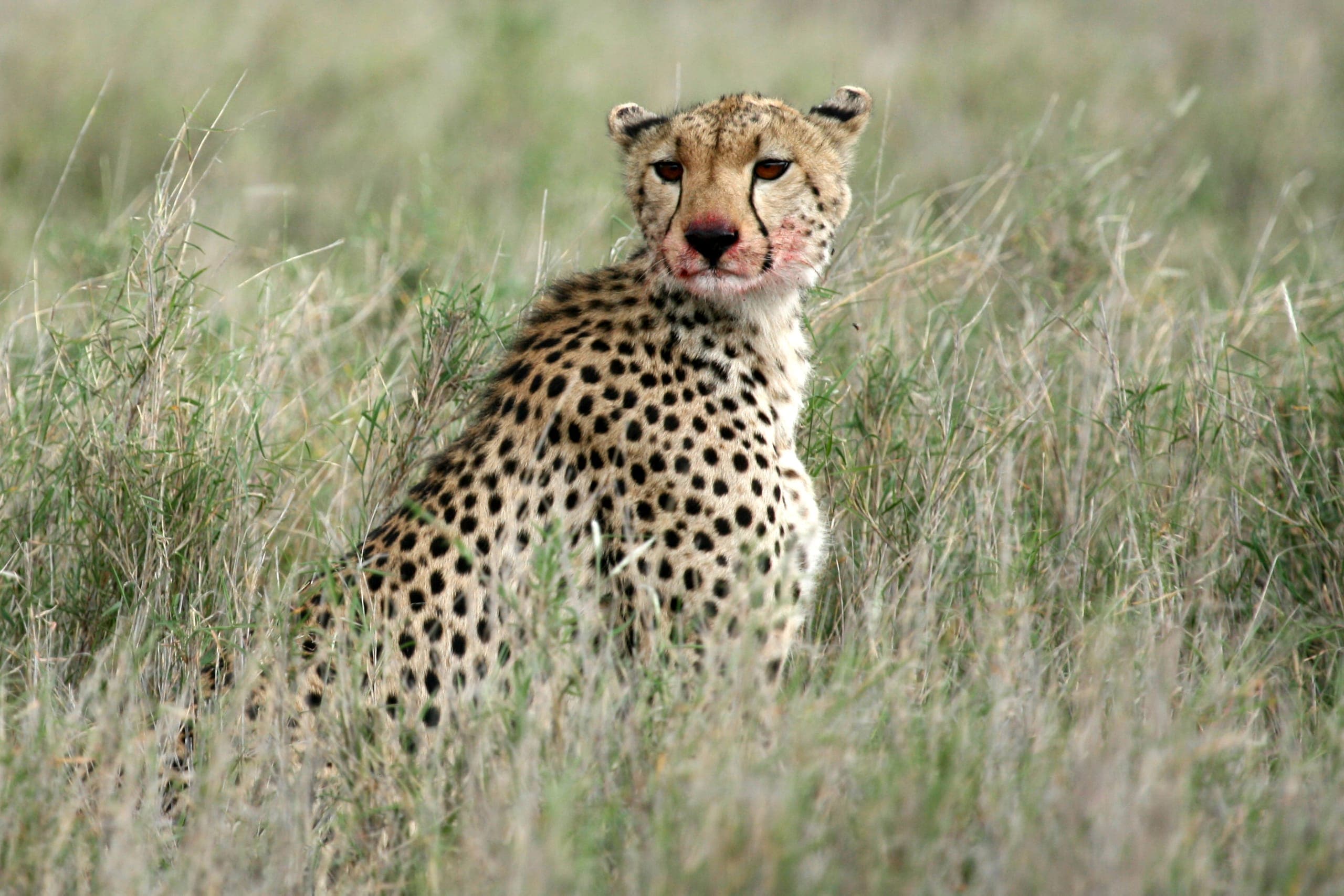
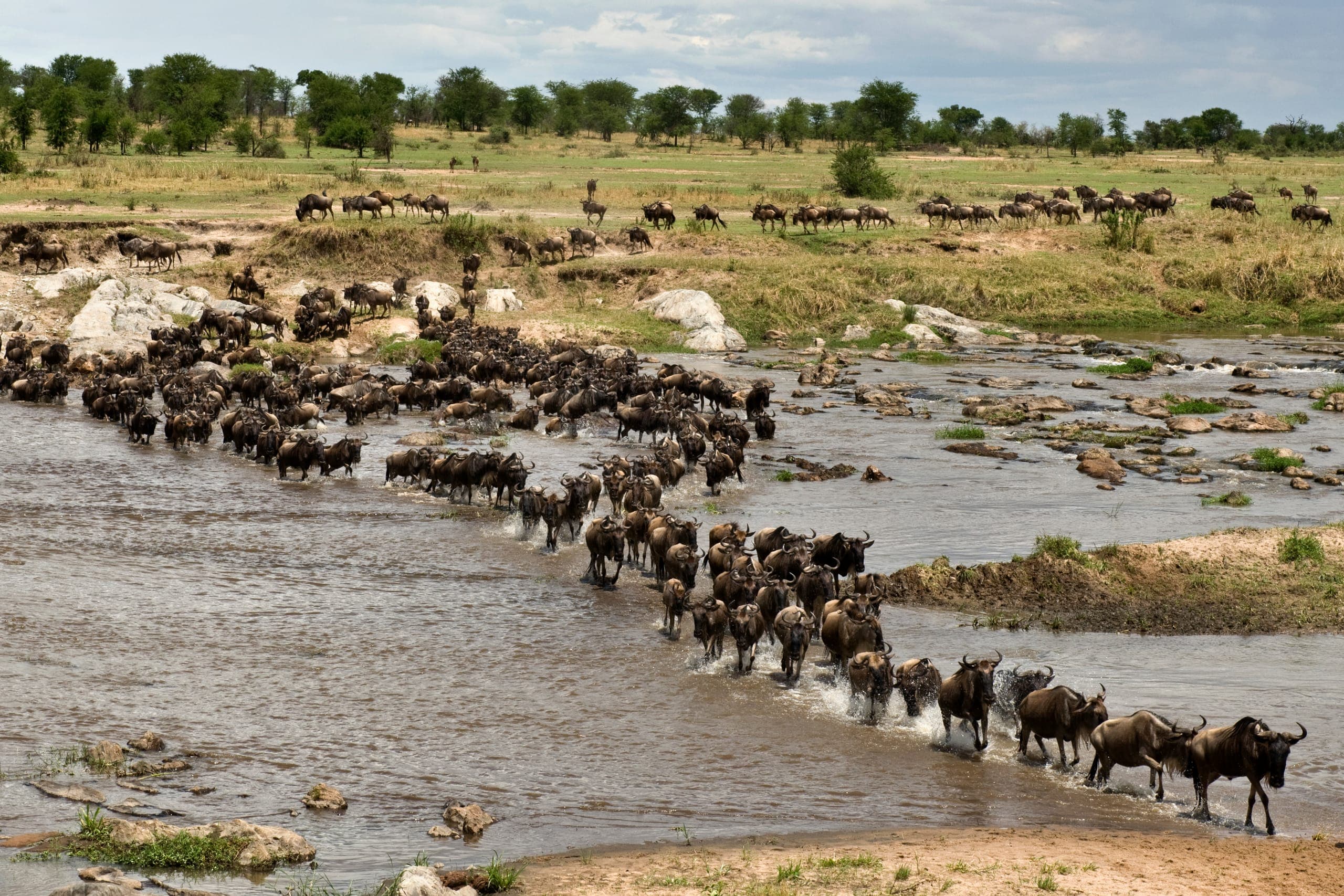
Beyond the resident elephant population, major dry-season migrants include wildebeest (which move from the northern short-grass areas as they dry), zebra, eland (Tarangire holds one of the largest eland concentrations in Tanzania), oryx, and buffalo. These migratory pulses drive corresponding predator density: lion, leopard, cheetah, and wild dog all follow prey into the park during the dry months. The convergence creates a dry-season wildlife spectacle comparable to anything the northern circuit offers, concentrated around the permanent water of the river.
Is Tarangire worth visiting instead of the Serengeti?
Tarangire is not a replacement for the Serengeti: the two parks offer genuinely different experiences. The Serengeti is unmatched for the Great Migration, lion density, and the scale of open savannah. Tarangire's specific strengths (elephant volume, the baobab landscape, and eland) are significant but constitute a different category. For travellers with time for one Tanzania park, the Serengeti is the stronger choice in most seasons. Tarangire's value is as the first leg of the northern circuit, providing a meaningful counterpoint to the Serengeti that follows.
What is the Silale swamp and why does it matter?
The Silale swamp in the southern section of Tarangire is a permanent wetland fed by underground springs. It maintains water and greenery year-round and acts as a secondary wildlife concentration point beyond the main river. In the dry season it attracts large numbers of elephant, buffalo, and antelope to its margins. It is less visited than the northern river areas because it requires more driving to reach, but knowledgeable guides consider it one of the most productive wildlife areas in Tanzania in peak dry season.
Is Tarangire good for birdwatching?
Exceptionally so. Tarangire records over 550 bird species, making it one of the most diverse parks in East Africa for birdlife. Highlights include the yellow-collared lovebird (a Tarangire speciality found in dense mixed flocks), various hornbills, the Kori bustard, secretary bird, martial eagle, and extensive waterbird presence along the river. The dry-season baobab woodland produces distinctive dry-country species not reliably found in the wetter parks further north. For dedicated birders, Tarangire warrants its own journey.
Zorani Expeditions
Plan Your Tarangire Safari
Every Journey we design is built around your goals, not a standard route.
Speak to a Specialist