On a Zorani Journey, the Rwanda gorilla day begins well before 07:00. We collect travellers from their lodge in the Volcanoes region and have them at the park headquarters in Kinigi before reporting closes. The briefing and family allocation happen there. The walk usually begins elsewhere, after a vehicle transfer to the assigned trailhead.
The fixed elements are clear: registration, briefing, a ranger-led trek, no more than eight visitors around one habituated family and a maximum of one hour once the gorillas are reached.
Everything between the trailhead and that hour remains variable.
The day before
Stay in the Volcanoes region, not Kigali, on the night before the trek.
A pre-dawn drive from Kigali may be physically possible, but we do not use it as the normal plan. It places an expensive permit behind an avoidable road risk, and late arrival or flight delay does not qualify for a refund.
The evening check should cover:
Departure time from the lodge
Permit and passport details
Vehicle and driver arrangements
Porter plan
Breakfast and packed food
Boots, gaiters, gloves and rainwear
Camera settings
Any health symptoms
Tell Zorani about a fitness, mobility or medical concern before travel. We pass the relevant information to the guide before the morning allocation. Information given after the group has left Kinigi is much harder to use.
Breakfast and departure
Most lodges in the area understand the early start and arrange breakfast accordingly. We confirm the timing, packed food and drinking water as part of the Journey.
Eat enough for several hours of walking. Carry water and a compact snack for the permitted rest point, not for use near the gorillas.
Wear the complete trekking clothing from the lodge. Changing boots or organising a camera at park headquarters creates unnecessary delay.
The vehicle should remain available. It will normally be needed after the briefing to reach the group's trailhead and again when the walk finishes.
Arrival at Kinigi
We have travellers at Kinigi before the 07:00 reporting time, with the same identification used for the permit.
The headquarters period is operational. Permits and identity documents are checked, guides and visitors gather, and the day's groups are organised.
The process can feel sociable because many trekkers arrive at the same time. Do not let that obscure the practical tasks:
Make sure the permit has been validated. Zorani and the guide will already be following this.
Make sure the guide knows about a relevant limitation.
Use the facilities.
Keep rainwear and identification accessible.
Listen for the allocation and vehicle instruction.
A valid permit issued under incorrect personal details or visitor category may still be refused. Carry the same passport or identity document used in the application.
The briefing
The ranger explains:
How the trek will proceed
The health and distance rules
Behaviour around the gorillas
What to do if an animal approaches
The one-hour viewing limit
Photography restrictions
The role of guides, trackers and porters
This is not generic theatre. The instructions respond to wild animals, disease risk and the practical conditions in that park.
Keep at least seven metres from the gorillas in Rwanda. Flash photography is prohibited. Visitors should keep voices low, avoid sudden movement and follow the ranger immediately if a gorilla vocalises or approaches.
Read Gorilla Trekking Rules and Etiquette: The Seven-Metre Rule and What Else Actually Matters before travel.
How family allocation works
Visitors are allocated to a habituated gorilla family on the trekking morning.
Fitness and mobility may be considered during allocation. Zorani and the guide can communicate a traveller's needs, but no one can guarantee the easiest family.
The allocation considers an operating picture that includes:
The families available for tourism
Their known or expected location
Visitor fitness and mobility
Group composition
Park management requirements
Gorilla groups are socially dynamic and free-ranging. Their position can change after trackers' earlier observations. A family expected to be near may continue uphill.
Requesting a manageable walk is sensible. Booking a Journey that only works if the request is granted is not.
The drive to the trailhead
After allocation, the ranger and visitors travel by vehicle to the relevant starting point.
The distance and road can vary by family and conditions. Our vehicle and driver remain available after the briefing because the allocated trailhead is not known in advance.
The trailhead may sit beside cultivated land rather than inside continuous forest. The first part of the walk can pass through farmland or a buffer area before reaching park vegetation.
Porters are arranged around this stage according to the current park procedure. Hire one even if the pack is light. The support on steep or muddy ground can matter more than the carrying.
Entering the park
The terrain changes with the route and elevation.
Possible conditions include:
Cultivated approaches
Bamboo forest
Montane vegetation
Mud
Stinging nettles
Roots and uneven ground
Steep climbs or descents
Rain and mist
The gorilla habitat used for trekking extends through roughly 2,500 to 4,000 metres. Some visitors notice the altitude during sustained climbing even when they are fit at home.
Move at the ranger's pace, drink water and report a problem early. The group can respond to a developing difficulty more easily than to an exhausted visitor who has tried to conceal it.
What the trackers do
Trackers monitor the gorilla families daily. They record observations and help the ranger team establish where to search.
Trackers, park teams, researchers and veterinarians share daily observations about gorilla health and behaviour. Tourism therefore sits alongside conservation surveillance rather than operating separately from it.
Tracking knowledge improves the chances of finding the family. It does not place the gorillas at a fixed viewing site.
The ranger may pause to receive information, assess signs or adjust the route. Those stops are part of the search.
When the gorillas are close
The ranger will prepare the group before the final approach.
Visitors may be asked to:
Leave walking sticks or unnecessary items with the porter
Put on a mask
Take only the camera
Form a controlled line
Lower voices
Move slowly
Follow the current instruction. Porter and equipment practice can vary by location and day.
The viewing hour begins when the ranger determines that the family has been reached. Time spent finding a safe position or moving with the group remains part of the hour.
The one hour
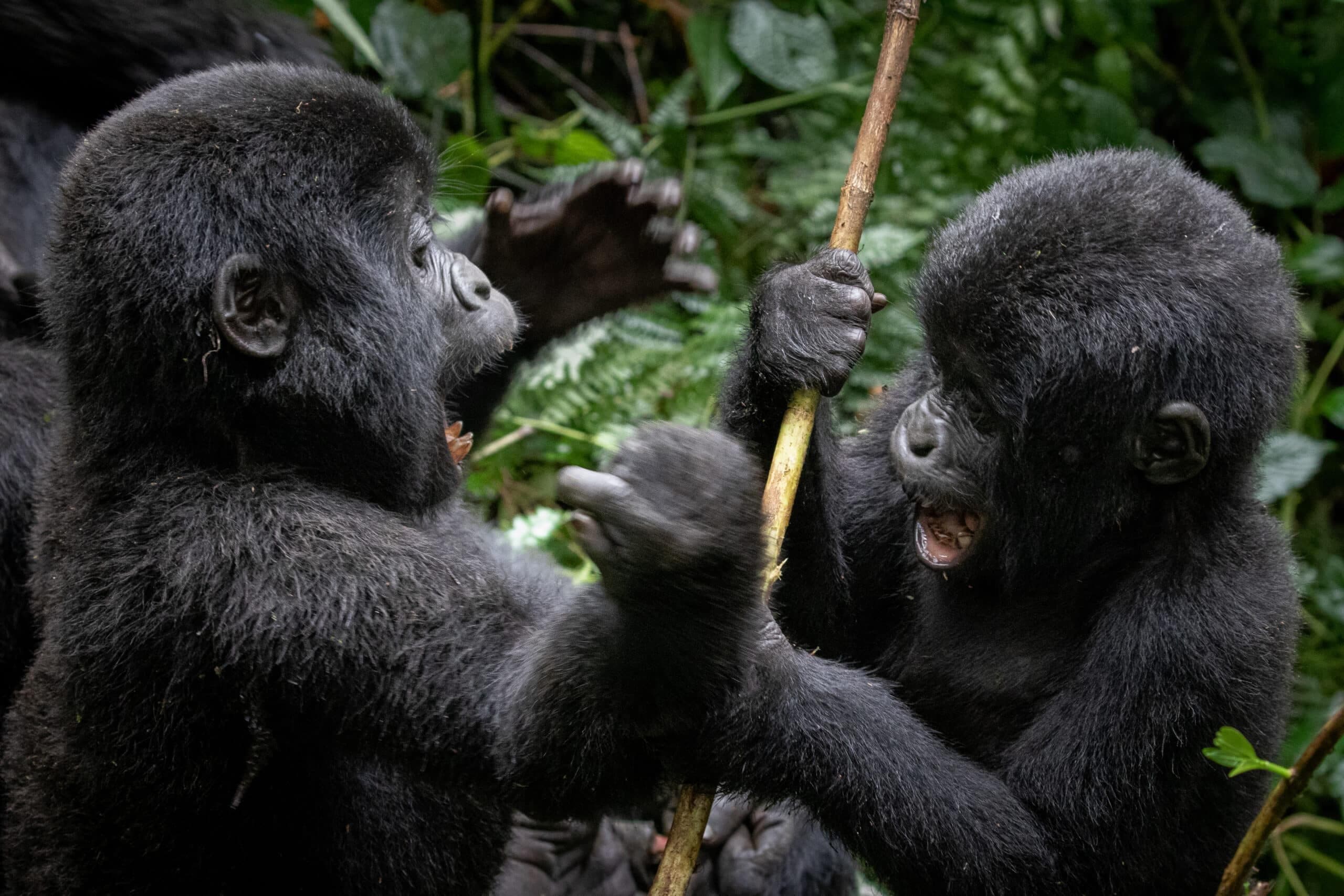
The encounter may be quiet.
A family might:
Feed
Rest
Groom
Move through vegetation
Play
Care for an infant
Interact around the silverback
An active display is not a better encounter than a resting group. A knowledgeable guide can explain proximity, rank, play, tension and care that might otherwise look like very little happening.
Stay with the visitor group. Do not circle for a clearer view or step beyond the ranger's line.
If a gorilla approaches, remain calm and follow the guide. Do not touch it, even when the animal closes the official distance itself.
The camera flash must remain off. Keep artificial sounds disabled and avoid repeated position changes.
For the social structure behind the scene, see Mountain Gorilla Family Life: How Groups Are Structured and What You're Actually Watching.
If the gorillas are difficult to see
Vegetation, rain and the family's movement can interrupt the view.
The ranger will work within the rules and the animals' behaviour to place the group. That does not mean every visitor receives an unobstructed portrait.
Do not:
Push through vegetation independently
Ask for plants to be cleared unnecessarily
Move closer
Stand above another visitor without permission
Pressure the ranger to extend the hour
The quality of the encounter is not measured by the number of photographs.
What if the family is not found?
The permit terms distinguish between different outcomes.
Visitors who cannot undertake the trek for the whole day because of the gorilla group's movement may be given another opportunity or a full permit refund. Those who trek for the full day without making contact may receive 75 per cent of the tracking fee.
This is not a general cancellation policy. Late arrival, flight delay, absence and cancellation for another reason do not receive a permit refund.
The current terms attached to the permit should be retained and rechecked before travel.
The return walk
The trek is not over when the viewing hour ends.
The group still has to return to the trailhead, and a route that involved a long descent may now require a climb. Fatigue can make footing less secure on the way back.
Keep the rainwear and water accessible. Use the porter. Continue at a controlled pace rather than rushing towards the vehicle.
The finishing time cannot be fixed in advance. Avoid a hard afternoon appointment or same-day flight that depends on a short trek.
Certificates and the end of the activity
Park teams commonly mark the completion of a gorilla trek with a certificate or closing moment, but the exact procedure is operational and should not be treated as the core inclusion.
The driver then returns the traveller to the lodge or continues with the confirmed itinerary.
A shower, food and unstructured time are usually more useful than a tightly scheduled afternoon. Muddy clothing and boots may need attention before the next movement.
Should you return to Kigali the same day?
It can be done after an earlier finish. It is not always the best plan.
The weaknesses are:
The trek may finish late.
The traveller may be tired or wet.
Road delay matters if a flight follows.
The lodge becomes a changing stop rather than part of the Journey.
For most routes, stay a second night in the Volcanoes region and leave the next morning. This protects the trekking day and allows the Journey to absorb its variable finish.
If a same-day transfer is necessary, do not attach a tight international departure without a substantial margin.
What to do the following day
The most useful options are:
A relaxed departure
Golden monkey tracking
Time at the Dian Fossey Gorilla Fund's Ellen DeGeneres Campus
A carefully paced visit around the wider Musanze region
An additional night before continuing through Rwanda
Do not place a demanding Bisoke or Karisimbi hike after the gorilla trek simply because it is available. Match the next activity to the traveller's recovery and interests.
The wider park guide is Volcanoes National Park: Gorillas, Golden Monkeys, and the Twin Lakes.
The complete day in one sequence
Sleep in the Volcanoes region.
Eat and leave the lodge early.
Report to Kinigi by 07:00.
Complete validation and briefing.
Receive the gorilla-family allocation.
Drive with the ranger to the assigned trailhead.
Hire a porter and begin walking.
Follow tracker information to the family.
Spend a maximum of one hour with the gorillas.
Walk back and return to the lodge without depending on a fixed finish.
The sequence is organised. The effort and duration are not.
What Rwanda does particularly well
Rwanda makes the administrative geography clear. All gorilla trekking is centred on Volcanoes National Park, with one main morning reporting point at Kinigi.
That simplicity should not be mistaken for a controlled forest experience. The gorillas choose where the group walks. The weather changes the ground. The hour may be active or quiet.
We manage the permit, early transfer, guide communication and vehicle. The traveller's part is to arrive with the right equipment, disclose fitness honestly and leave the afternoon flexible. The park team then manages the wildlife encounter.
For prices and inclusions, read Rwanda Gorilla Permit Prices: What USD 1,500 Actually Buys. The wider country decision sits in Gorilla Trekking in Uganda and Rwanda: The Complete Planning Guide.


