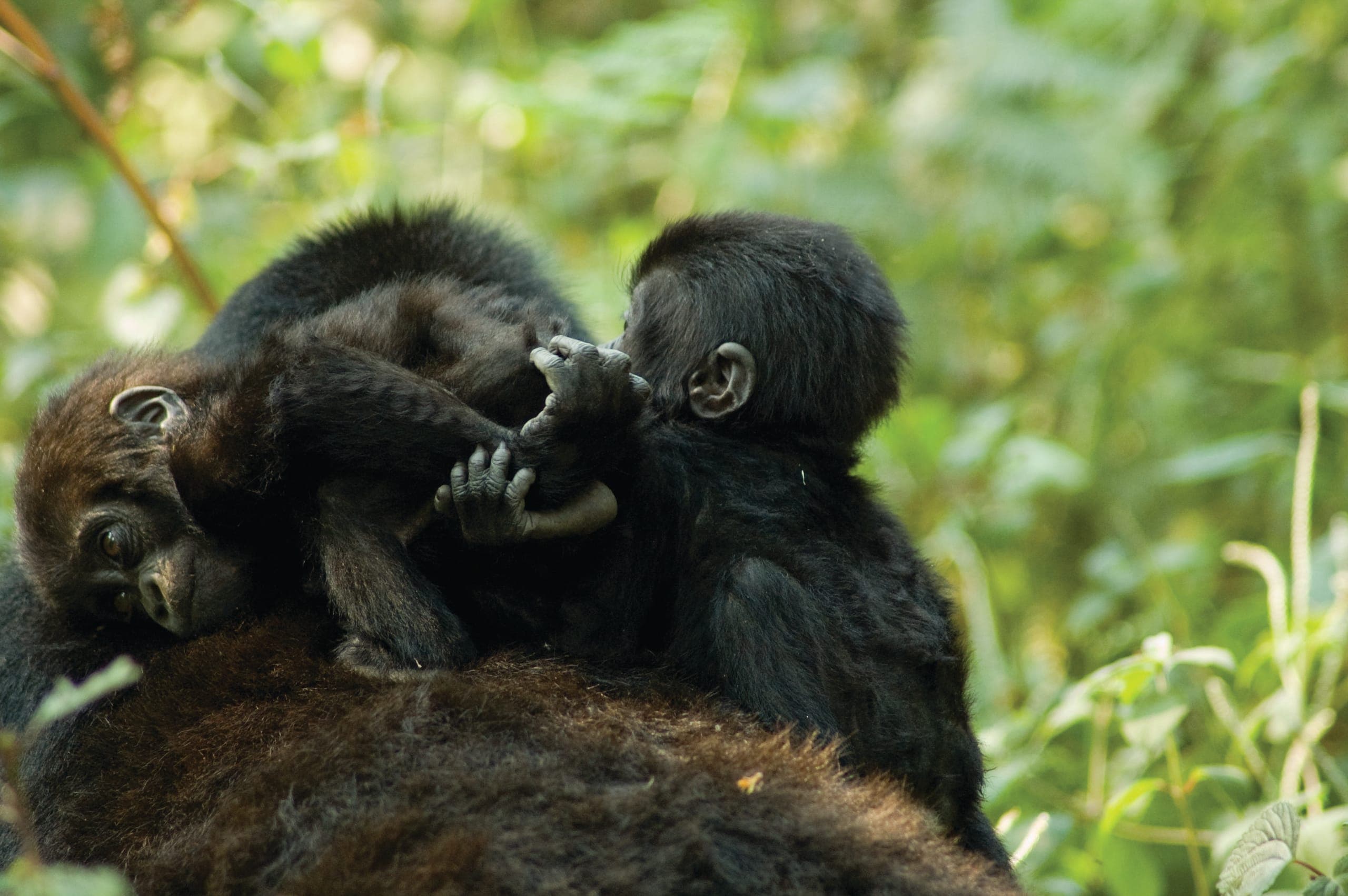
The minimum age for gorilla trekking is 15 in both Uganda and Rwanda. This is one of the first questions we resolve when planning a family Journey, because it changes the permits, supervision and shape of the stay around the forest.
Families should treat that as a firm park rule. It is not a recommendation based on height, maturity or previous hiking experience, and it should not be built around the hope of an exception at the briefing point.
The age limit does not prevent a family from travelling through the gorilla region. It changes how the Journey must be designed. Supervision, permit dates, lodge location and worthwhile plans for the non-trekking child all need to be resolved before the adults' permits are paid for.
The rule was reviewed on 29 July 2026. Zorani confirms the requirement and supporting documents again when securing the family's permits.
The rule in Uganda and Rwanda
Uganda: Minimum trekking age: 15; Applicable parks: Bwindi Impenetrable, Mgahinga
Rwanda: Minimum trekking age: 15; Applicable parks: Volcanoes National Park
The child should be at least 15 on the trekking date, not simply turning 15 during the wider Journey.
Age is checked against the passport or identity document used for the permit. We submit that document at booking and ask the traveller to carry the original or accepted travel copy on the trekking morning.
Are exceptions possible?
Do not plan on one.
Online accounts sometimes describe a younger child being allowed to trek after a parent signed a form or demonstrated the child's fitness. Those reports are not a reliable planning basis and may reflect an old rule, an unusual decision or an arrangement that would not be accepted now.
The published minimum is 15 in both countries. A Journey that depends on discretion at the park risks:
Losing the child's permit payment
Separating the family without suitable supervision
Creating pressure on rangers at the briefing
Delaying the visitor group
Leaving the child with no proper plan for the day
Zorani cannot override the park rule. If a documented exception is ever formally available, it must be secured in writing before permits, lodge nights and supervision arrangements are confirmed.
Why there is a minimum age
The age rule responds to several practical concerns.
Disease transmission
Mountain gorillas are vulnerable to human respiratory infections. Younger children may find it harder to identify early symptoms, maintain distance or consistently follow cough and hygiene instructions.
Unpredictable physical demand
The walk may be short, but it can also involve several hours on steep, muddy and uneven ground. The family allocation and gorillas' location are not known with certainty when the Journey is booked.
Behaviour around wildlife
Visitors need to remain quiet, avoid sudden movement and follow instructions immediately if a gorilla approaches or vocalises. A mature 14-year-old may be capable of this, but the park applies a clear age limit rather than assessing each child at the briefing.
Group management
One ranger-led visitor group can include up to eight people. A child who becomes distressed, exhausted or unable to continue affects the pace and management of the whole group.
The rule is not a judgement on an individual child. It is a conservative operating standard around an endangered wild animal.
The first question we ask a family
Ask who will supervise the child while the others trek.
A gorilla day can begin before the formal briefing and may not end until the afternoon. The supervising adult needs to be available for the whole period, not simply for the one-hour viewing window.
Suitable supervision might be:
One parent or adult family member who is not trekking
A known travelling companion
A qualified childcare arrangement confirmed by the lodge
A dedicated guide or family support arrangement whose role and safeguarding standards have been agreed in advance
Do not assume that lodge staff can watch a child informally. Staffing, insurance, age policies and the activities available vary widely.
The arrangement should state:
Who is responsible
The hours covered
Where the child will be
Which activities are included
How transport works
How the supervising adult can contact the trekking party or operator
What happens if the trek returns later than expected
If both parents want to trek
There are three workable structures.
Trek on different dates
One parent treks while the other remains with the child, then they exchange roles the following day.
This is the cleanest arrangement when both adults consider the trek important. It requires two trekking dates, enough nights in the region and two permits. The advantage is that the child remains with a parent and neither adult depends on outside childcare.
The compromise is time. The family needs at least one extra day, and the adults will not share the gorilla encounter.
Use confirmed professional supervision
Both parents trek on the same date while the child follows a pre-arranged programme with a suitable carer or guide.
This protects the length of the Journey but requires more diligence. The family should understand the provider's qualifications, safeguarding arrangements, transport and contingency plan. “The lodge can arrange something” is not enough until the details are confirmed.
Postpone the gorilla trek
If the child is close to 15 and the whole family wants to share the experience, postponing may be the strongest decision.
This can be better than using two separate trekking days or leaving one person outside the main reason for the Journey. Africa does not need to be postponed. The current trip can be built around safari, suitable walking, water-based activities or other wildlife experiences, with gorilla trekking reserved for a later Journey.
What can a younger child do instead?
The alternative should be designed around the child's age and interests, not treated as waiting time.
Possible options may include:
A relaxed morning at a lodge with suitable facilities
A short, age-appropriate guided nature activity
A community or craft visit that has been properly planned
Birding or a forest-edge walk where the provider accepts the child's age
Time around Lake Mutanda or another nearby landscape when transport and supervision work
A separate family activity later in the day after the trekkers return
Every option is conditional. Parks, lodges and activity providers set their own minimum ages, and some walks can be physically demanding even when they do not involve gorillas.
Zorani confirms:
The minimum age
The expected duration
Terrain and weather exposure
Whether a parent must attend
Transport
Who leads the activity
What happens if the gorilla trek runs late
A generic “village visit” or “nature walk” should not be inserted without knowing who hosts it, what actually happens and whether it is appropriate for the child.
How many nights does a split family need?
For one adult trekking while another supervises the child, two nights may work: arrive, trek the following day and leave after a second night.
When adults trek on separate dates, three nights are usually the practical minimum:
Arrive in the correct gorilla area.
First adult treks.
Second adult treks.
Leave the following morning.
An additional night may improve the pace when the road journey is long or when the family wants a shared activity after the two trekking days.
In Bwindi, the lodge must be close to the sector shown on each permit. In Rwanda, the stay should provide dependable access to the 07:00 briefing at Kinigi. Poor lodge geography becomes harder for a family because it also affects the non-trekking child's day.
What about a family with older and younger siblings?
A child aged 15 or over may trek while a younger sibling cannot.
This can work well when:
The older child genuinely wants the activity.
The teenager has the fitness and composure for an uncertain forest day.
The younger child has a worthwhile separate plan.
The adults agree who participates and who supervises.
Age eligibility is not the same as readiness. A 15-year-old who dislikes long walks, mud or close wildlife encounters should not be pressured to use an expensive permit simply because the rule allows it.
Discuss:
Recent hill-walking experience
Comfort with several hours away from facilities
Ability to remain quiet and follow the ranger immediately
Response to rain, insects and mud
Willingness to use a porter
Any medical or mobility concern
The fitness guide applies to teenagers as much as adults: Gorilla Trekking Fitness: What Kind of Physical Condition You Actually Need.
Can a baby or toddler come to the briefing area?
Do not assume this is practical or permitted.
The visitor centre is an operating point for trekkers, rangers, vehicles and allocations. A supervising adult and young child may be better based at the lodge or beginning a separate activity rather than joining a very early transfer with no role after the group leaves.
If the family wants to see the trekkers off, we check the visitor-centre arrangement, vehicle plan and facilities first. The supervising adult should always have independent transport or a clear return plan.
Permit decisions for families
Do not purchase a gorilla permit for a child under 15 in the expectation that it can be transferred later.
For every eligible trekker, we check:
Age on the trekking date
Name and passport details
Visitor category
Correct date
Correct park
Correct Bwindi sector, where relevant
Amendment and refund terms
If adults plan to trek on separate dates, we secure both permits before confirming the surrounding lodge stay. Availability on consecutive days cannot be assumed, particularly in high-demand periods.
Read Gorilla Permit Booking Guide before paying.
Does choosing Uganda or Rwanda solve the age issue?
No. Both countries use the same minimum age.
The country choice can still affect family logistics.
Rwanda may support a shorter route through Kigali and Volcanoes National Park, which can reduce overall travel time. Uganda can combine the gorilla region with safari and other primate experiences, giving a younger child more variety across a longer Journey.
Neither is automatically better for families. Consider:
How much road movement the child tolerates
Whether the family wants a short gorilla-focused route or a broader wildlife Journey
The lodge's confirmed supervision and family accommodation
Activities open to the younger child
Whether adults will trek together or separately
Total permit cost for all eligible family members
The wider comparison is in Gorilla Trekking in Uganda and Rwanda: The Complete Planning Guide.
Health and safety beyond the age rule
All family members should follow current health advice for the destination, even when only some are trekking.
For an eligible teenager, discuss any heart, respiratory, joint, balance or mobility concern with an appropriate health professional. Carry required medication in the daypack and tell Zorani about any limitation that affects route design.
For the younger child, check the suitability of accommodation features, road journeys, food arrangements and any proposed activity. A lodge being close to a national park does not make every surrounding experience suitable for every age.
The aim is proportionate preparation, not anxiety. Clear supervision and realistic pacing resolve most family-planning problems before travel.
A family decision, not a permit workaround
The 15-year minimum should shape the Journey from the start.
If one child is too young, decide who will supervise them and what they will do before the adults' permits are purchased. If both adults want to trek, use separate dates or a properly verified childcare arrangement. If the family's main wish is to share the encounter, wait until everyone is eligible.
A good family Journey does not leave one child parked beside the experience that everyone else came to have. It gives each person a day that has been planned on purpose.


