Travellers often arrive in Rwanda knowing Dian Fossey through Gorillas in the Mist. We place that story in a wider history. Fossey changed how mountain gorillas were studied and protected, but she also left a difficult legacy.
Her long-term field research established individual life histories, brought international attention to poaching and helped build the scientific record on which mountain gorilla conservation still depends. Some of the methods she used against suspected poachers and neighbouring communities were coercive, violent and ethically unacceptable.
Understanding both parts matters. The current conservation system did not emerge from one heroic figure, and it does not operate as Fossey did.
From Congo to the Virunga volcanoes
Fossey first began fieldwork with mountain gorillas in the Democratic Republic of Congo, then known as Congo, in 1966. Political upheaval forced her to leave.
On 24 September 1967, she established the Karisoke Research Centre in Rwanda's Virunga massif. The name combined Mount Karisimbi and Mount Bisoke, the two volcanoes between which the original camp stood.
The location was remote and conditions were difficult. Fossey and the researchers who followed her built a system of daily observation based on recognising individual gorillas and recording their relationships, movements, births and deaths.
That continuity became one of Karisoke's most important contributions.
Learning to recognise individuals
Early gorilla science could describe a species. Long-term observation could describe lives.
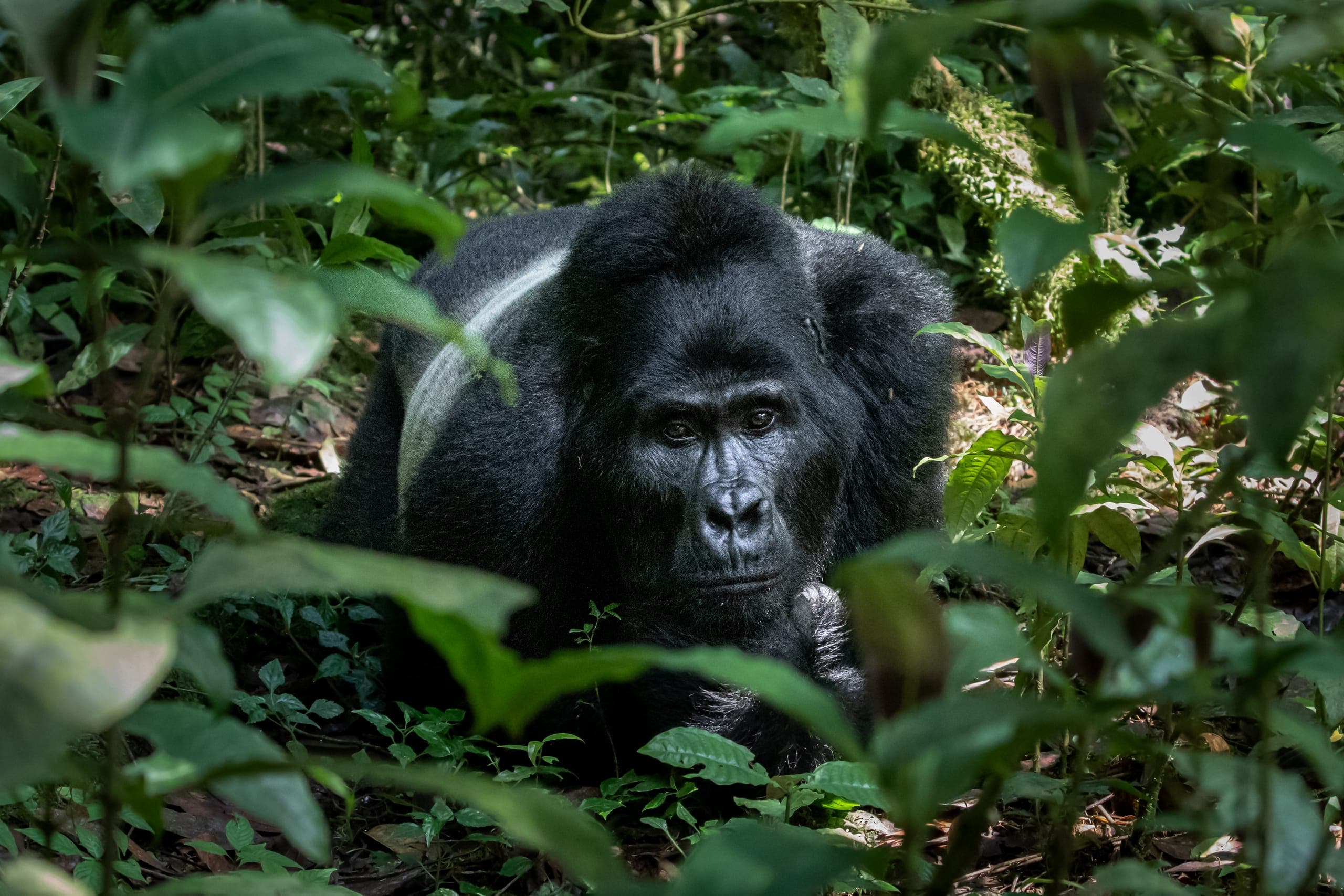
Researchers used the pattern of creases around each gorilla's nose, along with body shape, scars and behaviour, to distinguish individuals. This allowed them to follow:
Changes in group leadership
Female transfers
Births and infant development
Male maturation and dispersal
Group formation and division
Causes of injury and death
Relationships extending across generations
The resulting record challenged simple assumptions. Mountain gorilla groups were not static harems controlled by a single male. They could contain several silverbacks, change leadership and divide into new groups.
The companion guide explains what this means during a visitor encounter: Mountain Gorilla Family Life: How Groups Are Structured and What You Are Actually Watching.
Habituation and close observation
Fossey gradually accustomed study groups to a controlled human presence. Her approach included imitating gorilla behaviour and reducing actions the animals might perceive as threatening.
Habituation made sustained observation possible. It also created a long-term conservation question. Close access helps researchers monitor health and social change, but human proximity can transmit disease and alter behaviour.
Today's tourism and research protocols respond to that tension through limits on visitor numbers, viewing time, distance and illness. The rules are not an optional courtesy. They are part of managing a risk created by access.
Digit and the turn towards active protection
Fossey's work became increasingly focused on direct protection as poaching pressure intensified.
The killing of Digit, a silverback she had studied for years, became a defining event. Fossey established the Digit Fund in 1978 to support anti-poaching work. The organisation later became the Dian Fossey Gorilla Fund.
Her approach, often described as “active conservation”, included patrols, snare removal and direct opposition to people she suspected of poaching. It drew international attention to the urgency of protecting a small, vulnerable population.
It also crossed serious ethical lines.
The part of the legacy that should not be softened
Fossey used intimidation and violence against suspected poachers and local residents. Accounts describe detention, beatings, destruction of property and other coercive acts.
These methods harmed people and damaged relationships with communities living around the forest. They cannot be excused as a product of commitment or reduced to colourful stories about a determined conservationist.
The broader model also treated nearby communities too often as a threat rather than as people carrying the costs of restricted land access, crop damage and political decisions made without them.
Modern mountain gorilla conservation has moved towards a different premise. Long-term protection depends on Rwandan, Ugandan and Congolese institutions, field staff, scientists, veterinarians and communities working across borders. Revenue sharing, local employment and community programmes are imperfect, but they reflect a recognition that exclusion alone is not a durable conservation strategy.
Fossey and gorilla tourism
Fossey did not create the permit-funded gorilla tourism model used today.
She was deeply concerned that tourism would disturb gorillas and expose them to human disease. Her opposition makes sense within the conditions she observed and the limited visitor controls of the time.
Governments and conservation partners later developed tightly managed tourism as one part of a wider protection system. Permit revenue can support park management, monitoring and community programmes. Visitor access also creates risk, which is why one-hour limits, illness protocols and ranger control matter.
The line from Fossey to present tourism is therefore indirect:
Long-term research made individual monitoring possible.
Her campaigning drew international attention to the gorillas' vulnerability.
Protection organisations and government agencies built on that record.
Controlled tourism later became a source of conservation finance and political value.
It is inaccurate to say that Fossey designed the current system. It is equally inaccurate to describe that system without acknowledging the scientific and public foundation her work helped create.
Gorillas in the Mist and global attention
Fossey published Gorillas in the Mist in 1983. The book combined scientific observation with personal narrative and conservation advocacy.
The later film extended her public influence. It also encouraged a simplified story in which one outsider stood between the gorillas and extinction.
The real history is broader. African trackers, assistants and park staff were central to fieldwork and protection, although their contributions received less international attention. Conservation continued after Fossey because institutions and people in the region carried it forward.
That distinction matters when visiting Rwanda today. Karisoke's legacy is not a preserved chapter from the 1970s. It is a continuing programme led by a large Rwandan scientific and conservation workforce.
Her death and the unresolved case
Fossey was killed at her cabin at Karisoke in December 1985. Her murder remains unresolved.
She was buried at the research site beside Digit and other gorillas from the study groups. The original camp is now a research and historical location reached on foot in Volcanoes National Park.
The death has attracted speculation for decades. A responsible account should not turn unproven theories into fact.
What continued after Karisoke
The research centre moved from the forest to improved facilities, but daily gorilla monitoring continued.
The Dian Fossey Gorilla Fund's Ellen DeGeneres Campus near Volcanoes National Park now supports research, education and public interpretation. Government agencies, the International Gorilla Conservation Programme, Gorilla Doctors and other partners contribute different parts of the wider system.
That work includes:
Daily identification and behavioural records
Protection patrols and snare removal
Veterinary observation and intervention
Scientific research
Training of conservation professionals
Community and livelihood programmes
Transboundary coordination
No single organisation performs every function.
Visiting the former Karisoke site
The hike to the former Karisoke Research Centre is a historical and forest walk rather than a gorilla trek.
Travellers should expect mountain terrain, mud in wet conditions and a journey shaped by the pace of the group. The site provides context for Fossey's fieldwork and burial, but it should not be treated as a substitute for a balanced account of her methods.
The Ellen Campus offers a more accessible way to understand current research and the longer history. Zorani checks the current opening arrangements, visitor access and any required booking before placing it in a Journey.
The wider Volcanoes guide is Volcanoes National Park: Gorillas, Golden Monkeys, and the Twin Lakes.
What remains from Fossey's work
Fossey's strongest scientific legacy is the value of sustained attention.
A census estimates a population. Long-term monitoring shows how that population lives. It reveals whether infants survive, where females transfer, how groups respond to leadership loss and when an injured gorilla needs assessment.
Her public legacy is more complicated. She demonstrated the urgency of protection, but also the damage caused when conservation is pursued through fear and exclusion.
Both lessons remain relevant.
A history to read critically
Fossey's work helped give mountain gorillas a record extending across generations. That record supports science, veterinary decisions and a more precise understanding of population change.
It should not be turned into a simple founder story.
When visiting Rwanda, look beyond the cabin, grave and film narrative. The living legacy lies in Rwandan trackers entering the forest each day, scientists maintaining long-term records and institutions trying to join protection with meaningful local benefit.
For a data-led account of the population recovery, read Mountain Gorillas and the IUCN: How a Species Came Back From the Edge. For the complete planning context, return to Gorilla Trekking in Uganda and Rwanda: The Complete Planning Guide.


