UGANDA · EAST AFRICA
Semuliki
Congolese lowland forest species, geothermal springs, and a guided Batwa forest walk
UGANDA · EAST AFRICA
The Congo Basin at Africa's Heart
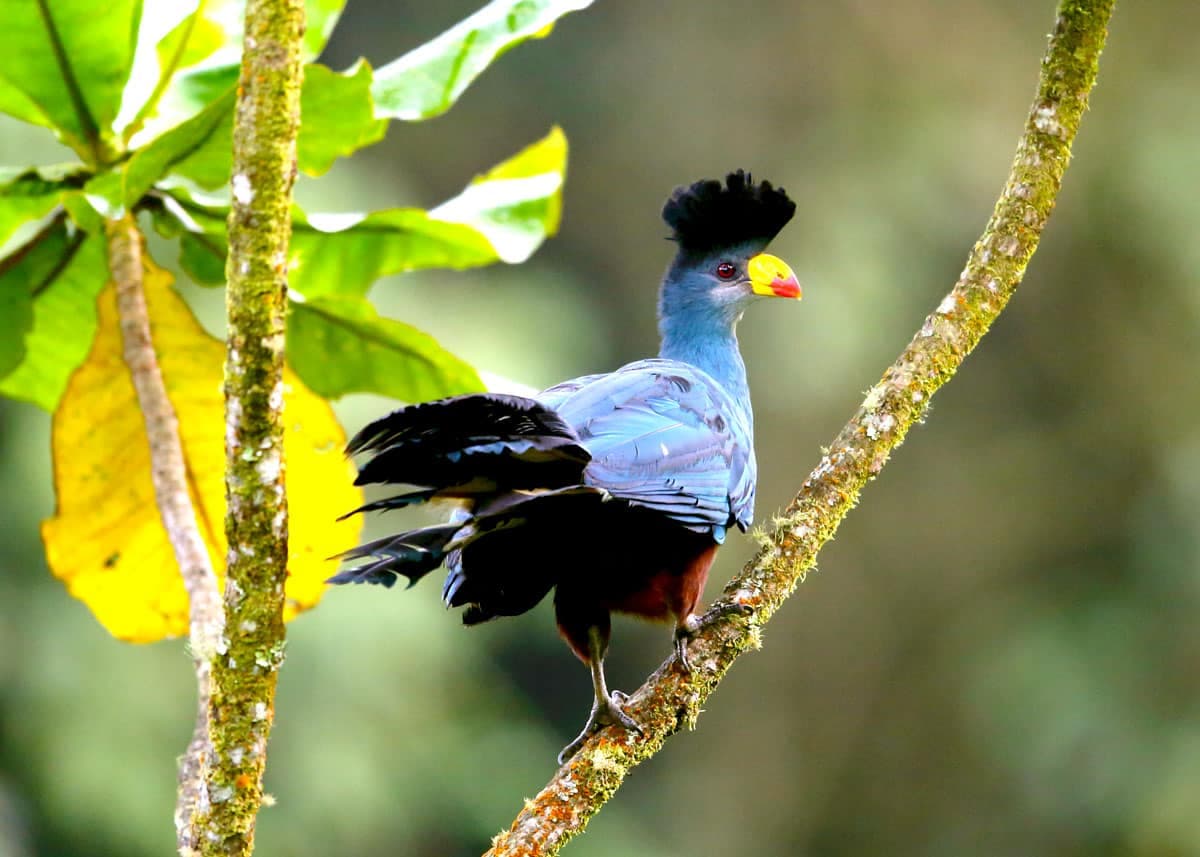
Semuliki National Park protects a westward extension of the Congo Basin lowland rainforest into Uganda, making it ecologically distinct from every other park in the country. At 220 square kilometres, it is not large, but its species composition is unlike anything else on the Uganda circuit. The park holds over 400 bird species, of which roughly 60 are Congo Basin endemics found nowhere else in Uganda. The Sempaya Hot Springs add a geological dimension that anchors it as more than a single-species destination.
Semuliki sits in the Semliki Valley on the Ugandan side of the Rwenzori Mountains, north of Lake Edward and west of the Rwenzori massif. The terrain is flat and the forest is dense. It is not a game-viewing park in the conventional sense. Elephant, buffalo, and chimpanzee are present but unhabituated and rarely sighted. The draw is the birds, the hot springs, and the very different feel of the Congo Basin forest ecosystem.
Most travelers visit Semuliki as part of a western Uganda circuit that combines it with Fort Portal, the Rwenzori Mountains, Kibale Forest, or Queen Elizabeth National Park. It works well as a 1 to 2 night dedicated stop for birders or as a half-day side trip from Fort Portal.
Safari Experiences
The Case For Semuliki
Why Visit Semuliki
The primary reason is the birds. Semuliki holds Congo Basin rainforest species that do not occur anywhere else in Uganda. For birders ticking Albertine Rift and African forest species, the park provides access to a distinct faunal zone in a single, compact destination. The tick rate for a serious birder spending two days in Semuliki can exceed 150 species including multiple endemics.
The Sempaya Hot Springs are the most visited feature in the park and provide a non-birding focus for mixed-interest groups. The Female Spring (Nyasimbi) produces a jet of boiling water approximately 2 metres high from a crater surrounded by palm trees. The Male Spring (Bintente) is a short walk away and is smaller but surrounded by distinctive mineralised ground. Both springs are on a well-maintained trail.
The forest experience itself is genuinely atmospheric. The Semliki Valley floor is flat, hot, and dense with little understory visibility. Walking trails penetrate the interior in the company of a UWA guide. Tracks are well-established and the feeling of being in a genuine Congo Basin forest, just inside Uganda, is unusual and compelling for travelers who respond to ecological distinction over headline wildlife.
Terrain & Ecosystem
Landscape & Environment
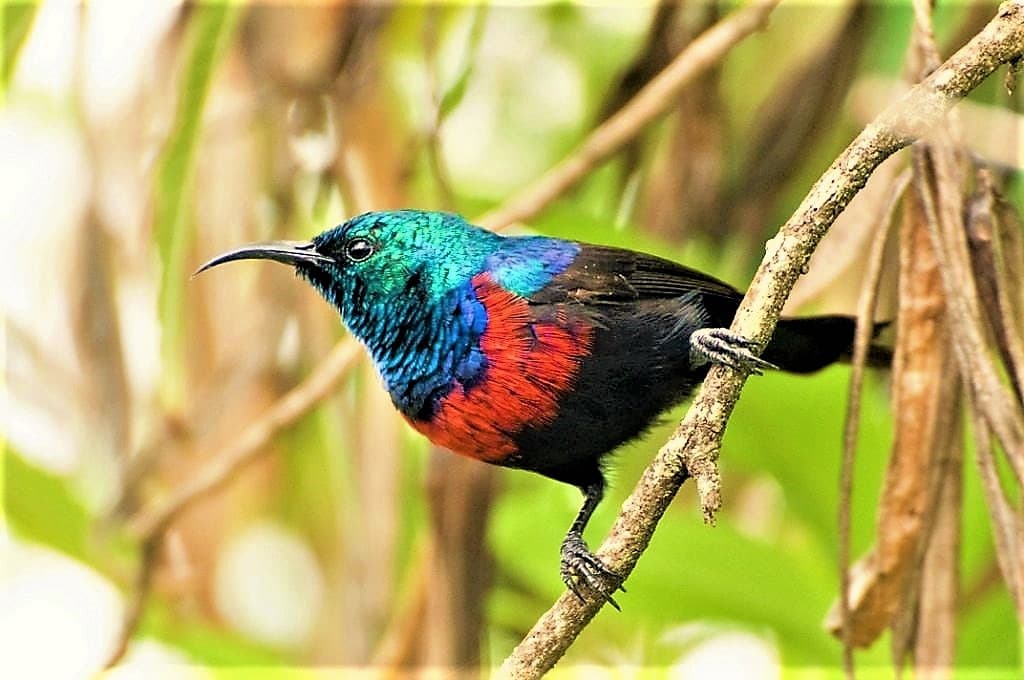
The Semliki Valley occupies a section of the Albertine Rift west of the Rwenzori Mountains. The valley floor is low, flat, and hot. The forest is a westward penetration of the Ituri Forest system, which extends deep into the DRC. Unlike Uganda's montane and transitional forests, Semuliki is true lowland tropical rainforest characterised by tall canopy trees, buttress roots, dense palms, and limited light at ground level.
The Semliki River, which flows north through the valley into Lake Albert, forms part of the park boundary. The river system and associated wetlands add habitat diversity and hold waterbirds alongside the forest species. The floodplain near the river is grassier and less forested, providing edge habitat that is productive for certain species.
Temperatures on the valley floor are consistently high. Mornings are the most comfortable time for trails. The flat terrain makes walking accessible even for those without high fitness levels, though the heat is the main physical consideration.
Fauna
Wildlife Highlights
Birds are the dominant reason to visit. Congo Basin endemics recorded in Semuliki include the Congo serpent eagle, African piculet, red-billed dwarf hornbill, white-crested hornbill, pitta-like ground thrush, black-throated wattle-eye, yellow-throated nicator, and nkulengu rail. The forest also holds African dwarf kingfisher, African broadbill, and multiple species of greenbul and illadopsis that are not reliably found elsewhere in Uganda. Over 400 species in total are recorded, making it one of the highest species count parks in Uganda relative to its size.
Forest elephant are present but unhabituated and rarely encountered on foot. Tracks and dung are commonly seen on trails. Forest buffalo are similarly present but not routinely observed. Chimpanzee occur in the park but are not habituated; their calls are sometimes heard but sightings are not something to plan around.
Central African red colobus, black-and-white colobus, red-tailed monkey, and grey-cheeked mangabey are among the primate species present. The primate diversity reflects the Congo Basin affinity.
On the Ground
Safari Experiences
Guided birding walks are the core activity and should begin early, before the heat of the day reduces bird activity. Walks are conducted on established trails with UWA rangers. A specialist birding guide, arranged in advance, makes a substantial difference to the encounter rate and identification quality.
Sempaya Hot Springs trail is the most visited walk in the park and takes approximately 2 hours return. The trail passes through palm forest to reach the Female Spring, with the Male Spring accessible on a short additional walk. Both springs are active and visible year-round. The surrounding vegetation is distinctive and the thermal activity is a genuine spectacle.
Night walks are available on a limited basis and allow for forest floor species including nightjars, scops owls, and various nocturnal amphibians and invertebrates. Arrange through the Uganda Wildlife Authority.
Boat trips on the Semliki River can be arranged on a limited basis and provide a different angle on the forest edge and riverine vegetation. This is not a standard activity but can be organised with advance notice.
Regions of the Park
Ntoroko Area: The northern section of the park near Lake Albert. The Ntoroko peninsula sits on the lake shore and combines forest access with lake views and waterbird diversity. This zone is slightly different in character to the main park forest, with more open areas near the lake margin.
Sempaya Trail Area: The main forest zone accessible from the Sempaya entrance gate. This is where most guided walks and hot spring visits take place. The trail network is well established and the habitat is the most productive for Congo Basin bird species.
Semliki River Corridor: The riverine zone along the park's western boundary. Productive for waterbirds and a distinct habitat compared to the interior forest.
Planning Your Visit
Best Time to Visit
December to February is the primary dry season and the recommended period for birding. Trails are accessible, humidity is lower, and forest bird activity is higher.
June to August provides a second dry window that is also reliable. This coincides with the peak Uganda safari season, which means other parks in a western circuit are also at their best.
March to May (long rains): The forest is at its densest and most humid. Some trails may flood. Bird breeding activity increases but the physical conditions are challenging. Not the best time for casual visitors, though dedicated birders often appreciate the activity levels.
Getting There
From Fort Portal: The drive from Fort Portal to Semuliki takes approximately 2 to 2.5 hours via Bundibugyo. The road descends from the Fort Portal highlands into the Semliki Valley, crossing the Rwenzori foothills. The final descent into the valley is steep and the road surface can be rough; a 4WD vehicle is recommended.
By charter flight: Kasese Airstrip is the closest to the Semuliki Valley. Charter flights from Entebbe to Kasese take approximately 45 to 60 minutes. From Kasese, the transfer to Semuliki is approximately 1.5 to 2 hours.
As part of a western circuit: Most travelers reach Semuliki as part of a Fort Portal-based circuit that includes Kibale Forest and the Rwenzori Mountains. The Bundibugyo road that passes through connects Fort Portal with the park and continues toward the Congolese border, though visitors do not cross.
How Many Nights
1 night is sufficient for the Sempaya Hot Springs and an early morning birding walk. This works for travelers with limited time or those using Semuliki as a single day break from Fort Portal.
2 nights allows for two full birding days, the hot springs trail, a potential boat trip or night walk, and the time needed to meaningfully work through the bird list. For dedicated birders, 2 nights is the recommended minimum.
Semuliki is rarely visited for more than 2 nights unless as part of a specialist ornithological expedition.
Where to Stay
Luxury Lodges and Camps
Ntoroko Game Lodge: Located on the Ntoroko peninsula on Lake Albert at the northern boundary of the park. The lodge occupies a lakeside position and the setting is distinctive, looking across Lake Albert toward the DRC mountains. It is the most comfortable option in the area and suits travelers who want good facilities alongside the birding. Some rooms have lake views. The lake location also means good waterbird diversity is accessible directly from the lodge.
Midrange Lodges and Camps
Semuliki has limited accommodation. Zorani uses its current Luxury and Midrange tiers and verifies the operating status, access, and room standard of a suitable base before including it in a Journey.
UWA operates basic rest camp accommodation near the park gates, which suits self-sufficient travelers or those on very limited budgets.
Combining With Other Destinations
Kibale National Park is the most natural pairing. The drive from Kibale (Kanyanchu) to Semuliki via Fort Portal takes approximately 3 hours. Combining chimpanzee trekking at Kibale with Congo Basin birding at Semuliki and the Rwenzori foothill landscape gives a very full western Uganda program.
Rwenzori Mountains National Park is accessible from Fort Portal, and travelers with a specific interest in mountain ecology can combine Semuliki with a Rwenzori lower-slope walk or the full multi-day circuit.
Queen Elizabeth National Park is approximately 2 hours south of the Fort Portal area. A circuit that includes Kibale, Semuliki, and QENP covers three entirely different ecosystems in western Uganda within a manageable itinerary.
Photography
The light in Semuliki's lowland forest is low. Dense canopy cover limits the available light for bird photography, particularly for species in the middle and upper storey. A fast telephoto lens and a camera body with good high-ISO performance make a significant difference.
The Sempaya Hot Springs provide a photographic subject unlike anything else in Uganda. Steam rising from the boiling spring against the palm forest backdrop is striking, particularly in early morning when contrast is lower. A wide-angle lens is more useful here than a long telephoto.
Forest trail photography works well for habitat shots and canopy compositions. Patience matters more than speed in this environment; the best bird encounters in dense forest happen when you stand still and let the forest come to you.
Semuliki Questions
What makes Semuliki National Park unique in Uganda?
Semuliki protects Uganda's only true lowland Congo Basin rainforest: a biological outlier from the vast Ituri Forest of the DRC that extends into Uganda across the Semliki River. This means Semuliki holds species associated with central Africa rather than east Africa: lowland forest primates, Central African bird families, and forest ecology found nowhere else in Uganda. For birders and naturalists, it is one of the most distinctive ecosystems in the country.
What are the Sempaya Hot Springs?
The Sempaya hot springs are a pair of geothermal springs within Semuliki National Park known locally as the female spring (Bitente) and male spring (Bintente). The female spring is the larger and more dramatic: a geyser pool that boils eggs and bananas thrown in by visitors: a demonstration that delights despite its tourist-show quality. The springs reach approximately 100°C. The male spring is smaller and surrounded by lower vegetation. Both are accessible via a short guided forest walk and are the most-visited feature of Semuliki.
How good is the birding at Semuliki?
Semuliki is considered one of Uganda's premier birding destinations. The park holds over 400 species, including a significant number of Afrotropical lowland forest species not recorded elsewhere in Uganda: among them the Congo serpent eagle, Nkulengu rail, African piculet, yellow-throated nicator, and black dwarf hornbill. For listers completing Uganda bird lists, Semuliki is an essential stop. The forest interior is most productive in the early morning; birding is best on foot with a specialist guide.
What is the Batwa Pygmy forest walk?
The Batwa (Twa Pygmy) people are the indigenous forest-dwelling community who historically lived inside what is now Semuliki National Park before its gazettement. The Batwa forest walk is a guided cultural experience led by Batwa community members who demonstrate their ancestral forest knowledge: identifying medicinal plants, tracking techniques, traditional honey collection from wild hives, and fire-starting. It runs 2 to 3 hours and operates in partnership with the community. Entry fees contribute to community income. It is similar in concept to the Batwa Experience at Mgahinga but set in lowland Congo Basin forest.
How do I combine Semuliki with Queen Elizabeth or Fort Portal?
Semuliki sits on the western edge of the Fort Portal tourism cluster. Fort Portal is approximately 2 hours by road from the park entrance. Queen Elizabeth National Park is approximately 2 to 3 hours south of Fort Portal. The standard combination for this corner of Uganda is Fort Portal (crater lakes, tea plantations) → Semuliki (1 to 2 nights) → Queen Elizabeth (3 nights) → Bwindi (2 nights). Kibale Forest is also within the Fort Portal circuit and can be added for chimpanzee trekking. This western Uganda circuit is one of the most varied and rewarding in the country.
What is the best time to visit Semuliki?
June to August and December to February are the drier months with better trail conditions in the forest interior. Bird species are present year-round, but the drier periods make walking more comfortable and mist less of an issue for photography. The forest is dense and the trails can be very wet during the April to May and September to November rains. However, Semuliki receives visitors year-round and the hot springs and Batwa walk operate regardless of season.
How do I get to Semuliki from Kampala or Fort Portal?
From Kampala, the drive to Semuliki National Park takes approximately 6 to 7 hours via Fort Portal. The nearest town is Bundibugyo, which is across the Rwenzori foothills from Fort Portal on a road that descends steeply into the Semliki Valley. The final section of road is winding and slow. Most visitors combine Semuliki with a Fort Portal base, from which the park is approximately 2 hours drive. Charter flights to Fort Portal airstrip are available and reduce the Kampala journey to around 1 hour.
How long should I spend at Semuliki?
One to two nights is sufficient for most visitors. One full day covers the Sempaya hot springs walk (morning), a forest bird walk (afternoon), and the Batwa cultural experience. Two nights allows for an early morning specialist bird walk into the forest interior (essential for the most sought-after species) plus a more relaxed pace. Semuliki is rarely visited as a primary destination; most travellers add it to a Fort Portal or western Uganda circuit for its distinctive ecology rather than as a standalone journey.
Zorani Expeditions
Plan Your Semuliki Safari
Every Journey we design is built around your goals, not a standard route.
Speak to a Specialist