
KENYA · EAST AFRICA
Meru
The landscape associated with Elsa the lioness, with riverine habitat and low visitor density
KENYA · EAST AFRICA
Meru's Rivers and Northern Plains
Meru National Park sits in north-central Kenya, northeast of Mount Kenya, covering 870 square kilometres of diverse wildlife habitat. It is one of Kenya's least visited major parks despite holding a compelling wildlife list and a landscape that changes noticeably across its width, from the drier western plateau to the well-watered riverine zones in the east fed by the Tana River and its tributaries.
The park entered the wider public consciousness through Joy Adamson's account of raising Elsa the lioness, published in Born Free in 1960. The Adamson connection has not translated into high visitor numbers. Meru remains quiet by Kenyan standards, which is both its main challenge from a commercial perspective and a significant part of its appeal to travelers who value solitude and a less managed bush experience.
The northern Kenya wildlife profile is present here: reticulated giraffe, Grevy's zebra, and Beisa oryx occur alongside species more common in central Kenya. A managed rhino sanctuary holds both white and black rhino. Wild dog are documented in the ecosystem. For a traveler willing to accept lower guaranteed encounter rates in exchange for privacy and a different kind of wildlife experience, Meru delivers.
Safari Experiences
The Case For Meru
Why Visit Meru
Meru is one of the quieter choices in Kenya's park system, and that quiet is its primary character. Game drives often encounter few other vehicles. The trade-off is that wildlife can require more time and patient tracking than in Kenya's busier reserves.
The northern Kenya species list, anchored by reticulated giraffe, Grevy's zebra, and gerenuk, gives Meru a different character from the southern parks. The rhino sanctuary, established as part of the park's recovery after significant poaching pressure in the 1980s and 1990s, now holds a stable population and produces rhino sightings over 2 to 3 day visits. Wild dog are occasionally seen in the ecosystem, a rarity in many Kenyan parks.
Elsa's Kopje, the lodge built on the rocky outcrop where George Adamson lived during the Born Free period, provides a historical connection that enriches the experience for travelers who know the story.
Terrain & Ecosystem
Landscape & Environment
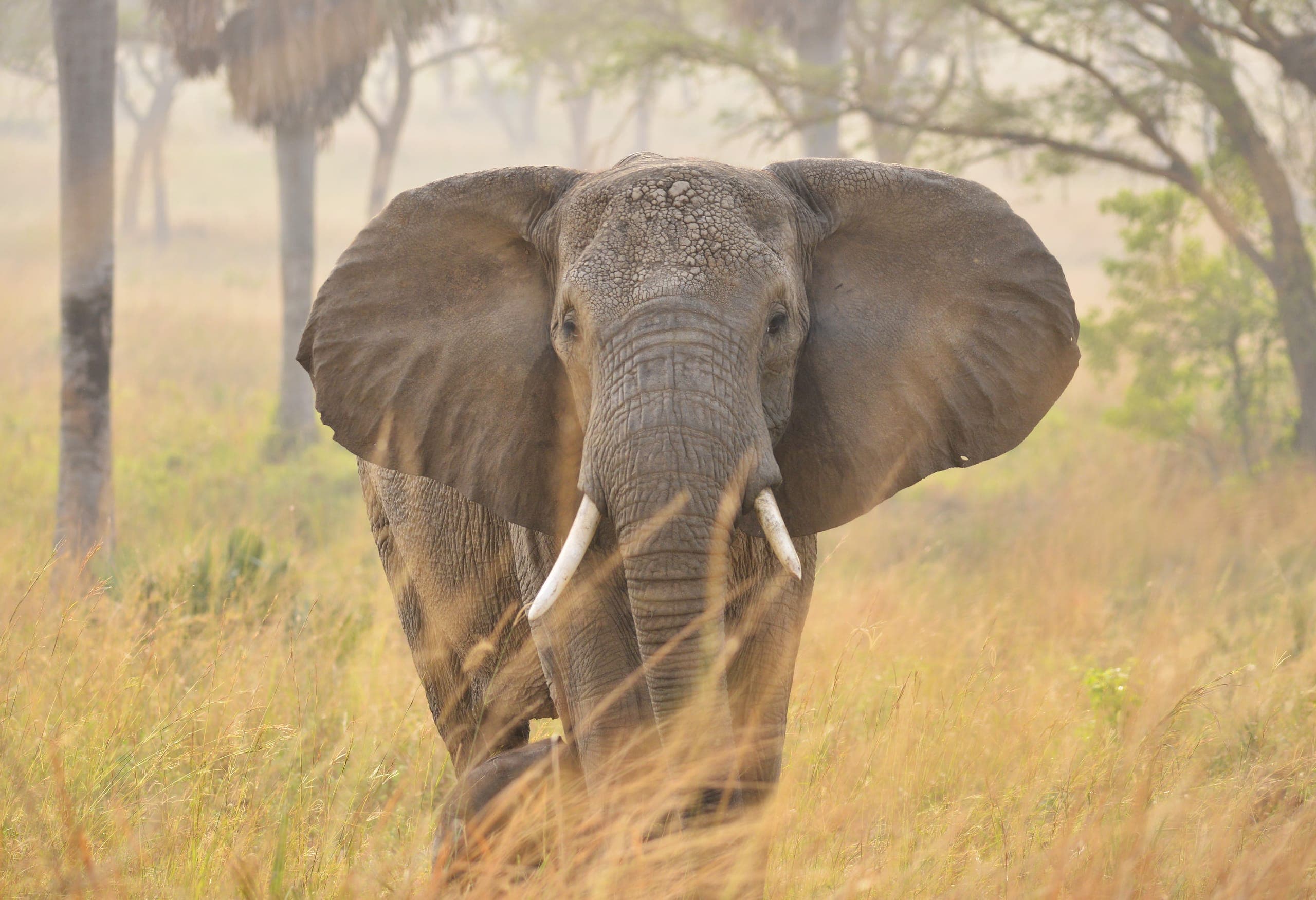
The park's landscape is shaped by a series of rivers, the Tana, Rojewero, Murera, and smaller tributaries, that flow across the park from west to east. The western sections of the park are drier and more open, with semi-arid grass and shrubland. Moving east, the vegetation becomes denser as riverine forest and doum palm woodland take over along the watercourses. The contrast between the arid western plateau and the well-vegetated eastern river corridors is one of the park's defining features.
The Tana River, which forms the park's southern boundary, is the largest river in Kenya and provides permanent water and extensive riverine forest. The doum palm grasslands in the park's eastern sections are distinctive: tall palms spaced across flat alluvial ground with a cathedral-like quality in the early morning light.
Rocky inselbergs and kopjes are scattered through the western section, providing habitat for leopard, klipspringer, and hyrax.
Fauna
Wildlife Highlights
Reticulated giraffe, Grevy's zebra, Beisa oryx, and gerenuk bring the northern dry-country wildlife profile to Meru. These species, absent from the Mara and Amboseli, are well represented in the park's drier western sections.
White rhinoceros and black rhinoceros are present in the managed sanctuary. White rhino are the more reliably encountered. Guided drives within the sanctuary, arranged through the park, focus specifically on finding the animals and give good probability over a 2 to 3 day visit.
Lion are well established in the park. The absence of heavy vehicle pressure means the cats are less habituated than in the Mara or Amboseli, and encounters tend to feel more incidental. Leopard are present in the kopje areas and riverine woodland. Cheetah are recorded on the open western plateau.
African wild dog have been documented in Meru in recent years. Sightings are irregular but the pack presence in the ecosystem is confirmed. A wild dog encounter at Meru would be a rare finding by any standard.
Hippopotamus and Nile crocodile are present along the Tana River and the main river systems. Buffalo are common in the riverine zones. Elephant are well distributed across the park.
Birdlife exceeds 427 species and includes a mix of northern Kenya dry-country species and forest birds from the riverine zones. Peter's finfoot and various kingfisher species are found along the rivers.
On the Ground
Safari Experiences
Game drives across the western plateau and into the riverine eastern zones provide the core experience. The contrast between the two habitat zones is worth planning specifically into the drive routing: an early morning drive across the open doum palm grassland followed by a move into the denser riverine forest covers very different wildlife and atmosphere.
Rhino sanctuary drives: Arranged through the park authority with a dedicated guide. The focused time inside the sanctuary produces rhino sightings at a meaningful rate over a multi-night stay.
Walking safaris are available with armed rangers. The scale of the park and the relatively low visitor volume make this a genuinely wild experience. Riverine walks along the Tana and its tributaries are particularly good.
Night drives are available from some properties and are productive for leopard, genet, and various nocturnal species in the woodland zones.
Tana River access: Some camps in the east offer boat trips or guided walks along the Tana River. This provides a very different perspective from game drives and brings crocodile, hippo, and riverine bird species into focus.
Regions of the Park
Western Plateau: The drier, more open section of the park. Best for reticulated giraffe, Grevy's zebra, Beisa oryx, and cheetah. Rocky kopjes here are good leopard habitat.
Doum Palm Grassland (Central East): The distinctive doum palm country, particularly striking in the morning. Elephant are common here and the bird diversity is high.
Tana River Corridor (South): Dense riverine forest along the Tana. Good for forest species, hippo, crocodile, and a different atmosphere from the open sections. Less visited.
Rhino Sanctuary (North): A managed area within the park accessible with a dedicated guide. The focus is specifically on white and black rhino encounters.
Planning Your Visit
Best Time to Visit
June to October is the primary dry season and the recommended period. The western plateau is dry and open, rhino are more visible in shorter vegetation, and predator activity around water sources intensifies.
January to February is the short dry season and an alternative window. The landscape is greener after the November rains, which can improve photography conditions.
March to May: Long rains. Some tracks, particularly in the riverine east, can become difficult. A quieter period with lower visitor numbers. The park remains accessible in the western sections.
Getting There
By charter flight: Meru Mulika Airstrip serves the park with charter flights from Wilson Airport in Nairobi (approximately 1 hour). This is the most practical approach and avoids a long road journey. Transfers to camp are organised through the lodge.
By road: The drive from Nairobi to Meru town takes approximately 3 to 4 hours. From Meru town to the park entrance is a further 1 to 2 hours on rough roads. Total road time from Nairobi is approximately 5 to 6 hours. A 4WD is essential for the park interior.
How Many Nights
2 nights covers the western plateau, one rhino sanctuary drive, and the riverine zones in basic form.
3 nights allows for a comprehensive exploration of all park zones, dedicated rhino time, a walking safari, and the unhurried pace that the park actually rewards.
Meru works well in combination with either Samburu (to the north) on a northern Kenya circuit, or with Mount Kenya and the Laikipia Plateau on a central Kenya route.
Where to Stay
Luxury Lodges and Camps
Elsa's Kopje: Built on the rocky inselberg where George Adamson lived and where the Born Free story was partly lived out, this is the most atmospheric property in Meru. Individual cottages perch on the kopje with views across the park. The guiding is strong and the wildlife access excellent. The historical and literary connection gives the property genuine depth beyond its physical design. The standard is high and it remains the benchmark property for a Meru visit.
Midrange Lodges and Camps
Offbeat Meru: A comfortable camp in the park's east, near the riverine zones. A well-run option for travelers who want to explore the eastern sections and the Tana River corridor specifically. Better priced than Elsa's Kopje.
Zorani uses its current Luxury and Midrange accommodation tiers in Meru. The selected property should have a verified operating status and suitable access for the planned park activities.
Combining With Other Destinations
Samburu National Reserve is approximately 2.5 to 3 hours northwest of Meru (or a short charter hop). A northern Kenya circuit combining Samburu and Meru gives a diverse dry-country wildlife program with minimal overlap. The Samburu Special Five and the Elsa connection of Meru are complementary.
Mount Kenya National Park: The mountain and its surrounding forests lie between Meru and Nairobi. A Meru and Mount Kenya circuit, adding a mountain lodge or a lower-slope walking day, is a distinctive central Kenya program.
Laikipia Plateau: From Meru, the Laikipia conservancies are accessible via the Isiolo and Nanyuki road corridor. Combining Meru with a Laikipia conservancy adds community conservation, night game drives, and walking or riding safaris.
Photography
Meru's combination of low visitor numbers and diverse habitat makes it a strong photography destination for travelers willing to work for encounters. The doum palm grassland in early morning produces a warm, golden quality of light and atmosphere rarely available in more visited parks. The kopje areas provide classic African landscape compositions with rocky outcrops, acacia, and savannah.
Reticulated giraffe in the western scrub, at close range with no competing vehicles, is an image quality difficult to replicate in a busier park. The riverine zones in the east are productive for bird photography with multiple kingfisher species and large waders along the water margins.
Meru Questions
What is the connection between Meru and Born Free?
Joy and George Adamson raised Elsa the lioness in and around what is now Meru National Park in the late 1950s. Joy's book Born Free (1960) and the subsequent film brought Meru international attention. Elsa's grave is within the park, and Elsa's Kopje lodge sits on the rocky outcrop where George Adamson lived.
Can I visit Elsa's grave?
Elsa's grave is located within the park and can be visited on request. It is a simple site with genuine historical significance for those who know the story. Your guide can incorporate it into a morning drive.
Why does Meru get so few visitors?
A combination of historical reputation (Meru suffered serious poaching and security problems in the 1980s and 1990s, which damaged both wildlife populations and visitor confidence), competition from better-known parks, and lower guaranteed game densities have kept numbers low. The recovery since the 2000s has been substantial. This is, paradoxically, Meru's main attraction for travelers who value privacy.
Is the Big Five present at Meru?
Yes. Elephant, buffalo, lion, leopard, and both black and white rhino (in a managed sanctuary) are all present. Meru also holds northern dry-country species (reticulated giraffe, Grevy's zebra, Beisa oryx, and gerenuk) that are absent from the southern parks. Wild dog are documented in the broader ecosystem.
Is the rhino sanctuary at Meru worth visiting?
Yes. The dedicated sanctuary drives with a focused guide produce meaningful rhino sightings over a multi-night stay. White rhino are more reliably encountered than black rhino. No sightings are guaranteed, but the program is well managed and success rates over two or three nights are reasonable.
How does Meru compare to Samburu?
Both parks have the northern dry-country wildlife profile, but they differ significantly in landscape and atmosphere. Meru's riverine east (fed by the Tana River and its tributaries) is not replicated at Samburu. The Born Free history and considerably lower visitor numbers provide further differentiation. If you can visit both, they are complementary rather than redundant.
How does Meru compare to Tsavo for wildlife?
Both parks have lower wildlife densities than the Mara or Amboseli. Meru has a more varied habitat range across a smaller area and a more focused rhino programme. Tsavo East has greater scale and a stronger elephant showing. Both suit travelers who value solitude and are not dependent on guarantee-level wildlife encounters.
When is the best time to visit Meru?
June to October is the primary dry season recommendation, when tracks are passable and wildlife concentrates near water sources. January to February provides a shorter dry window. Avoid the long rains of April to May when tracks in the eastern riverine zones can become impassable. Meru is wetter than the southern parks due to its position northeast of Mount Kenya.
How do I get to Meru?
Meru is accessible by charter flight to Meru airstrip, which takes approximately 45 minutes from Wilson Airport in Nairobi. Road access is possible via Meru town, approximately 4 to 5 hours from Nairobi. Most itineraries use charter flights for efficiency given the distance.
How can Meru be combined with other Kenya parks?
Meru works well as part of a northern Kenya circuit with Samburu and Ol Pejeta. It can also be combined with a Nairobi start and a finish at the coast via Tsavo. The charter network connects it to most Kenyan airstrips. A two or three night minimum is needed to do the park justice given the travel time involved.
Zorani Expeditions
Plan Your Meru Safari
Every Journey we design is built around your goals, not a standard route.
Speak to a Specialist