The differences go beyond permit price. The forest character is different. The access logistics are different. The accommodation landscape is different. And the type of traveler who gets the most from each country is different.
Both countries offer gorilla trekking. Both are worth considering. But they are not interchangeable, and the choice matters more than most planning guides suggest.
The differences go beyond permit price. The forest character is different. The access logistics are different. The accommodation landscape is different. And the type of traveler who gets the most from each country is different.
This is what you actually need to know to make the right call.
The Permit: Cost and What It Covers
Uganda gorilla trekking permits cost USD 800 per person, issued by the Uganda Wildlife Authority. Rwanda gorilla trekking permits cost USD 1,500 per person, issued by the Rwanda Development Board.
Verify current permit prices with UWA and RDB before publishing. Uganda raised its permit price from USD 700 to USD 800 in July 2024.
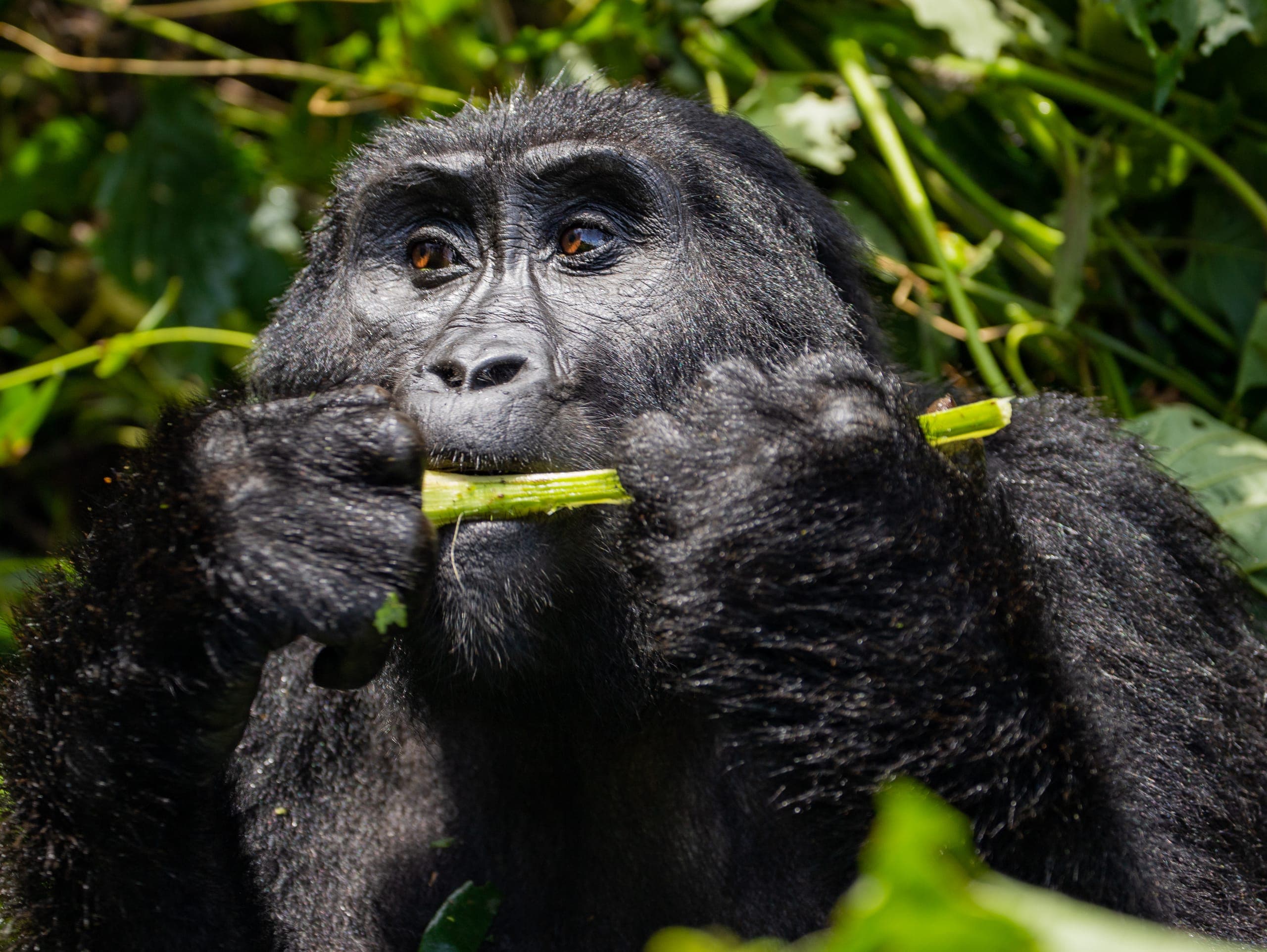
Both permits cover a single trek to visit one habituated gorilla family. You spend one hour with the gorillas once the family is located. That is the same in both countries.
The difference in price is significant, particularly for couples or small groups. On a two-person trek, Uganda costs USD 1,600 in permits alone. Rwanda costs USD 3,000. That gap shapes how the rest of the journey can be structured.
The Forest: What You Are Actually Walking Into
In Uganda, gorilla trekking takes place primarily in Bwindi Impenetrable Forest in the southwestern corner of the country. The name is accurate. Bwindi is dense, steep, wet, and heavily vegetated. The terrain varies significantly between its four sectors.
The secondary Uganda option is Mgahinga Gorilla National Park, also in the southwest, on the volcanic slopes of the Virunga range. Mgahinga has fewer habituated families and more limited permit availability.
In Rwanda, trekking takes place in Volcanoes National Park in the Virunga mountains. The terrain is volcanic rather than equatorial rainforest. Trekkers move through bamboo forest, open moorland, and dense vegetation as the altitude changes. The landscape is dramatic in a different way from Bwindi.
Neither option is categorically easier. Rwanda's Volcanoes Park can involve altitude above 3,000 metres. Bwindi involves steep gradient and dense undergrowth, particularly in its southern sectors. Fitness expectations should be comparable for both.
How Many Families Can You Trek?
Uganda has over 20 habituated gorilla families across Bwindi's four sectors: Buhoma, Ruhija, Rushaga, and Nkuringo. Each sector has a distinct character.
Rushaga has the highest concentration of habituated families. Buhoma is the most established and the most visited. Ruhija sits at higher altitude and tends to be quieter. Nkuringo has a more remote feel and involves a steep descent on the approach, which means a demanding uphill return.
Rwanda has a smaller number of habituated families in Volcanoes National Park. The park is more contained, and the trekking experience tends to feel more managed and predictable. For some travelers that is a benefit. For others it is less appealing than the rawer character of Bwindi.
Accommodation
Rwanda has invested significantly in premium lodge infrastructure directly adjacent to Volcanoes National Park. Several of the strongest gorilla lodges in Africa are located here, with short transfers to the trekking headquarters, strong architecture, and genuine conservation integration.
Uganda's lodge range is broader. Bwindi has properties at various price points, from mid-level camps to premium lodges with serious guiding and strong design. The trade-off is that some lodges require longer road transfers between sectors, and road quality varies.
For travelers prioritising lodge quality with minimal road time, Rwanda often has the edge. For travelers wanting more choice across a budget range or combining gorilla trekking with other Uganda wildlife parks, Uganda offers greater flexibility.
Access: Getting There
Rwanda's access is uncomplicated. Kigali International Airport is well-connected from Europe, the Middle East, and major African hubs. The drive from Kigali to Volcanoes National Park takes around two to two and a half hours on good roads. It is possible to fly in, trek the following morning, and fly out without losing days to road time.
Uganda's access is longer. The main entry point is Entebbe International Airport. The drive from Entebbe to Bwindi is typically eight to nine hours depending on sector and road conditions. Domestic charter flights to Kihihi or Kisoro airstrips reduce transfer time considerably but add cost and depend on aircraft and weather.
If time is a constraint, Rwanda has the cleaner access. If the gorilla trek is part of a longer Uganda itinerary, the road transfer to Bwindi is manageable within a well-structured schedule.
Which Country Suits Which Traveler
Uganda suits travelers who:
• are building a multi-park Uganda journey
• want lower permit costs
• prefer more gorilla family and sector variety
• want a wilder, more physically demanding forest experience
• are comfortable with longer road transfers or domestic charter flights
Rwanda suits travelers who:
• want a shorter, more contained trip
• prioritise lodge quality and proximity to the park
• have limited time and need fast access from the airport
• want to combine gorilla trekking with Kigali before or after
• are willing to pay more for a smoother overall experience
Can You Do Both?
Yes. A combined Uganda and Rwanda gorilla journey works well for travelers with two weeks or more. The logical route is Uganda first, then Rwanda, or vice versa, connecting overland via the western route or by air between Kigali and Entebbe.
If you are considering both countries, let the itinerary structure drive which comes first rather than building the journey backwards from the border crossing.
The Short Answer
Uganda is the stronger choice for value and variety. Rwanda is the stronger choice for ease of access and lodge experience. Neither is wrong. But they reward different types of trips, and understanding that difference is what makes planning this journey well worthwhile.