Is the Rwenzori Tougher Than Kilimanjaro?
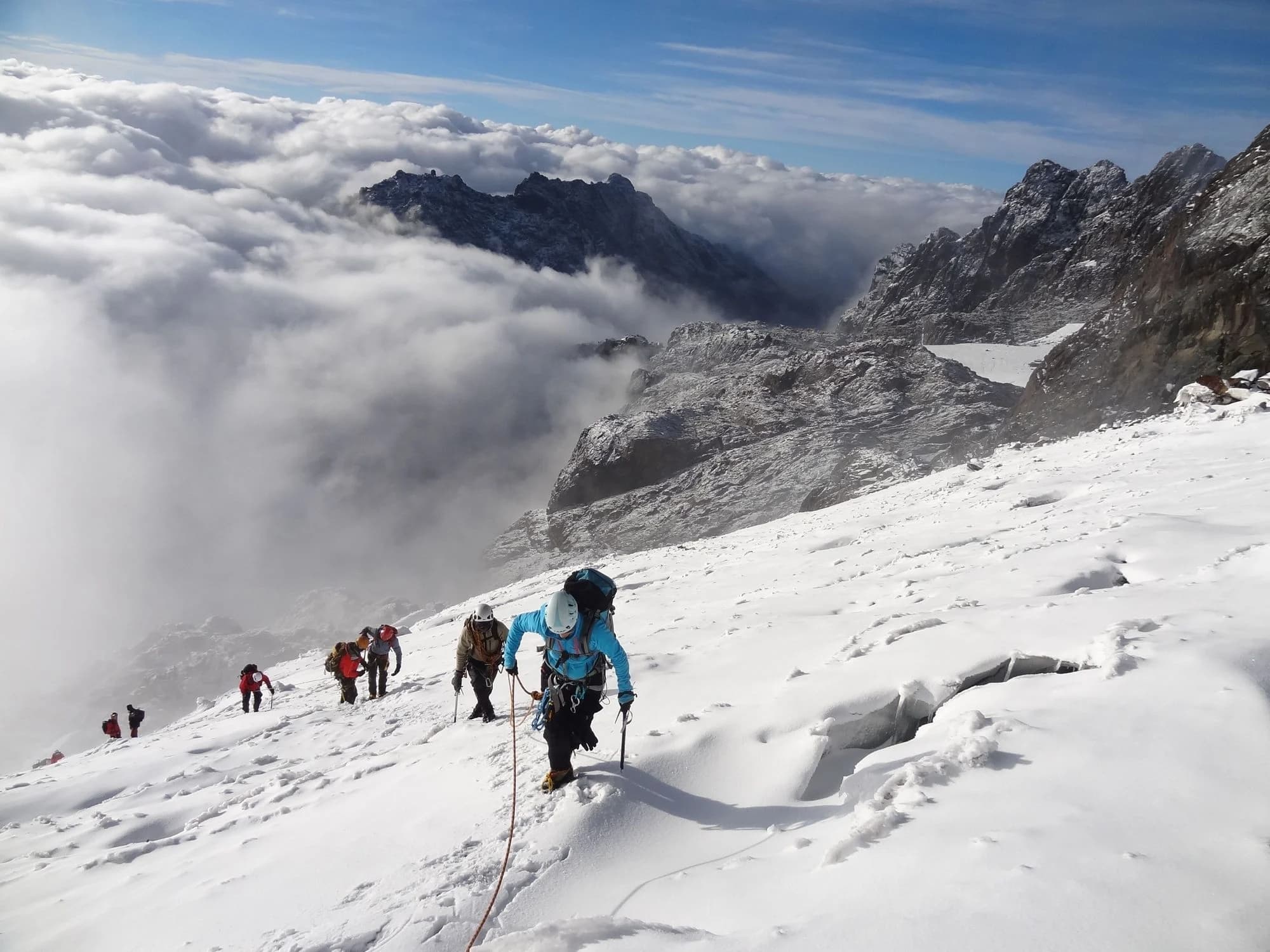
In most of the ways that matter to a fit trekker, yes. Kilimanjaro is a single volcanic cone with well-maintained, largely non-technical trails; most standard routes involve no ropes, no crampons, and no glacier travel, and a reasonably fit trekker with proper acclimatisation has a strong chance of reaching the summit. The Rwenzoris are a different proposition entirely. They're a full mountain range rather than one peak, which means the standard route to Margherita Peak, Uganda's highest point at 5,109 metres, involves repeated ascents and descents across ridges and valleys rather than one continuous climb. The final push to the summit crosses genuine glacier terrain, requiring crampons, ropes, and a guide experienced in glacier travel — closer to a technical mountaineering objective than a long walk at altitude. Trails are also considerably muddier and wetter than Kilimanjaro's drier slopes, adding a layer of physical grind that has nothing to do with elevation.
What Makes the Mountains of the Moon Different
The name predates modern tourism by roughly two thousand years — Ptolemy referred to a mountain range in this region as the source of the Nile's headwaters, and Mountains of the Moon has stuck to the Rwenzoris ever since. What makes the range genuinely distinct from Uganda's other major destinations is the ecosystem itself: as the trail climbs, it passes through dense tropical forest, then bamboo forest, then a zone of heather trees and giant lobelia found only at this altitude in a handful of East African ranges, and finally alpine terrain near the glaciers — glaciers that are retreating quickly and, by credible projections, may not persist for many more decades. The Rwenzoris are a UNESCO World Heritage Site, and see a small fraction of the foot traffic Kilimanjaro does, which gives the whole experience a quieter, more solitary character.
Which Trek Should You Choose?
Not every trek in the Rwenzoris is an attempt on Margherita Peak, and it's worth being clear about the difference before committing to either. Full summit treks typically run seven to nine days, following either the Central Circuit Trail or the Kilembe route, both converging on the technical glacier approach near the top. Shorter, lower-altitude treks — reaching around 3,000 to 3,100 metres without attempting the summit — run three to four days along the same general trail network, offering the range's forest and heather zones, waterfalls, and views of the high peaks without the glacier travel or the same physical demand. For trekkers who want the Rwenzori experience without a full mountaineering commitment, the shorter route is a genuine, complete trip in its own right, not a consolation option.
How Fit Do You Need to Be?
A full Margherita Peak attempt demands real trekking fitness — multiple consecutive days of six to ten hours of walking over uneven, often muddy terrain, followed by a technical, early-morning summit push involving glacier travel. This isn't a trip to attempt without a genuine fitness base built over the months beforehand, and prior high-altitude trekking experience, Kilimanjaro included, is a reasonable prerequisite rather than a nice-to-have. The shorter, lower-altitude treks are considerably more forgiving, suited to trekkers with solid general fitness and some multi-day hiking experience, without requiring the same specialised preparation.
What Surprises First-Time Trekkers
The mud is usually the first surprise. The Rwenzoris receive high rainfall regardless of season, and trails that look manageable on a map often involve genuine bog sections that slow progress considerably. The huts along the route are functional rather than comfortable, and nights at altitude before the summit push are cold in a way that catches some trekkers off guard, even those who prepared gear carefully. What tends to surprise people more pleasantly is the solitude — after Kilimanjaro's well-trodden trails and crowded camps, many trekkers describe the Rwenzoris as feeling genuinely remote, with long stretches of trail where no other group is in sight.
Should You Climb Margherita Peak?
This depends more on what a trekker is looking for than on fitness alone. For someone who has already summited Kilimanjaro and wants a technical mountaineering objective — glacier travel, ropes, a genuine sense of climbing rather than walking — Margherita is a serious and rewarding answer. For someone who wants the Rwenzori experience, the ecosystem, the solitude, and a real physical challenge without committing to technical glacier terrain, one of the shorter treks delivers most of what makes the range distinctive, at a fraction of the time and cost, and with meaningfully less risk.
Best Time to Trek
The Rwenzoris see rain in every month, which is part of the range's character rather than a planning failure to work around. That said, the driest stretches, roughly mid-December to mid-February and June through August, offer somewhat firmer trails and a better chance of clear summit views, and are the periods most operators recommend for a Margherita attempt specifically, where visibility on summit day genuinely matters.
Getting There and Where to Stay
The trailhead at Nyakalengija sits near Kasese, a town in western Uganda that also serves as a common gateway for Queen Elizabeth National Park. Most trekkers base themselves in Kasese the night before starting, using local lodges to organise final gear checks ahead of the mandatory briefing from Uganda Wildlife Authority staff at the trailhead. Kasese is reachable from Kampala by road in around six to seven hours, or by domestic flight to a nearby airstrip followed by a shorter transfer.
What It Costs
Trekking costs are driven primarily by trip length, since park fees, guide fees, porter costs, and hut accommodation are typically charged per day on the mountain rather than as a flat rate. A full Margherita Peak trek, given its length and the additional technical guiding required for the glacier sections, costs considerably more than a shorter, non-technical trek — the exact figure depends on group size, operator, and season, and is worth requesting as a specific quote rather than assuming a fixed rate.
How the Rwenzoris Fit Into a Wider Uganda Journey
Kasese's proximity to Queen Elizabeth National Park makes a natural pairing: a trek in the Rwenzoris followed by a few days of savanna safari and a Kazinga Channel boat cruise, without significant additional travel time between the two. For travellers with enough time, extending further to Bwindi for gorilla trekking is also realistic from the same general region, though it adds several more days to an already substantial itinerary.
Frequently Asked Questions
Do I need prior climbing experience for Margherita Peak? Formal mountaineering experience isn't strictly required, but genuine trekking fitness and ideally some prior high-altitude experience make a meaningful difference, given the technical glacier section near the summit.
Is altitude sickness a real risk? Yes — Margherita Peak sits above 5,000 metres, and altitude-related illness is a genuine risk on any trek reaching this height. Reputable operators build acclimatisation days into the itinerary and monitor trekkers throughout.
How does the cost compare to Kilimanjaro? Rwenzori treks are generally less expensive than an equivalent-length Kilimanjaro climb, in part because the region sees far less tourism traffic and correspondingly lower operator overheads, though the technical Margherita summit adds cost relative to Kilimanjaro's non-technical routes.
Is the Rwenzori crowded? No — this is one of its defining characteristics. Trekkers frequently go long stretches without encountering another group, a sharp contrast to Kilimanjaro's more heavily trafficked routes.
Speak to a Zorani travel specialist about which Rwenzori route fits your fitness and time, and how to pair it with Queen Elizabeth National Park or a longer Uganda journey.


