Why Jinja Feels Different From the Rest of Uganda
Most of Uganda's tourism circuit revolves around wildlife — a gorilla family in Bwindi, a lion in Queen Elizabeth, a chimpanzee in Kibale. Jinja breaks that pattern entirely. The town sits at the point where Lake Victoria narrows into the Nile, and everything that makes it worth visiting flows from that single piece of geography: moving water and the activities built around it. Travellers who add Jinja to a Uganda route aren't chasing a species. They're chasing a river.
Is White Water Rafting on the Nile Worth Travelling For?
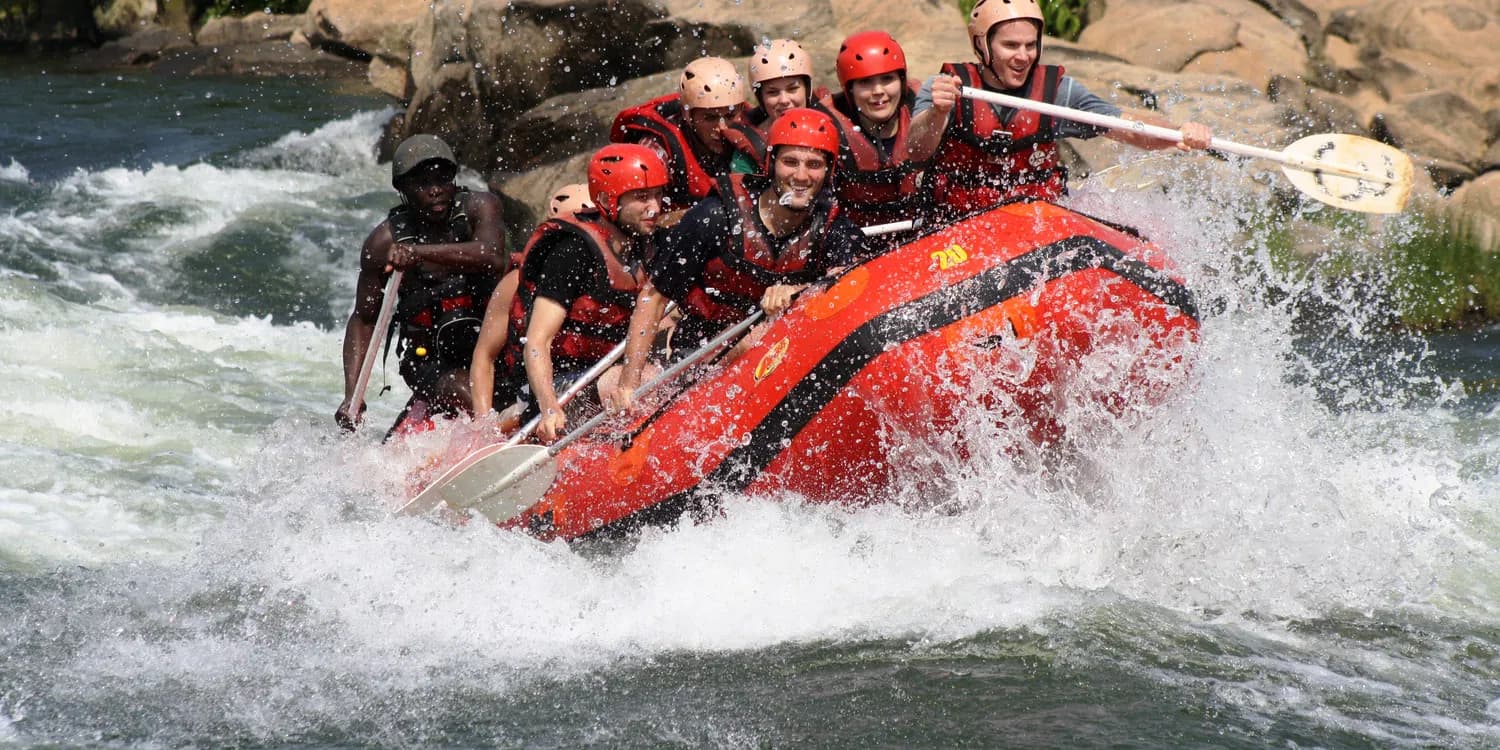
For a meaningful number of travellers, yes, and the reason explains a lot about why Jinja has built its reputation around this one activity. The Nile below Jinja carries some of the more consistent commercial white water available anywhere, run by operators who have worked these rapids for decades. A full-day trip typically starts near Bujagali and works downstream toward Itanda Falls, covering around nine major rapids, four of them grade five — technical, genuinely demanding water capable of throwing a raft if it's misread. Between rapids, the river slows into wide, calm stretches with a completely different rhythm: birdlife along the banks, room to swim beside the raft, long quiet gaps between the intensity. That contrast is part of what makes the day work. It isn't nine hours of adrenaline; it's adrenaline punctuated by calm.
Family float trips exist for travellers who want time on the river without the technical rapids, following a gentler route that avoids the grade-five sections. It's a genuine alternative rather than a diluted version of the main event.
Beyond the Rapids
Rafting gets most of the attention, but it isn't the whole picture. Bujagali itself is no longer a waterfall in the traditional sense — the site was submerged by a hydroelectric dam completed in 2011, and what was once one of the Nile's best-known rapids is now a reservoir. Itanda Falls, roughly 27 kilometres from Jinja town, has effectively taken over as the region's dramatic set piece: a site considered sacred by the local Basoga community, where the Nile's full force is visible in a way the calmer water near town doesn't offer. Griffin Falls and Busowoko Falls, smaller and less visited, round out the area's waterfall circuit for travellers who want to see more of the Nile than the commercial rafting stretch covers.
Near town, the Source of the Nile monument marks the point close to where the river leaves Lake Victoria. Ripon Falls, the site historically credited with the exact source, is submerged as part of the same hydroelectric development that reshaped Bujagali. A short boat trip out from the monument gives a better sense of the scale of what's beginning there than the shoreline view alone.
Kayaking, stand-up paddleboarding, and quad biking along the riverbanks round out the activity list, along with a bungee jump site overlooking the Nile for travellers who want a shorter, more contained dose of adrenaline than a full rafting day requires.
Where the River Crowd Actually Stays
Jinja's accommodation sits mostly along the riverbank north of town, close to the same stretch of water the rafting trips run through. Camps like Explorers River Camp draw much of the rafting crowd through sheer proximity to the put-in point, while options like Griffin Falls Camp sit further out, closer to their namesake falls, trading convenience for quiet. This isn't an endorsement of any specific property — camps change hands and standards shift, so current status is worth confirming before booking — but the general pattern holds regardless: proximity to the river matters here more than almost anywhere else in Uganda, since so much of what Jinja offers happens on or beside the water.
How Much Time Should You Spend Here?
One full day covers the core rafting experience. Two days allow for rafting plus one additional activity — a waterfall visit, a source-of-the-Nile boat trip, or simply a slower morning before moving on. Most travellers try to squeeze Jinja into a single day trip from Kampala, and it works: the drive is manageable, and a full rafting day followed by a return that evening is a realistic plan. But an overnight stay changes the character of the visit. The rafting groups clear out by late afternoon, and a quiet evening by the river, without the day's crowd of operators and shuttle vans, is a genuinely different experience from the one most day-trippers get.
Can Jinja Work as a Day Trip?
Yes, and for travellers with limited time it's often the right call. A day trip from Kampala — roughly two to three hours each way — leaves enough time for a full rafting day if departure is early. The trade-off is a long day bookended by driving, with no chance at the quieter evening described above. For travellers already routing through Jinja on the way to or from a park in the east or north, an overnight stop costs little in additional time and adds meaningfully to the experience.
Who Should Include Jinja in Their Uganda Journey?
Jinja suits travellers who want at least one genuinely active day built into an otherwise wildlife-focused trip, and it works well for mixed groups — the range of intensities, from grade-five rafting to a gentle float trip or a calm boat cruise, means a family or group with different appetites for adventure can each find something that fits, rather than compromising on one shared activity. It's a weaker fit for a trip built entirely around slow travel, or for anyone travelling with very young children, since most river-based activities carry a minimum age set by individual operators — worth confirming directly rather than assuming.
What It Costs
Rafting day trips are typically priced in the range of $125 to $150 per person, generally inclusive of equipment, a safety briefing, lunch, and transport from central Jinja, though this should be confirmed with the specific operator since rates change. Bungee jumping, kayaking, and quad biking are usually priced separately as standalone half-day activities. None of these figures should be treated as fixed without checking current rates.
Best Time to Visit
The Nile's water levels shift with the season, which affects the character of the rapids more than it affects whether rafting runs at all — Jinja operates year-round. During the drier months, roughly June to September and December to February, rapids tend to be more technical, with the grade-five sections more pronounced. During wetter months, higher water can smooth some rapids while intensifying others, and operators adjust routes accordingly. Neither season rules rafting out; the experience simply shifts in character.
How to Get There
Jinja sits roughly two to three hours from Kampala by road, and about the same from Entebbe. Most visitors arrive by private transfer or as part of an organised rafting day trip that includes pickup from Kampala hotels, which means transport rarely needs arranging separately if rafting is booked through an established operator.
Nearby Attractions and How Jinja Connects
Jinja sits naturally along a route between Entebbe or Kampala and destinations further east or north, including Mbale and the base of Mount Elgon, or looping back toward Murchison Falls. Mabira Forest, roughly forty minutes toward Kampala, offers a shorter, gentler forest walk and zip-lining for travellers with an extra afternoon. None of this requires Jinja to be a dedicated multi-day trip on its own — it works best woven into a longer Uganda route.
Frequently Asked Questions
Is white water rafting on the Nile safe? Commercial operators run safety briefings before every trip, provide helmets and life jackets, and staff rafts with experienced guides and safety kayakers following alongside. Grade-five rapids carry real risk, and rafts do occasionally flip — that's part of the honest picture, covered directly in the pre-trip briefing rather than glossed over. Travellers uncomfortable with that risk have the family float trip as an alternative.
Can children go rafting? Most operators set a minimum age for the full grade-five trip, typically around fifteen, though this varies and should be confirmed directly. Family float trips, which avoid the technical rapids, generally accommodate younger children.
How many days do you need in Jinja? One day covers rafting; two allows for rafting plus a waterfall visit or a quieter evening by the river.
Is Jinja worth visiting if you don't want to raft? Yes, to a lesser degree — the source-of-the-Nile boat trip, Itanda Falls, and Mabira Forest all work as a gentler alternative to the rafting-centred itinerary most visitors follow.
The rafting is the headline, but the version of Jinja most travellers remember fondly is usually the quieter one — an evening by the river once the day's operators have packed up. Speak to a Zorani travel specialist about where Jinja fits in your route, and whether it's worth the extra night.


