KENYA · EAST AFRICA
Amboseli
Long-studied elephant herds on open plains beneath Mount Kilimanjaro
KENYA · EAST AFRICA
Where Elephants Walk Beneath Kilimanjaro
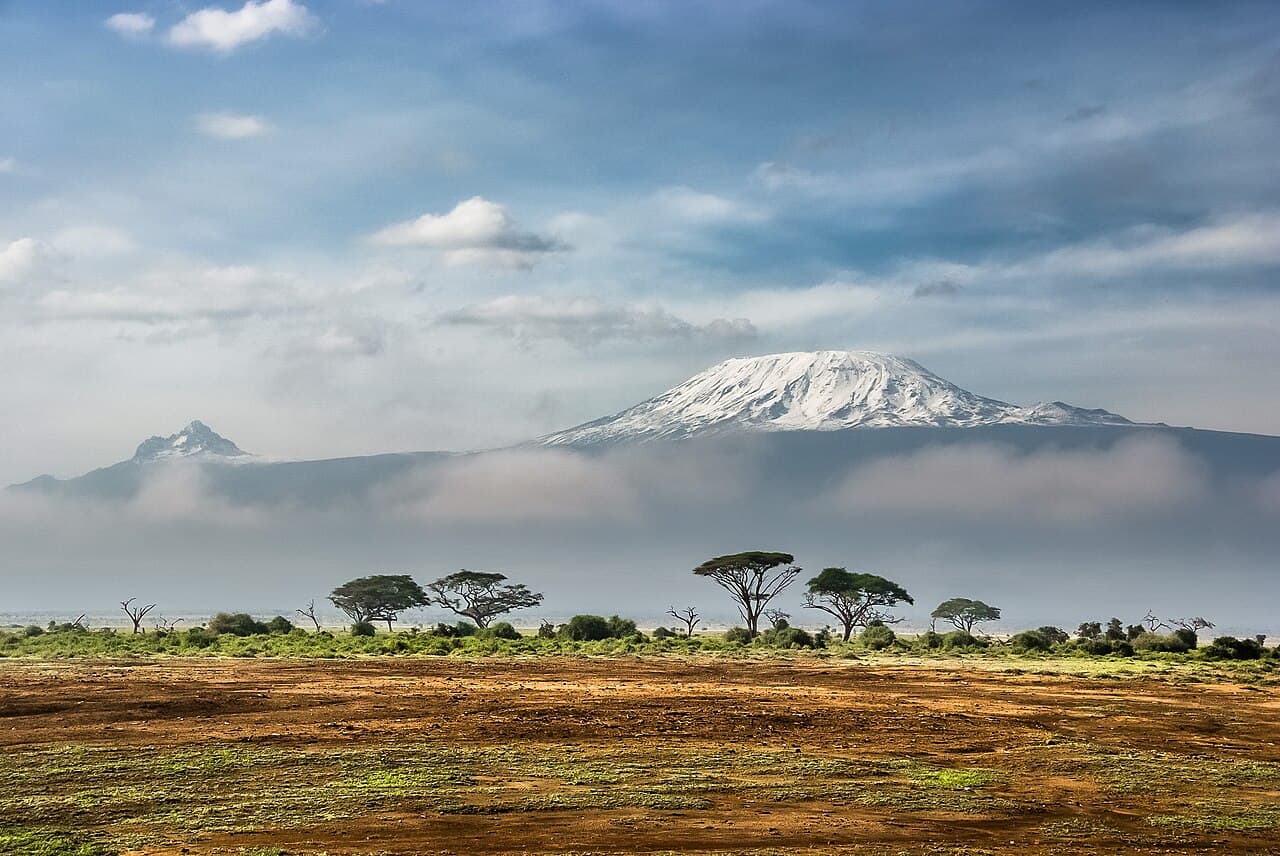
Amboseli National Park sits at the foot of Mount Kilimanjaro in southern Kenya, just north of the Tanzanian border. It covers 392 square kilometres, a relatively contained area that concentrates wildlife around the permanent swamp systems at its centre. The park is best known for two things: its large, well-studied elephant herds, and the opportunity to photograph those elephants with Kilimanjaro's snow-capped summit in the frame. When the mountain is visible, which is most reliably early in the morning before cloud builds, it produces images that have become emblematic of Kenyan wildlife.
The Amboseli ecosystem extends well beyond the park boundary into community conservancies and Maasai group ranches to the north, east, and west. This broader landscape supports the seasonal movement of elephant herds that may number in the hundreds during the dry season. The park acts as a core area of permanent water and vegetation in a wider system that sustains one of the most studied elephant populations in Africa, tracked continuously since the 1970s by the Amboseli Elephant Research Project.
Safari Experiences
The Case For Amboseli
Why Visit Amboseli
The elephant experience at Amboseli is different from that at other Kenyan parks. The herds here are habituated over decades to vehicle presence and research teams, which means approach distances are often close and behavior is natural and unforced. Large multi-generational family groups moving across the swamp margins with Kilimanjaro in the background are a consistent dry-season image. The park regularly provides encounters that longer and more expensive safaris to remote parks cannot guarantee.
The swamp systems (Enkongo Narok and Longinye) provide permanent water and attract a concentration of wildlife throughout the year. In the dry season, this concentration intensifies. Elephant, buffalo, hippo, and waterbirds gather along the swamp margins in a way that is remarkably accessible from vehicles.
Amboseli is also one of the most practical entry points to a Kenya safari circuit, particularly for travelers arriving into Nairobi. The 4-hour road drive or 45-minute charter flight from Wilson Airport both work well. For many first-time Kenya visitors, Amboseli provides an immediate and high-quality wildlife experience that sets the tone for the rest of the journey.

Terrain & Ecosystem
Landscape & Environment
The park occupies a basin that was once a shallow lake. Lake Amboseli is now seasonal and largely dry, creating a pale grey expanse of dust and salt that turns into a shimmering sheet of water during wet months. Around the basin, swamp vegetation fed by underground water filtering through the volcanic rock of Kilimanjaro supports a belt of green that sustains permanent wildlife concentrations.
Yellow fever acacia woodland covers much of the park's lower terrain, providing shade for larger mammals and a nesting habitat for birds. Open grassland extends north and east toward the ecosystem boundary. The views toward Kilimanjaro dominate the southern horizon on clear days, and the combination of open landscape, swamp, and mountain backdrop gives Amboseli a visual quality that is its most distinctive feature.
The park floor is generally flat. Observation Hill, a low volcanic cone, provides the only elevated viewpoint and gives an aerial perspective across the basin, swamp, and plains.
Wildlife Highlights
Elephant are the defining species. The Amboseli population has been studied and individually identified since 1972. Large families move through the swamp systems throughout the day and can be approached closely in vehicles. Breeding herds of 20 to 50 animals are common. Large bulls with impressive tusks are present year-round.
Lion are present but at lower densities than some other Kenyan parks. Sightings are possible but not guaranteed on short visits. Cheetah are present in the open plains areas and are more regularly encountered than lion on average. Hyena are common and active throughout the day. Leopard are present but rarely seen.
Masai giraffe, common zebra, wildebeest, Cape buffalo, and impala are all resident and reliably encountered on game drives. Hippopotamus are present in the permanent swamp sections.
Birdlife is extensive, with over 600 species recorded in the broader ecosystem. Greater and lesser flamingo appear seasonally when Lake Amboseli holds water. African fish eagle, grey crowned crane, saddle-billed stork, and numerous herons and egrets are common around the swamp. Kenya's most diverse waterbird concentrations in the swamp areas reward early morning drives.
On the Ground
Safari Experiences
Game drives are the primary activity. Drives focus on the swamp margins (Enkongo Narok and Longinye), the yellow fever woodland, and the open plains north of the dry lake. Early morning departures (06:00) give the best light and most animal activity. Afternoon drives (15:30 to 18:00) are excellent for elephant movement toward the swamp. Self-drive is not permitted; all drives require a guide.
Observation Hill walk: A short, permitted walk to the summit of Observation Hill provides the only elevated viewpoint in the park. The view across the basin to Kilimanjaro is the reward, particularly in early morning. This is the only walking activity available inside the park.
Cultural visits to Maasai villages: Maasai community encounters are available outside the park boundary and provide context for the broader ecosystem, where Maasai pastoralists and wildlife have coexisted for generations. Quality varies significantly between operators; arrange this through a guide you trust.
Photography sessions oriented specifically to elephant and Kilimanjaro compositions can be arranged with specialist photographic guides. Some operators offer dedicated half-day photographic vehicles with roof hatches removed.
Regions of the Park
Enkongo Narok and Longinye Swamps: The heart of wildlife activity. Permanent green vegetation on the alkaline plain attracts elephant, buffalo, and waterbirds year-round. Most productive in the early morning and late afternoon.
Open Plains (North and East): Drier grassland where cheetah hunt and zebra and wildebeest move seasonally. Observation Hill sits in this zone.
Lake Amboseli Basin: Seasonal. During wet months, water floods the basin and attracts flamingo and other waterbirds. In dry months it is a pale expanse with dust devils and distant elephant movement.
Kitirua Area (Southern and Eastern Boundary): Closer to the Tanzanian border, more acacia woodland. Less visited but occasionally productive for leopard and smaller mammals.
Planning Your Visit
Best Time to Visit
June to October is the dry season and peak period. Kilimanjaro is visible more frequently in the morning during July and August than at other times of year. Wildlife concentrates around swamp systems. The best conditions for elephant photography.
January to February is the short dry season and an excellent alternative. Slightly greener than the main dry season, which can improve photography conditions. Kilimanjaro visibility is generally good in January mornings.
November brings short rains. The park turns green and migratory birds arrive. Wildlife disperses more widely, but the scenery is more attractive and visitor numbers drop. Some tracks become difficult after heavy rain.
Getting There
By charter flight: Wilson Airport in Nairobi to Amboseli Airstrip takes approximately 45 minutes. This is the most time-efficient approach and is recommended for travelers with limited days. Charter flights require advance booking and are typically part of a multi-park Kenya circuit.
By road: The drive from Nairobi takes approximately 4 hours via the Namanga road (A104) to the Meshanani Gate. The road is largely tarmac with a final dirt section. A 4WD is recommended for the park roads but not strictly necessary for the access road.
Combining with Tsavo: Amboseli connects by road to Tsavo West National Park to the east via the Chyulu Hills corridor. This combination is a natural circuit for a southern Kenya itinerary.
How Many Nights
2 nights is the practical minimum. Two full days of game drives allow you to cover the swamp systems, the dry lake area, and the open plains, and to give the morning Kilimanjaro views multiple attempts.
3 nights is more satisfying and allows for a better photographic rhythm, a cultural add-on, and flexibility around weather and mountain visibility.
Amboseli is typically combined with Masai Mara, Tsavo West, or a Laikipia destination to form a wider Kenya circuit. As a standalone destination, 3 nights is the maximum most travelers find sufficient.
Where to Stay
Luxury Lodges and Camps
Tortilis Camp (Campi ya Tortilis): A well-established luxury camp on a private conservancy adjacent to the park, within the broader Amboseli ecosystem. Tortilis has good guides, a strong environmental track record, and a position that allows wildlife movement through the camp property. The views toward Kilimanjaro from certain areas of the camp are exceptional. One of the most consistently recommended options in Amboseli.
Tawi Lodge: A conservation-oriented luxury lodge in the Maasai community lands adjacent to the park. The lodge has its own conservancy and provides access to areas not available to mainstream park visitors. Strong guiding program and community integration.
&Beyond Kichwa Tembo at Amboseli (or comparable camp): Premium camps adjacent to the park offer the combined benefit of park game drives and community land access. Check current operating camps with your specialist, as the luxury camp landscape evolves.
Midrange Lodges and Camps
Amboseli Sopa Lodge: A reliable midrange option inside the park with a central location and consistent service standards. Less exclusive than the conservancy camps but well-positioned for park access.
Kibo Safari Camp: A tented camp option at accessible price points with reasonable positioning for game drives. Suitable for travelers seeking good wildlife access without the full luxury camp rate.
Combining With Other Destinations
Masai Mara is the most common pairing on a Kenya circuit. Amboseli and the Mara provide contrasting ecosystems and complementary wildlife profiles. The two are connected by charter flight (approximately 1 to 1.5 hours) or a long road transfer.
Tsavo West National Park is 2 to 3 hours east by road and connects naturally to Amboseli for a southern Kenya land circuit. The combination of Amboseli's elephants and Tsavo West's diverse terrain is a strong two-park program.
Chyulu Hills National Park: A small park between Amboseli and Tsavo West with distinctive volcanic landscape and good walking. It can be added as a single-night detour.
Nairobi is 4 hours north and Amboseli typically serves as either the opening or closing section of a Kenya journey for Nairobi-based travelers.
Photography
Amboseli is one of the most photogenic parks in Africa when the conditions align. The combination of open terrain, swamp water, large elephants, and Kilimanjaro provides the archetypal African wildlife photograph. This combination is most achievable between about 06:30 and 09:00 before the mountain clouds over.
Position near the Enkongo Narok swamp looking south gives Kilimanjaro framing behind elephant movement. A 100-400mm zoom covers the range from full-herd environmental shots to tighter individual portraits. Dust on the dry lakebed in the afternoon creates atmospheric effects worth exploring for wider landscape compositions.
Kilimanjaro sightings are never guaranteed. Build at least two or three morning sessions into a three-night stay to maximise the probability of a clear summit shot.
Amboseli Questions
When can I see Kilimanjaro clearly from Amboseli?
The clearest views are typically in the early morning (06:30 to 09:00) before cloud builds around the summit. January and the early dry season months (June, July) are generally the most reliable periods, but the mountain can be visible on any clear morning year-round.
How many elephants are in Amboseli?
The Amboseli elephant population that uses the park and surrounding ecosystem numbers approximately 1,600 to 2,000 individuals. The park itself hosts several hundred at any one time, with numbers increasing during the dry season as herds return to permanent water.
Is Amboseli good for the Big Five?
Elephant, lion, leopard, buffalo, and hyena are all present, but Amboseli is not the strongest Big Five destination in Kenya. Rhino are absent. Amboseli excels at elephant and open landscape photography rather than Big Five tick lists.
Can I self-drive in Amboseli?
No. Self-driving is not permitted inside the park. Guides are required for all game drives.
How does Amboseli compare to the Masai Mara?
The Mara is a larger, more complex ecosystem with higher predator densities and, during the Great Migration, unrivalled wildlife spectacle. Amboseli is more intimate, more focused on elephants, and provides the Kilimanjaro backdrop that the Mara does not offer. Most travelers benefit from visiting both.
What is the best approach: charter or road?
The charter from Wilson Airport is recommended for travelers who value time efficiency. The road journey is possible in a day and suits travelers who want a gradual introduction to Kenyan landscape.
Are there rhino at Amboseli?
No. Rhino are not present in Amboseli. For black or white rhino, Ol Pejeta Conservancy, Lake Nakuru, or Tsavo West are the relevant Kenyan destinations.
Is Amboseli crowded?
During peak season (July to August), vehicle concentrations at popular sightings can be significant. The conservancy camps provide access to private land outside the park where crowd levels are much lower.
What is the Amboseli Elephant Research Project?
Founded in 1972 by Cynthia Moss, the project is one of the longest-running wildlife studies in Africa. The elephants of Amboseli are individually identified and their family relationships have been documented over multiple generations.
Can I fly from Amboseli to the Masai Mara directly?
Yes. Charter connections between Amboseli and the Mara typically take 1 to 1.5 hours. Your operator arranges these as part of a circuit.
Zorani Expeditions
Plan Your Amboseli Safari
Every Journey we design is built around your goals, not a standard route.
Speak to a Specialist