
TANZANIA · EAST AFRICA
Lake Manyara
Groundwater forest, a soda lake, and the possibility of tree-climbing lions
TANZANIA · EAST AFRICA
A Rift Valley Lake and Forested Escarpment
Lake Manyara National Park is small by Tanzania standards, covering roughly 648 square kilometres, but it contains an unusually compressed range of habitats within its narrow corridor between the Rift Valley escarpment and the soda lake. Forest, swamp, open floodplain, woodland, and lake edge all sit within reach of a single day's game driving, and the park consistently delivers wildlife that its modest size might not suggest.
Most travelers visit Manyara as part of the northern Tanzania circuit, typically as the first park after arriving from Arusha. That positioning, first stop on a longer itinerary, can lead to the park being treated as a warm-up. It deserves more respect. The tree-climbing lions are the most famous draw, the flamingo on the lake edge are a visual spectacle when numbers are high, and the groundwater forest section at the northern end of the park is one of the best places in Tanzania to encounter elephants and baboons at close quarters.
The park is compact enough to cover in a day, which is why most itineraries allocate it a single overnight. That is workable, but two nights is more comfortable and allows time to explore the southern lakeshore sections that are less frequently visited.
Safari Experiences
The Case For Lake Manyara
Why Visit Lake Manyara
The tree-climbing lions are the signature. Manyara's lion prides have developed a habit of resting in the branches of large fig and sausage trees during the day, a behaviour linked to avoiding ground-level insects, gaining better vantage, or simply the availability of suitable trees in this particular landscape. It is not guaranteed on every visit, but it is more reliably witnessed here than anywhere else in Tanzania.
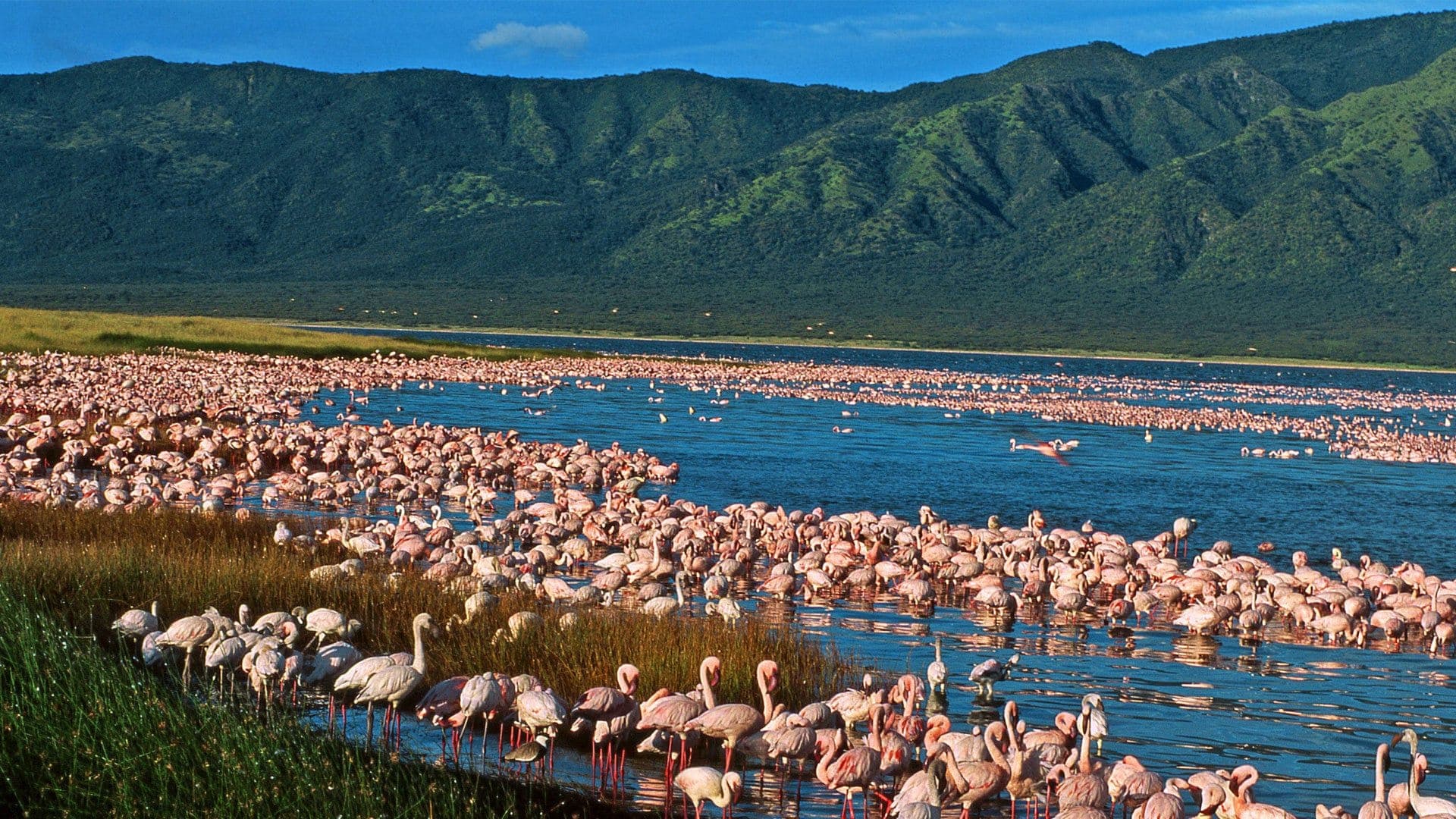
The flamingo, when present in large numbers, transform the lake edge from an ordinary water view to something genuinely striking. Populations fluctuate with water levels and food availability, but the southern lake sections often hold tens of thousands during good years.
The groundwater forest at the park's northern entrance is fed by underground springs from the escarpment above and supports a dense, jungle-like environment that is unusual in this part of Tanzania. Elephants and baboons move through it freely, and the transition from open floodplain to forest canopy in a single drive adds texture to the overall experience.
Safaris Through Lake Manyara
Terrain & Ecosystem
Landscape & Environment
The park sits in the Rift Valley, between the escarpment rising to the west and the alkaline Lake Manyara filling most of the valley floor to the east. The escarpment rises several hundred metres above the park and is visible throughout most of the game drive circuit. In clear conditions the views across the lake from the upper escarpment road above the park are extensive.
The northern section contains the groundwater forest, a dense band of riverine vegetation fed by springs from the escarpment. Fig, mahogany, and palm trees dominate, creating a shaded canopy different from any other habitat in the northern circuit. The middle section opens into acacia woodland and short-grass floodplain. The southern section, less frequently driven, extends toward the lake margin where hippo pools and birdlife concentrate.
Lake Manyara itself is a soda lake, shallow and highly alkaline. It varies in depth seasonally and supports the algae and microorganisms that flamingo feed on. The lake's extent and depth shift significantly between wet and dry seasons. This variability affects flamingo numbers directly.
Fauna
Wildlife Highlights
Tree-climbing lions. The reason most travelers want to visit Manyara specifically. The lion prides here regularly rest in the fork of large fig trees, particularly in the fig-tree area of the northern and central park. Sightings are not guaranteed but occur frequently enough that guides will specifically seek out the known trees where resting has been observed recently. A clear visual of a pride draped across branches is unlike anything in most other parks.
Elephants. The groundwater forest at the park's northern end is excellent elephant country. Herds move through the dense vegetation and emerge onto the floodplain in the late afternoon. The forest-to-grassland transition makes for varied sightings.
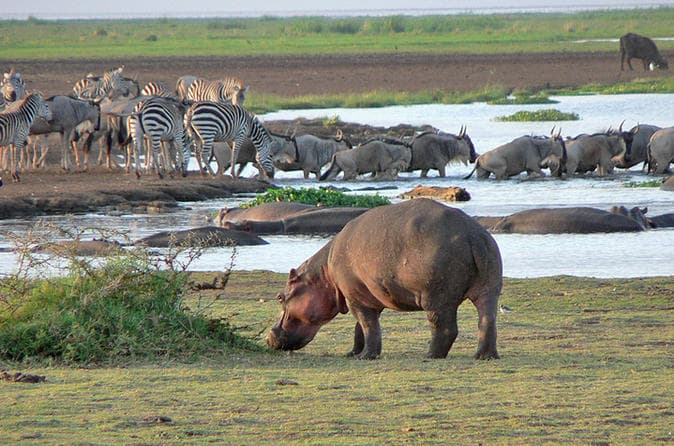
Hippo. The hippo pools in the central and southern sections hold substantial numbers and are reliably productive. This is one of the more dependable hippo viewing spots in northern Tanzania.
Flamingo. Lesser and greater flamingo both use the lake. Timing is unpredictable but the southern lakeshore sections during the short dry season (November to January) often hold impressive concentrations.
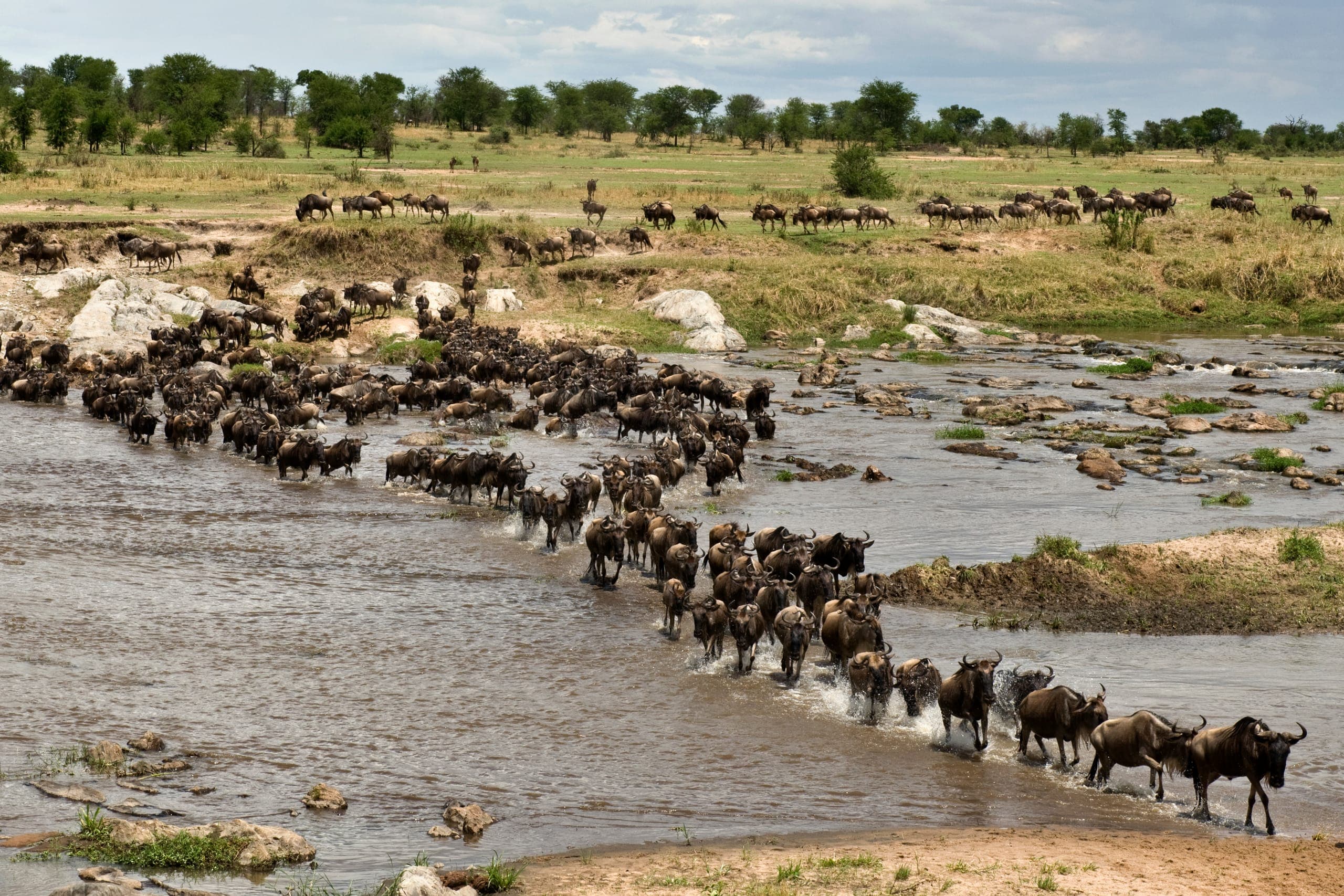
Buffalo. Large herds move through the acacia woodland and floodplain sections and are commonly encountered on afternoon drives.
Baboons and primates. The groundwater forest holds large troops of olive baboon. Blue monkey and vervet monkey are also present. The forest section of any game drive is reliable for primate encounters.
Birdlife. Over 400 species recorded. The lake edge during flamingo season is exceptional. Beyond flamingo, the park holds yellow-billed stork, various kingfisher species, African fish eagle, and a good range of forest and woodland species including silvery-cheeked hornbill and Eastern green tinkerbird.
On the Ground
Safari Experiences
Game drives. The standard activity. A full circuit of the park from northern groundwater forest through central woodland to southern lakeshore and back takes a full day in a well-paced manner. Most single-night stays allocate one morning and one afternoon game drive, which covers the key areas without rushing.
Night drives. Available through selected camps with special permits. Manyara at night produces genet, porcupine, bushbaby, and occasionally African civet.
Walking safaris. Limited walking options are available from camps situated outside the park boundary in the escarpment area above Manyara. These offer escarpment forest and village context rather than lake-level wildlife.
Canopy walk. A tree canopy walkway operates in a forested section near the park edge and is available through one of the lodges on the escarpment above. This is a complementary activity rather than a core park experience.
Regions of the Park
Groundwater forest (northern entrance area). Dense riverine forest fed by escarpment springs. Best for elephants, primates, and the transition into more open habitat. The entrance gate and main visitor facilities are located here.
Central floodplain and acacia woodland. The core game-drive area for predators, giraffe, zebra, and buffalo. Tree-climbing lion sightings are most often associated with the large fig trees in this zone.
Southern lakeshore. Less-visited, quieter, and best for flamingo and hippo. The southern sections require more driving time but reward the effort with calmer conditions and lake-margin wildlife.
Escarpment road (above the park). Not within the park itself, but the road running along the top of the escarpment south of Mto wa Mbu offers views across the entire park from above and marks the boundary with the wider Manyara ecosystem.
Planning Your Visit
Best Time to Visit
June to October (dry season). Best overall for wildlife viewing. Vegetation is open, water concentrates animals, and flamingo numbers are often solid in the southern lake sections. Mornings are clear and productive for game drives.
November to January (short rains and early dry). Flamingo concentrations on the lake often peak in this period as water conditions and food availability align. The park is greener and the landscape is photogenic. Wildlife is spread more widely across the terrain.
February to March. A transitional period. Wildlife activity remains reasonable, the park is quiet, and the landscape still holds colour from the previous rains.
Getting There
By air. Kilimanjaro International Airport is the primary gateway. A small airstrip near Mto wa Mbu at the park entrance takes light aircraft connections from Arusha and other northern circuit destinations.
By road. The park gate at Mto wa Mbu is approximately two hours from Arusha by road. From the Tarangire main gate, it is roughly 45 minutes heading north and east. The road is accessible year-round in a suitable vehicle.
Within the northern circuit. Manyara works most naturally as either the first or last park on a northern Tanzania circuit. Its position between Arusha and Ngorongoro makes it a logical stopping point rather than a standalone destination.
How Many Nights
One night. The minimum. One evening arrival and a full morning game drive covers the main areas adequately. This is how most itineraries handle Manyara and it works reasonably well.
Two nights. The better option if time allows. Two days provides a morning and afternoon drive on each day, time for the southern lakeshore sections, and a less pressured pace. Particularly useful for birders or photographers for whom the lake is a significant draw.
Manyara is rarely the longest stop on a northern Tanzania journey but it earns its place on most itineraries rather than being skipped.
Where to Stay
Accommodation divides between properties on the escarpment above the park, with elevated views across the Rift Valley and lake, and camps closer to the entrance near Mto wa Mbu. Escarpment lodges offer a different perspective and tend to be quieter, though the drive down to the park gate each morning takes 20 to 30 minutes.
Luxury Lodges and Camps
The escarpment lodges above Manyara represent the strongest accommodation option in the area. Several are positioned to offer unobstructed views across the lake and Rift Valley, with forested escarpment grounds and cool evening temperatures at altitude. The andBeyond Lake Manyara Tree Lodge, situated within the park itself in the groundwater forest, is one of the most distinctive addresses in the northern circuit.
Midrange Lodges and Camps
Several midrange options sit near Mto wa Mbu at the park entrance or along the escarpment access road. These provide reliable access to the park at a lower cost and work well for travelers allocating budget to longer stays in the Serengeti or Ngorongoro.
Combining With Other Destinations
Tarangire National Park. The most natural pairing. The two parks are approximately 45 minutes apart by road and work well in sequence, with Tarangire providing wildlife weight and Manyara adding habitat variety and flamingo.
Ngorongoro Conservation Area. Manyara to Ngorongoro by road takes approximately 1.5 hours via the Rift Valley escarpment road. Most northern circuit itineraries move between the two in a morning, stopping at the Rift Valley viewpoint en route.
Serengeti National Park. Manyara is too far removed from the Serengeti to justify as a direct staging post, but it fits naturally into a multi-park circuit that ends at the Serengeti via Ngorongoro.
Photography
The tree-climbing lion offer an unusual photographic challenge. The best shots require patience and a medium telephoto. Early morning light coming off the escarpment provides the clearest conditions before the midday haze develops.
Flamingo photography on the lake is best with a long lens from the water's edge at the southern lakeshore sections. The reflective surface of the soda lake creates strong mirror conditions in flat morning light.
The groundwater forest section rewards a slower, more textured approach: dappled light through the canopy, elephant in shadow, primate troops in tree cover. Bracketing exposures is useful in these low-contrast forest conditions.
Lake Manyara Questions
Are tree-climbing lions guaranteed at Lake Manyara?
No. The tree-climbing behaviour of Lake Manyara's lions is genuine and well documented, but it is not guaranteed on any given game drive. The lions rest in the acacia and mahogany trees when they choose to (typically during the heat of the day) and sightings depend on timing, current lion location, and season. The behaviour is most reliably associated with certain trees in the groundwater forest section of the park. A guide with current intelligence on lion movement will significantly improve the probability of a tree-climbing sighting.
When can I see flamingos at Lake Manyara?
The soda lake at Manyara does host flamingo, but numbers are highly variable and less reliable than at Lake Nakuru in Kenya. The lake level fluctuates with rainfall: when the level is right and the algae concentration is productive, thousands of lesser and greater flamingo gather in the shallows. In dry years or high-water years the flamingo presence can be negligible. If flamingo in large numbers is your specific priority, Lake Nakuru remains the more reliable choice.
How long should I spend at Lake Manyara?
Most itineraries allocate Lake Manyara as a half-day or single-day stop: either on the first afternoon arriving from Arusha or on the way from Ngorongoro back to Arusha. One night at Manyara is comfortable and allows an early morning game drive. Two nights provides more time to explore the diverse habitat zones and spend time at the lake shore. Manyara is not usually the primary wildlife destination on a northern Tanzania itinerary; it is a productive and scenically beautiful addition to the Ngorongoro and Serengeti experience.
Can I visit Lake Manyara as a day trip from Arusha?
Yes. The park is approximately two hours from Arusha by road and can be done as a day trip combined with a short stop at the park viewpoint on the rift escarpment. Most operators run Lake Manyara as the first stop on the northern circuit, arriving from Arusha in the early afternoon, spending the night, and continuing to Ngorongoro the following morning. A day trip is possible but limits the early morning game drive that typically produces the best wildlife sightings.
How does Lake Manyara combine with Ngorongoro and the Serengeti?
Lake Manyara is the standard first stop on the classic northern Tanzania circuit. From Arusha, the circuit runs Lake Manyara (1–2 nights) → Ngorongoro (1–2 nights) → Serengeti (3–5 nights) → return to Arusha via Ngorongoro or direct flight from the Serengeti. Manyara provides the groundwater forest and lake environment as a counterpoint to the open Serengeti plains and the enclosed crater world of Ngorongoro. The variety of habitat across the three destinations is one of the northern circuit's greatest strengths.
What did Ernest Hemingway say about Lake Manyara?
Ernest Hemingway visited Lake Manyara in 1933 on a hunting safari and wrote in Green Hills of Africa that it was "the loveliest lake in Africa." The description has followed the park ever since. The combination of the Rift Valley escarpment rising 600 metres above the western shore, the forest-to-lake transition, the pink flamingo scatter, and the sense of theatrical scale (compressed into a park that is barely ten kilometres wide in most places) gives credence to the claim.
What other wildlife is in Lake Manyara besides the tree-climbing lions?
The park holds substantial elephant populations (often among the most reliable elephant sightings on the northern circuit), large hippo pods in the Hippo Pool area, giraffe, zebra, wildebeest, and abundant buffalo. The groundwater forest holds blue monkey and baboon troops. Birdlife is exceptional: over 400 species recorded including a wide range of waterbirds, raptors, and forest birds. The habitat diversity is the defining character of Manyara: groundwater forest, acacia woodland, open grassland, and soda lake shoreline are all traversed within a single game drive.
How do I get to Lake Manyara from Arusha?
The drive from Arusha to the Lake Manyara gate takes approximately two hours on good tarmac road. The journey passes through the Ngorongoro highlands and offers views across the rift escarpment above the park. There is no scheduled air service directly to Manyara; most visitors arrive by road as part of the northern circuit. The park entrance gate is at the escarpment edge and the road descends into the park through the groundwater forest.
Zorani Expeditions
Plan Your Lake Manyara Safari
Every Journey we design is built around your goals, not a standard route.
Speak to a Specialist