A Tanzania safari rarely goes wrong because there is too little to see. More often, the itinerary asks too much of the time available.
The route keeps expanding. Another park is added because it is famous. A second Serengeti region appears because the migration might be there. A lodge is chosen because it looks good, then the rest of the Journey is bent around its location. A long transfer is described as part of the safari. By the time everything fits on paper, there is very little room left in the actual days.
The result can still be a good trip. Tanzania is generous enough to carry weak planning surprisingly far. But a stronger itinerary usually comes from making fewer decisions, and making those decisions earlier.
The route becomes too busy before anyone notices
The easiest way to weaken a Tanzania safari is to confuse coverage with value.
Tarangire, Lake Manyara, Ngorongoro, central Serengeti and northern Serengeti can all appear in a one-week itinerary. The vehicle can physically reach them. That is not the same as saying the route works well.
Every additional stop takes something. There is another departure morning, another check-in, another period of road time and another place that receives less attention than it would have on a simpler route.
The problem becomes obvious when one-night stays begin to dominate. One night is sometimes necessary to connect two parts of a Journey. Several one-night stays in succession turn the safari into a sequence of arrivals and departures.
This is where planners should ask a harder question: if one destination is removed, do the remaining days become better? Quite often, they do.
Lake Manyara is a good example. It can fit naturally into some northern routes and can be worthwhile when current conditions, interests and timing support the stop. It should not be included automatically if doing so reduces Tarangire to an afternoon or the Serengeti to a single full day.
A good itinerary is not the one with the longest list of park names. It is the one where each place has enough time to justify the journey there.
The Serengeti exposes weak planning quickly
The Serengeti is usually where an overbuilt itinerary starts to show its weaknesses.
Two nights sound reasonable until the calendar is translated into usable time. Arrive on the first day, spend one full day in the park, then leave on the third. That may be enough on a short Journey, but it is not a deep Serengeti stay.
Three nights are a more useful baseline for many first-time travellers. Four become valuable when the Serengeti is a major reason for travelling, when photography matters or when the route includes a seasonally relevant second region.
That last point matters. The Serengeti is not one lodge neighbourhood. Central Seronera, the northern areas around Kogatende and Lamai, the western corridor and the southern plains serve different purposes at different times of year.
Choosing the camp before choosing the region reverses the planning logic. A beautiful property in the wrong part of the ecosystem can create hours of unnecessary movement every day. The month and wildlife priority should determine the area first. The camp comes afterwards.
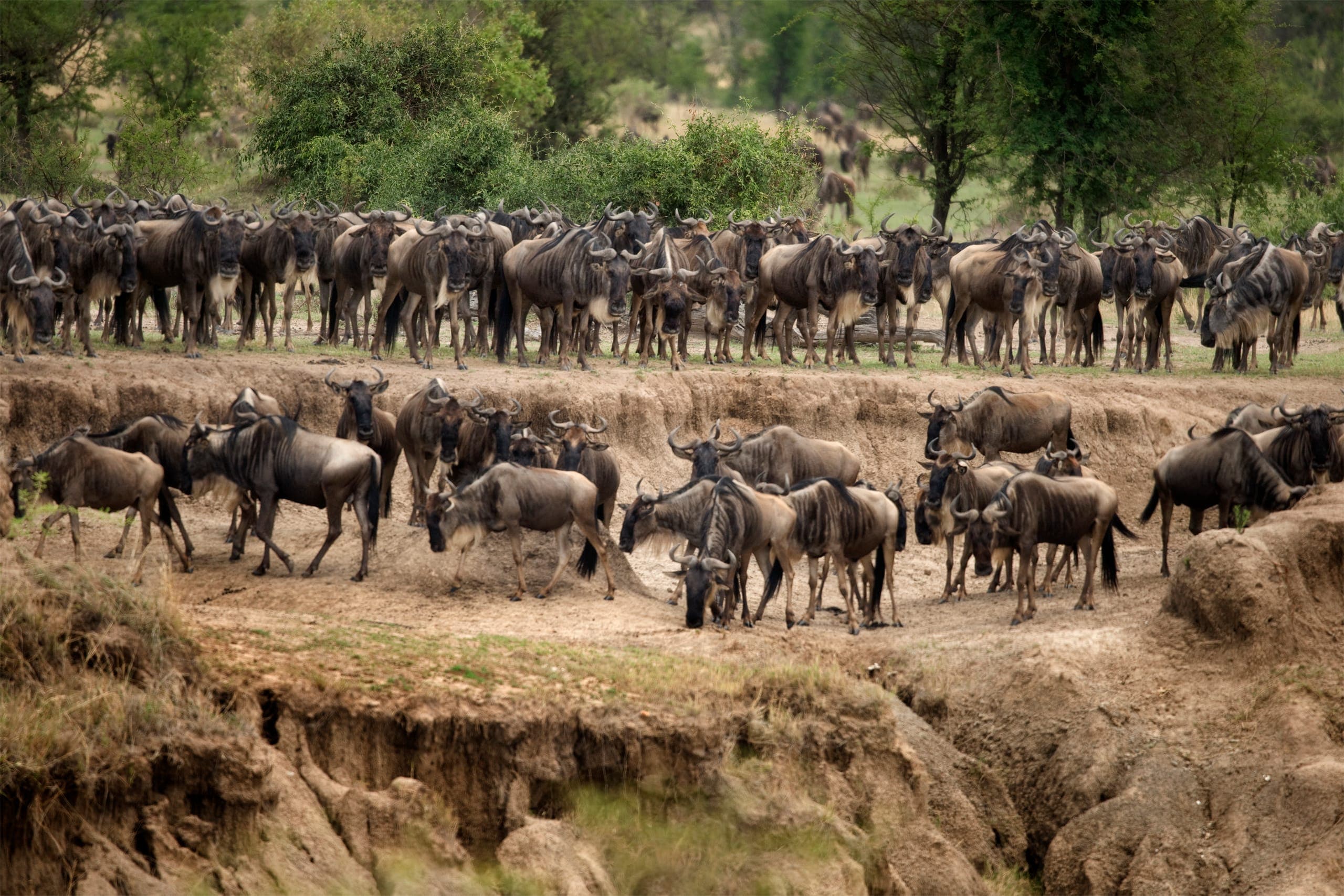
Migration planning makes this even more important. The Great Migration follows broad seasonal patterns, but rainfall and grazing affect actual movement. River crossings are especially unpredictable. No itinerary can turn them into appointments.
One night near the Mara River is not a crossing strategy. It is a bet on timing.
A stronger migration Journey gives the relevant region enough nights to absorb that uncertainty and avoids pretending that exact wildlife movement can be scheduled.
Price can hide what has been removed
A lower quotation is not automatically better value, and a higher one is not automatically better planning.
The useful comparison is what sits behind the total.
One itinerary may cost less because it uses shared transport, places more nights outside protected areas, shortens the Serengeti stay or returns to Arusha entirely by road. Another may cost more because it includes a private vehicle, stronger camp locations, more park time and a flight out of the Serengeti.
Neither can be judged from the final number alone.
This is also where the word luxury becomes unhelpful if it is not connected to the Journey itself. A larger suite does not fix a poor location. A plunge pool does not return the half-day lost to an unnecessary transfer.
If the budget is limited, the spending order matters. Good guiding, enough time in the right area, sensible lodge location and appropriate private vehicle arrangements will usually affect more of the safari than decorative room upgrades.
The same applies to accommodation location. A less expensive lodge may look like good value until every game drive starts with a long approach road. A smaller camp in the right place can protect hours of usable safari time.
Price should therefore be read together with route, location and time. A quotation is only transparent when the traveller can see what has been included and what has been sacrificed.
Transport decisions shape the Journey more than they appear to
Northern Tanzania works well overland. Driving from Arusha through Tarangire and Ngorongoro towards the Serengeti gives the route geographical sense and allows one guide to remain with the Journey.
The return is different.
Driving all the way back from the Serengeti towards Arusha can consume most of a day. Sometimes that is the right budget decision. Sometimes the scheduled flight is worth far more than the room upgrade it replaces.
The point is not that flying is always better. It is that time should be priced too.
The same thinking applies at the beginning of the Journey. An Arusha night after a late international arrival can look disposable when the itinerary is being compressed. In practice, it can protect the first proper safari day from fatigue, flight delays and a rushed road departure.
Light-aircraft flights create another planning issue that often appears too late: baggage. International airline allowances do not automatically apply to bush aircraft. Soft-sided luggage, weight limits and camera-equipment rules need to be checked against the actual operating airline before departure.
These may look like small logistical details. They stop feeling small when they affect the day on the ground.
A safari can also be overplanned after arrival
A full-day game drive every day can sound like good value. After several early starts and rough-road days, it may feel very different.
Some travellers want to stay out from dawn until late afternoon throughout the safari. Others enjoy the first few days that way and then prefer a slower morning, a long lunch or an earlier return to camp.
A private Journey should have room to respond to that.
The same problem appears when Zanzibar is added at the end without enough time. Two nights provide one full day between arrival and departure. That can work if the island is only a brief stop. It is weak planning if Zanzibar is supposed to be the slower part of the Journey.
Three nights are a practical minimum. Four or five are usually better when the coast is meant to feel different from safari rather than simply becoming another hotel change.
There is a pattern behind all of this. Weak itineraries often assume that more must be better: more parks, more activities, more kilometres, more game-drive hours, more expensive rooms.
Tanzania usually rewards the opposite approach.
Remove the stop that creates three rushed days. Give the Serengeti another night. Choose the camp after the region is clear. Use a flight where it materially improves the route. Leave an afternoon unplanned when the Journey needs one.
A strong Tanzania safari is not empty or slow. It is simply disciplined enough to give the right places time to work.