UGANDA · EAST AFRICA
Murchison Falls
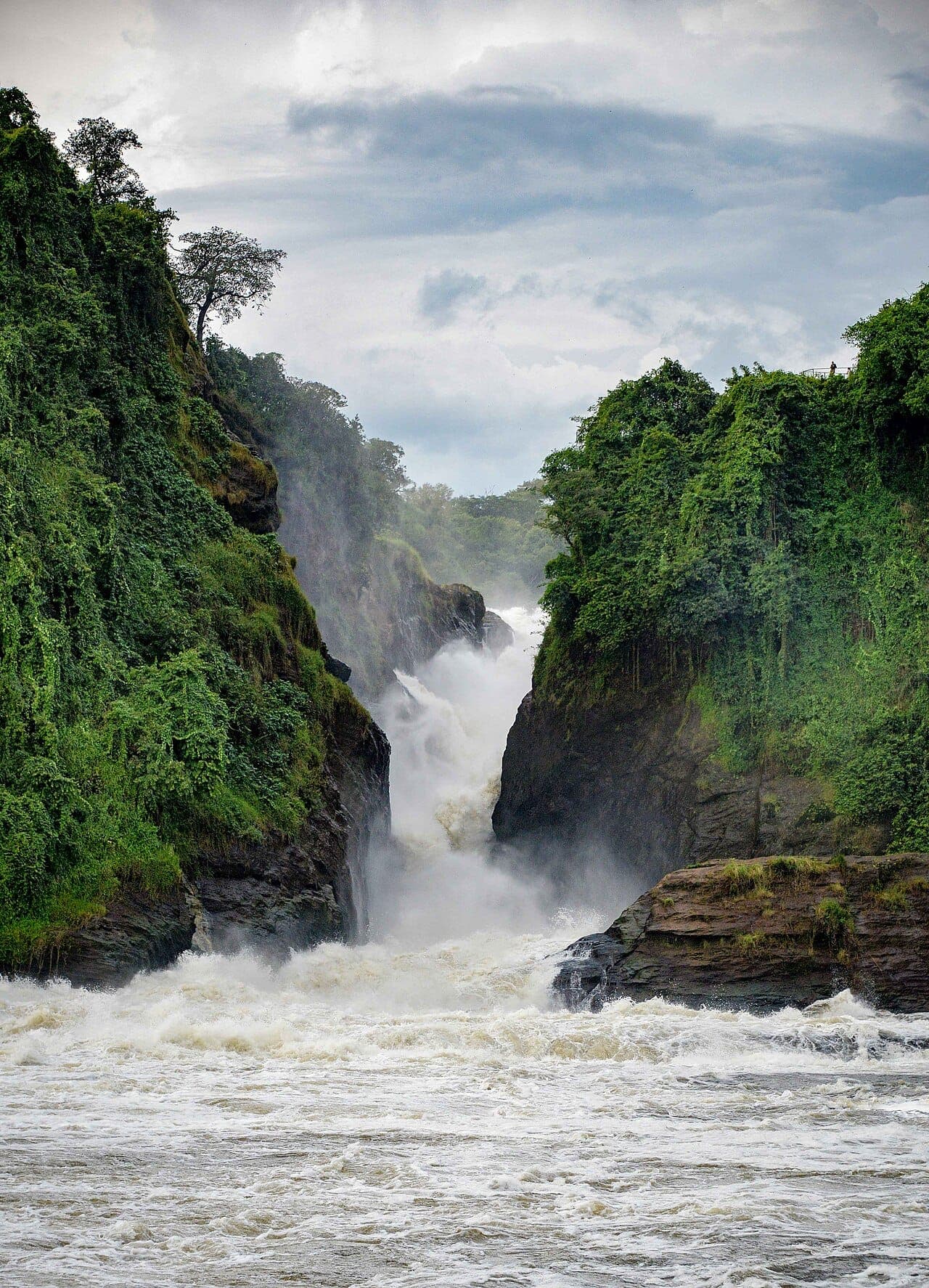
The Victoria Nile forced through a seven-metre gorge before a 43-metre drop
UGANDA · EAST AFRICA
The Nile at Murchison Falls
Murchison Falls National Park is Uganda's largest national park, covering almost 3,900 square kilometres of northwest Uganda. The Victoria Nile runs through its heart, passing over the Murchison Falls before widening into Lake Albert. This combination of river, falls, and open savannah gives the park a physical drama that most Uganda parks lack.
The falls themselves are the defining image. The entire force of the Nile is squeezed through a 7-metre gap in the rock, dropping roughly 45 metres in a roar of spray and white water. The sound carries well before you see it and the visual impression from the base, reached by boat from the launch, is one of the most powerful natural sights in the country.
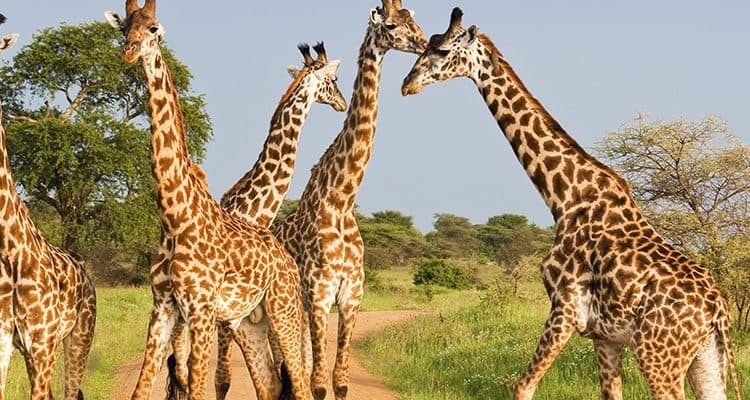
Beyond the falls, Murchison operates as a strong conventional wildlife park. The north bank of the Nile holds substantial elephant herds, lion, leopard, buffalo, Uganda kob, and the critically endangered Rothschild's giraffe, one of the most significant populations of this subspecies remaining in the world. The Nile itself is covered on morning boat cruises that combine crocodile, hippo, and the approach to the base of the falls.
Safari Experiences
The Case For Murchison Falls
Why Visit Murchison Falls
The Nile boat cruise to the base of the falls is Murchison's equivalent of the Kazinga Channel at Queen Elizabeth, the activity that cannot be replicated elsewhere. The lower Nile below the falls supports very large populations of Nile crocodile and hippo, and the two to three-hour boat trip from the delta launch to the falls base passes both in concentration. The arrival at the waterfall from the water, with the full force of the river visible above, is a genuine physical experience rather than an observation-deck moment.
The Rothschild's giraffe is the other compelling reason to visit. Fewer than 3,000 Rothschild's giraffe remain in the wild, and Murchison holds a meaningful proportion of them. They are present in the north bank game drive areas and are larger and more distinctively marked than the Maasai giraffe found in East Africa's southern parks.
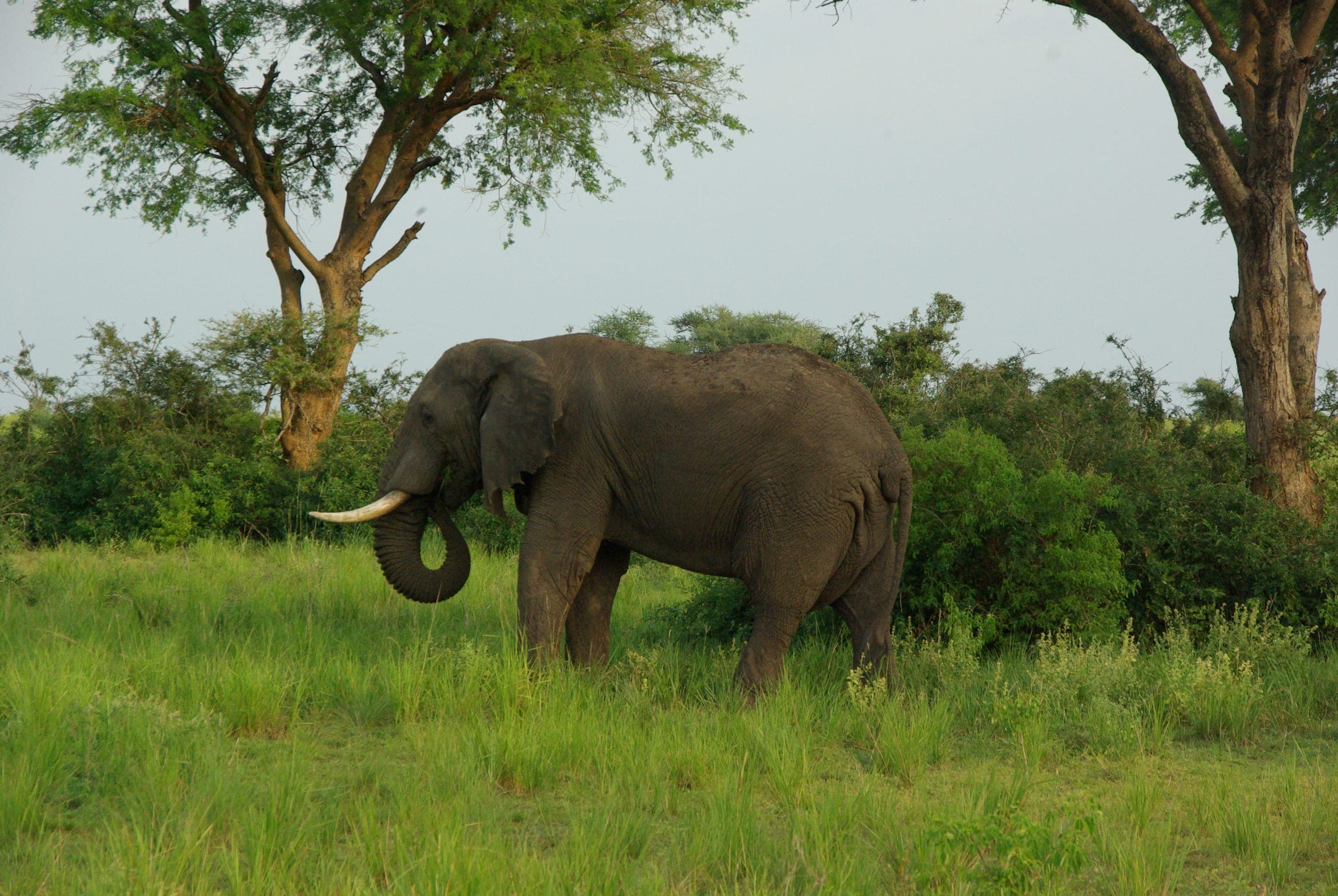
The park's elephant population is one of Uganda's largest, and the north bank savannah consistently produces herds in a landscape that feels more open and East African in character than the forested terrain of western Uganda.
Safaris Through Murchison Falls


Terrain & Ecosystem
Landscape & Environment
The Victoria Nile divides the park. The northern section, the primary game drive area, sits above the falls and holds the open savannah and acacia woodland where most wildlife is concentrated. The southern section, below the falls and delta, is flatter, contains the Budongo Forest, and is accessed primarily by boat.
The Nile above the falls is wide and slow, with papyrus swamps fringing the banks in the areas near the delta. Below the falls, the river is narrower and faster before widening into Lake Albert. The delta area where the Nile enters Lake Albert is a rich bird habitat and a productive stop on the boat circuit.
The north bank plateau is open savannah with seasonal grass, scattered acacia, and periodic rocky outcrops. The game drive circuits cover this terrain effectively and the open character makes for easy wildlife spotting compared to the denser habitats in western Uganda parks.
Budongo Forest, the largest mahogany forest in East Africa, sits in the south of the park and extends toward the park boundary. It holds the chimpanzee population tracked from Budongo.
Fauna
Wildlife Highlights
Rothschild's giraffe. Murchison holds a significant and growing population. They are commonly encountered on the north bank game drive circuits, often in groups of five to ten. The subspecies is distinguished from common giraffe by its leg colouring, which stops at the knee rather than extending to the hooves.
Elephant. One of Uganda's largest elephant populations ranges across the north bank savannah. Herds are large, frequently over 50 animals, and are seen regularly at the Nile water points and along the northern plateau.
Lion. Present on the north bank with several prides occupying the savannah and woodland. Sightings are less reliable than at Queen Elizabeth but occur consistently.
Hippo. Enormous populations on the Nile, concentrated below the falls in the slow water and accessible on the boat cruise. Numbers are very high and the pods along the riverbank are a consistent feature of any Murchison visit.
Nile crocodile. Among the largest and most numerous anywhere in Uganda. The Nile below the falls and along the delta section holds individuals of exceptional size. Boat-cruise positioning alongside resting crocodile on sand banks is straightforward.
Buffalo. Large herds on the north bank, often moving with the elephant in the dry season months.
Chimpanzee (Budongo Forest). The Budongo Forest Conservation Field Station outside the park's southern boundary runs a habituated chimpanzee tracking programme. Organised as a separate excursion from a Murchison base or from Budongo-specific accommodation.
Birdlife. Murchison's bird list exceeds 450 species. The Nile delta area is exceptional, including the rare shoebill stork, which can be located in the papyrus swamps near the delta. The shoebill is one of Africa's most sought-after species and Murchison is among the more reliable locations for it.
On the Ground
Safari Experiences
Nile boat cruise. The signature activity, operating morning and afternoon from the launch near Paraa. A two to three-hour cruise covers the lower Nile, passing hippo pods, crocodile, and a strong bird list before arriving at the base of the falls. The afternoon departure produces good light conditions in the dry season.
Murchison Falls ascent. A short hike or vehicle drive to the top of the falls provides a view from above the gorge. The walk from the base (reached by boat) to the top of the gorge takes approximately 45 minutes.
Game drives. North bank circuits cover the primary savannah and woodland areas. Morning departures are standard. Full-day drives are available and worthwhile for dedicated wildlife time.
Budongo chimpanzee trekking. Organised separately from Budongo Forest. The trek is less structured than Kibale but the Budongo chimp community is well-established and encounters are fairly regular. Day trips are possible from Murchison, though an overnight at Budongo is better.
Shoebill boat excursion. Dedicated small-boat excursions into the Nile delta papyrus to find the shoebill. This is a specialist activity for birders and is organised separately from the main boat cruise.
Night drives. Available from some camps with appropriate permits. The savannah at night produces bush baby, genet, pangolin (rare), and various nocturnal species.
Regions of the Park
North bank (main game drive area). The plateau above the Nile, accessed via the Paraa ferry crossing. Game drive circuits cover the savannah and open woodland where giraffe, elephant, lion, and buffalo are concentrated. This is the primary wildlife area.
Paraa and the falls area. The management hub on the south bank of the Nile, containing the main lodge and the boat launch. The falls are a short drive west of Paraa.
South bank. The area below the falls, including the delta, papyrus swamps, and the beginning of the Budongo Forest zone. Less-visited but productive for shoebill and other waterbirds.
Budongo Forest (south of park). Accessed separately. Contains the chimpanzee trekking operation and a network of forest walks through Uganda's largest mahogany forest.
Planning Your Visit
Best Time to Visit
December to March. Dry season. Grass is short, road conditions are good, and wildlife concentrations along the Nile are highest. The shoebill is generally easier to find during this period.
June to August. Also dry and very good for wildlife. The savannah is open and game drives produce consistent sightings. Slightly higher visitor volume than December to March.
September to November. Transition into the short rains. Conditions are generally still manageable, visitor numbers are lower, and the landscape begins to green.
Getting There
By air. Pakuba airstrip inside the park is served by charter flights from Entebbe, with flight time approximately 1 hour. This is the most practical option for most safari visitors.
By road. Approximately 4 to 5 hours from Kampala, via Kampala's outskirts and the Gulu highway, turning into the park at Masindi. Ziwa Rhino Sanctuary can be added as an optional stop on this road route. Road surfaces are generally good on the main highway but deteriorate on some park tracks.
Connection to other parks. Murchison is most naturally combined with Kibale National Park to the south (approximately 3 to 4 hours by road) and Kidepo Valley National Park to the north (approximately 5 to 6 hours).
How Many Nights
Two nights minimum. Covers the boat cruise, top-of-falls visit, and a morning game drive on the north bank. The minimum for a meaningful experience.
Three nights. The better allocation. Three days allows a full-day north bank drive, a morning and afternoon boat cruise, and a Budongo chimp trek day.
Four nights. For those including Budongo as an overnight stay alongside a full Murchison programme, four nights works well.
Where to Stay
Accommodation concentrates at Paraa and along the north bank. Baker's Lodge (andBeyond) on the north bank is the leading luxury option, positioned with direct Nile access and morning views across the river. Chobe Safari Lodge south of Paraa is a longer-established option with a pleasant garden position. Nile Safari Lodge (Asilia Africa) is an award-winning camp on the south bank with a distinctive design and strong guiding programme.
Midrange options include several camps and lodges around the Paraa area and along the main access routes to the north bank.
Combining With Other Destinations
Kibale National Park. Approximately 3 to 4 hours south of Murchison. Combining a chimpanzee trekking focus at Kibale with the Nile boat cruise and wildlife at Murchison is an effective northern and western Uganda circuit.
Kidepo Valley National Park. Uganda's most remote major park, located roughly 5 to 6 hours northeast of Murchison. A charter flight connection makes the combination more practical.
Budongo Forest. A natural add-on, either as an overnight or a day trip. The chimpanzee community at Budongo is one of the most-studied in Africa.
Photography
The Nile boat cruise is the primary photographic opportunity. Use a 100 to 400mm zoom for crocodile and hippo close-ups along the river bank. The falls approach produces strong wide-angle conditions from the boat, with the gorge walls framing the waterfall's descent.
Morning north bank game drives in the dry season produce golden-hour light across open savannah, with Rothschild's giraffe silhouettes particularly effective at dawn.
Shoebill photography in the delta papyrus requires a long lens, patience, and a good local guide. The bird's slow movement and distinctive profile make it a rewarding subject when found.
Murchison Falls Questions
What makes Murchison Falls special?
The falls themselves are extraordinary: the entire volume of the Victoria Nile is forced through a rock cleft only 7 metres wide, creating what is considered the world's most powerful waterfall by force. The roar and spray are audible and visible from a distance. Beyond the falls, Murchison is Uganda's largest national park at 3,893 square kilometres, offering comprehensive savannah wildlife including lion, elephant, giraffe, buffalo, and leopard, plus the added dimension of a river-based safari along the Nile that is unique in the region.
What is the Nile boat cruise and why is it considered the best part?
The Nile boat cruise from Paraa to the base of Murchison Falls is typically 3 hours each way (or shorter in one direction). The river banks hold extraordinary concentrations of wildlife: Nile crocodile and hippo are seen in abundance, and the riverine habitat draws elephant, buffalo, waterbuck, and oribi to the water's edge. The cruise ends at the base of the falls, where the roar and mist are overwhelming at close range. Many visitors rank it the single best activity in Uganda: the combination of volume, variety, and the falls themselves is hard to match.
Can I see the Big Five at Murchison Falls?
Lion, elephant, buffalo, and leopard are all present and regularly encountered. Rhino are not part of Murchison's wildlife: the only place in Uganda with white rhino is Ziwa Rhino Sanctuary, which is commonly visited as a stop en route to Murchison from Kampala. If completing the Big Five is a priority, combine the two. Giraffe (the northern Nubian subspecies, found only here and in Kidepo in Uganda) are a distinctive Murchison highlight not typically grouped with the Big Five but equally impressive.
Where can I see the shoebill stork at Murchison Falls?
The shoebill is found in the papyrus swamps along the Albert Nile, particularly in the Murchison Falls area and the delta where the Nile meets Lake Albert. The Nile delta near Wanseko (reached by a separate boat from the main park) is the most reliable shoebill location associated with Murchison, though the birds are sedentary and require a morning boat trip. Your operator should arrange this specifically if shoebill is a priority: it is not part of the standard Paraa boat cruise itinerary.
Can I combine Murchison Falls with chimpanzee trekking?
Yes. Budongo Forest Reserve, which contains a habituated chimpanzee community, lies on the southern edge of Murchison Falls National Park. The Kaniyo Pabidi sector offers chimpanzee trekking permits at lower cost than Kibale (approximately USD 150 per person). Many Murchison itineraries of 3 nights or more incorporate a morning at Budongo, either en route to or from the main park. The experience is less structured than Kibale but genuine, and combining it with the Nile safari and falls walk makes Murchison one of the most activity-rich parks in East Africa.
What is the best time to visit Murchison Falls?
December to February and June to August are the dry season peaks, when wildlife concentrates around water sources and tracks are in the best condition. The Nile boat cruise and falls walk operate year-round regardless of season. The wet seasons (March to May and September to November) bring green landscapes and good birding, but some tracks in the northern sector become difficult. Murchison is productive in any season; the dry months are preferred for the north bank game drives.
How do I get to Murchison Falls from Kampala or Entebbe?
By road, the journey from Kampala to Paraa (the main camp area) takes approximately 5 to 6 hours including a stop at Ziwa Rhino Sanctuary. The road quality varies: the first section is good tarmac, the final section into the park is slower. Charter flights from Entebbe to Pakuba or Chobe airstrips take approximately 1 hour and land within the park. For visits of 3 nights or more, flying in and driving out (or vice versa) to include a road game drive through the north bank is a common itinerary structure.
How many nights should I spend at Murchison Falls?
Three nights is the recommended minimum to do Murchison justice. This allows for: one full day covering the Nile boat cruise in the morning and the top of the falls walk; one full day for north bank game drives (lion and giraffe territory); and time to visit Budongo Forest for chimpanzees. Two nights is possible but creates a rushed experience. Four nights suits birders, photographers, and those adding a delta shoebill trip.
What is the walk to the top of the falls?
The walk from the base of the falls to the top is a 45-minute to 1-hour guided hike up the gorge wall, ending at the crest where the Nile forces through the 7-metre gap. Standing at the lip of the falls with the full force of the river passing beneath you is a visceral experience. The walk is steep in places and involves uneven terrain: good shoes are required. It is typically done after the boat cruise drops passengers at the base. Most visitors rate it among the best experiences in Uganda.
Zorani Expeditions
Plan Your Murchison Falls Safari
Every Journey we design is built around your goals, not a standard route.
Speak to a Specialist