Serengeti · Tanzania
The Great Migration
A month-by-month guide to where the wildebeest are and how to position a Journey around their movement.
Understanding the Migration
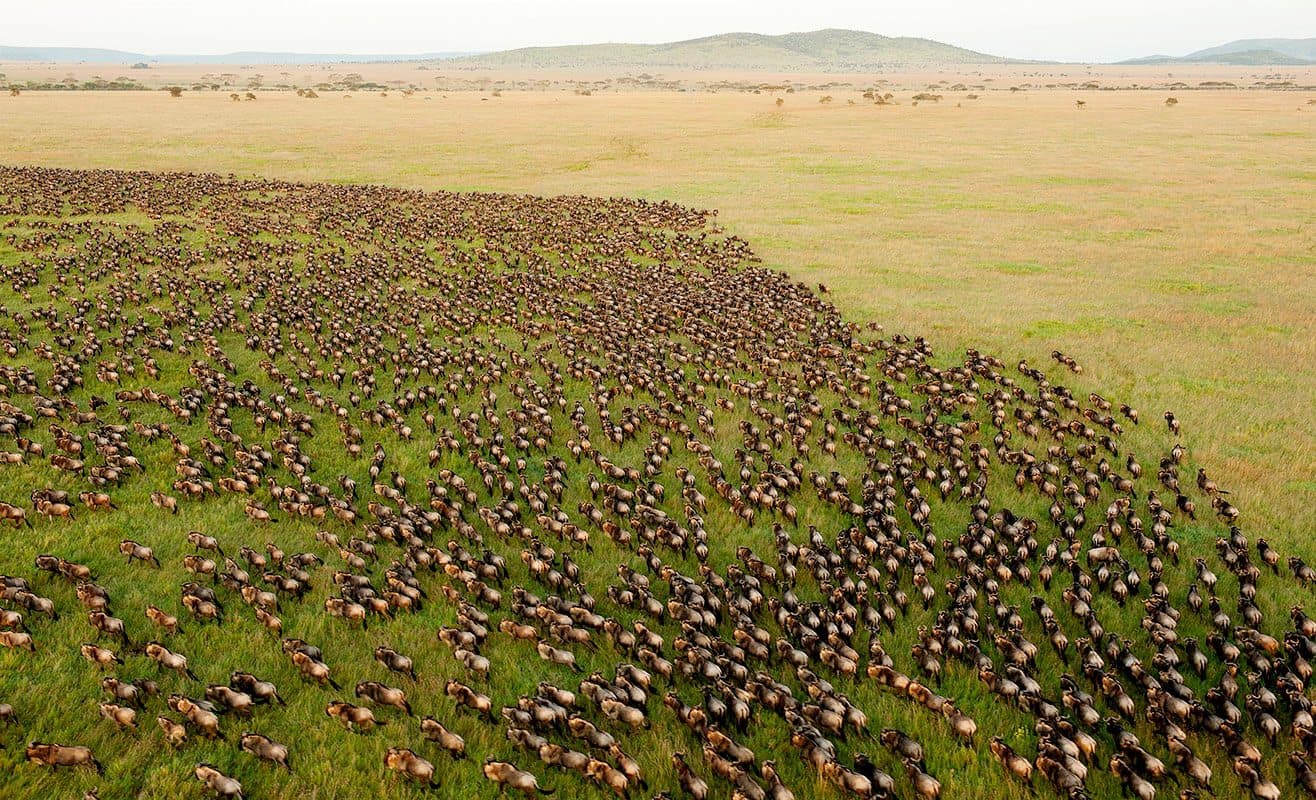
The Great Migration is not a single event. It is a continuous, year-round cycle: the world's largest overland migration of terrestrial mammals, shaped by rainfall patterns and the nutritional quality of grass.
Approximately 1.5 million wildebeest, 300,000 plains zebra, and 500,000 Thomson's gazelle complete an annual circuit through the Serengeti-Mara ecosystem. They follow a 'green wave' of high-nitrogen grass that emerges in the wake of rainfall: a learned nutritional response that has driven this cycle for millennia.
Understanding where the migration is, what phase it is in, and which camp position gives you the best access is the foundation of any serious Serengeti itinerary.
Seasonal planning guide
Migration patterns by month
This is a broad planning pattern, not a live herd forecast. Rainfall, forage, and recent movement can shift the animals away from calendar expectations.
Southern plains and calving phase
Jan
- Broad area
- Southern Serengeti and Ndutu area
- Typical pattern
- Herds may gather on short-grass plains as calving begins.
- Planning implication
- Compare southern mobile camps and fixed properties by their current location and access.
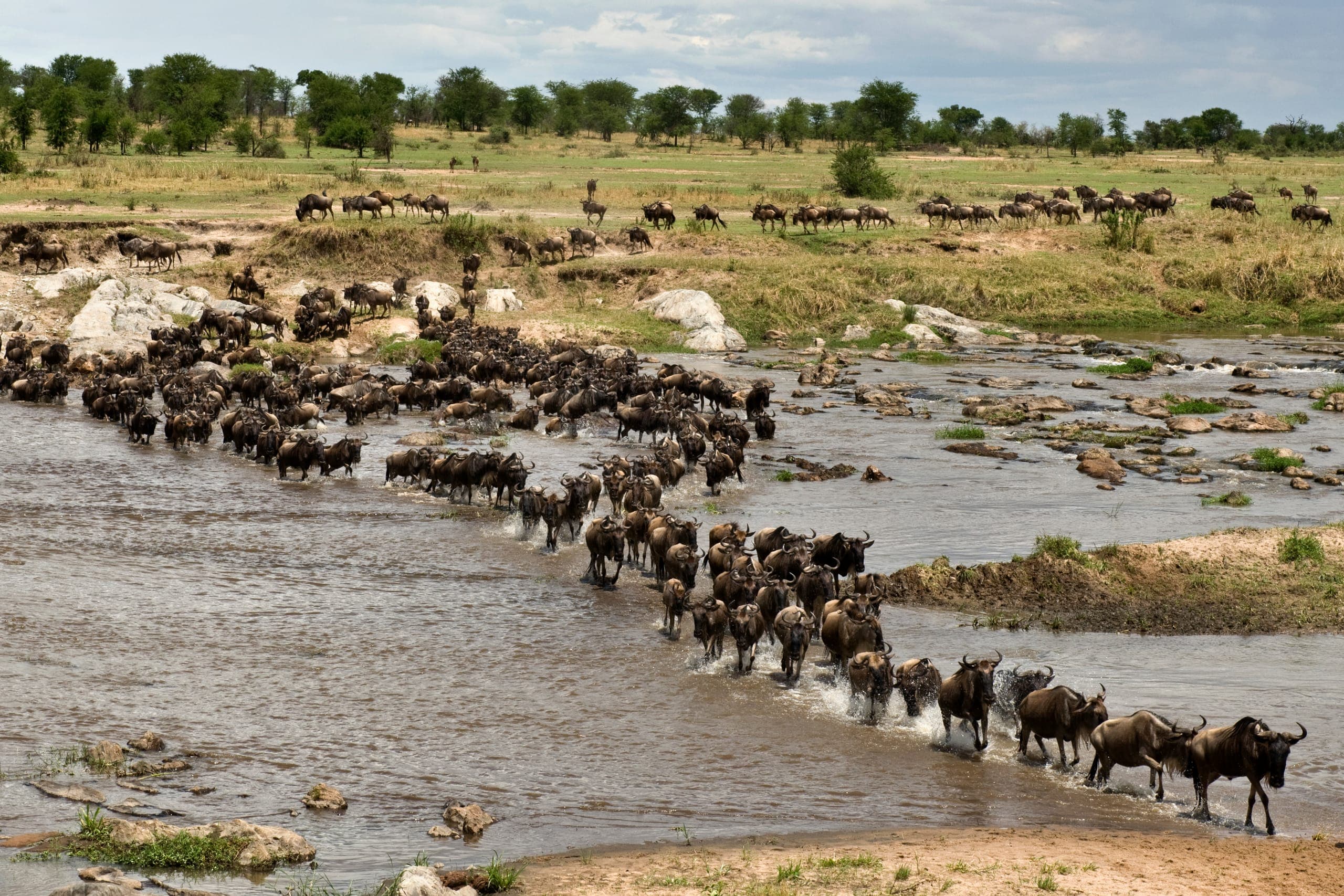
Mara River · Jul–Oct
The River Crossings
The Mara River crossings are the most dramatic act of the migration cycle. Herds mass on the northern river banks for hours or days: testing the water, turning back, massing again. When a crossing finally initiates, thousands plunge in over minutes.
The Nile crocodiles of the Mara River are among the largest on the continent, having fed on migration animals for decades. Crocodile predation during crossings is visceral. It shows the ecological stakes of the migration.
Crossings cannot be predicted to a specific date or location. The decision is made collectively by the herd. The best approach is a minimum five-night stay in the northern Serengeti with a guide who monitors the river daily.
Ndutu · Jan–Mar
The Calving Season
The calving season in the southern Serengeti, centred around the Ndutu area, is arguably the most biologically intense period in the entire ecosystem and one of the most underestimated safari experiences in Africa.
Approximately 8,000 wildebeest calves are born daily at peak calving in February. The synchrony is deliberate: overwhelming predators by flooding the system with prey simultaneously so that individual survival probability increases.
The result is extraordinary predator activity. Cheetah mothers with cubs, hyena clans operating in open daylight, lion prides at back-to-back kills. The concentration of action on the short-grass plains is unmatched anywhere in Africa.

Specialist Advice
Migration Planning Tips
Book the north 6–9 months ahead
Northern Serengeti camps for July–September sell out fast. The Lamai area has limited inventory. Confirm before finalising any migration journey.
Never plan around a specific crossing date
Crossings happen when they happen. Herds may mass on a riverbank for days before crossing. A minimum 5-night stay dramatically improves probability.
Calving season is underrated
February is statistically one of the best wildlife experiences in Africa. Fewer visitors than peak crossing season, extraordinary predator density, and dramatic open plains.
Camp position matters more than camp quality
A Midrange camp 30 minutes from the river beats a Luxury camp 90 minutes away. Ask your specialist specifically about drive-to-river times, not star ratings.
Use mobile camps for best positioning
Mobile camps follow the migration and reposition seasonally. Fixed camps are committed to their location year-round.
The migration is also in Kenya
The Mara ecosystem crosses the border. If July–October Serengeti camps are booked, Kenya's Maasai Mara offers the same crossings.
Plan Around the Migration
Tell us when you want to travel. We'll tell you exactly where the herds will be and which camp positions make the most sense.
Speak to a Specialist