
TANZANIA · EAST AFRICA
Ruaha
The Great Ruaha River, dry woodland, and extensive lion and elephant habitat
TANZANIA · EAST AFRICA
A Large Park in Southern Tanzania
Ruaha National Park covers over 20,000 square kilometres in central Tanzania, making it one of the largest national parks in Africa. Despite its size and the quality of its wildlife, it remains far less visited than the northern Tanzania circuit. That combination of scale, wildlife density, and low visitor numbers is Ruaha's principal asset.
The Great Ruaha River runs along the park's eastern edge for a significant stretch and acts as the dry-season focal point for the park's wildlife. The river shrinks to pools and sandy stretches between July and October, concentrating elephant, predator, and water-dependent species along its margins in numbers that make for some of the most sustained game-viewing in Tanzania.
Ruaha has a reputation for large lion prides, and it is warranted. The park holds a significant portion of Tanzania's lion population and the prides found along the river and surrounding woodland are large, well-established, and regularly visible. Wild dog are also present with more consistency than in many other parks. The combination of these two apex predators alongside Ruaha's sable antelope, greater kudu, and roan gives the park a species list that rewards multiple days.
Safari Experiences
The Case For Ruaha
Why Visit Ruaha
The lion are the headline. Ruaha holds some of the largest lion prides in Africa, and the Great Ruaha River creates the kind of sustained dry-season concentration that allows for extended, repeated observation. Seeing a pride of 12 to 20 animals, which is not unusual here, operating across a section of river is a different category of experience from the typical three to five animals sighted in a smaller park.
The scale of the park contributes to the experience in a less obvious way. Because Ruaha is very large and visitor numbers are low, the game-drive circuits in the eastern accessible zone still feel genuinely open. You are unlikely to encounter more than a handful of other vehicles during a full day's driving, and some areas near the more remote camps see almost no other traffic.
The species variety also distinguishes Ruaha. The combination of miombo woodland and the river system supports species not found together in the northern circuit: sable antelope, roan antelope, and greater kudu alongside the more widely distributed elephant, lion, buffalo, and giraffe.
Terrain & Ecosystem
Landscape & Environment
The Great Ruaha River is the landscape anchor. During the dry season it occupies a wide sandy bed flanked by borassus palm, fig, and riverine forest, with the open miombo woodland rising away from both banks. As the dry season progresses, the river contracts to isolated pools and sandy channels, and the concentration of wildlife along its course intensifies.
Away from the river, the terrain is varied. The Ndoha Plains in the park's core offer more open grassland with good long-range visibility. The western areas become progressively more remote and include rocky escarpment and deeper miombo. The park's eastern boundary is the most accessible, with the majority of camps clustered along the Great Ruaha River within a few hours of the Msembe airstrip.
Baobab trees are a feature of the landscape, particularly in the drier eastern areas. They are not as dense as in Tarangire but appear throughout the baobab-studded terrain near the river and add a visual scale to elephant sightings.
Altitude in the accessible zone averages around 900 to 1,100 metres, making the climate warm and dry. Nights are cool in June and July.
Fauna
Wildlife Highlights
Lion. The defining species. Prides in Ruaha are among the largest in Africa and the river system supports multiple overlapping territories. Extended encounters with prides of over ten individuals are documented regularly. Cubs are visible throughout the dry season.
African wild dog. Present with more consistency than in many Tanzanian parks. The open terrain and low visitor numbers make encounters particularly memorable. Packs are tracked by camp guides and can be followed on foot in certain areas.
Leopard. The riverine woodland provides good leopard habitat and sightings are reported regularly, particularly near the Great Ruaha River and around rocky outcrops. Evening and early morning game drives are most productive.
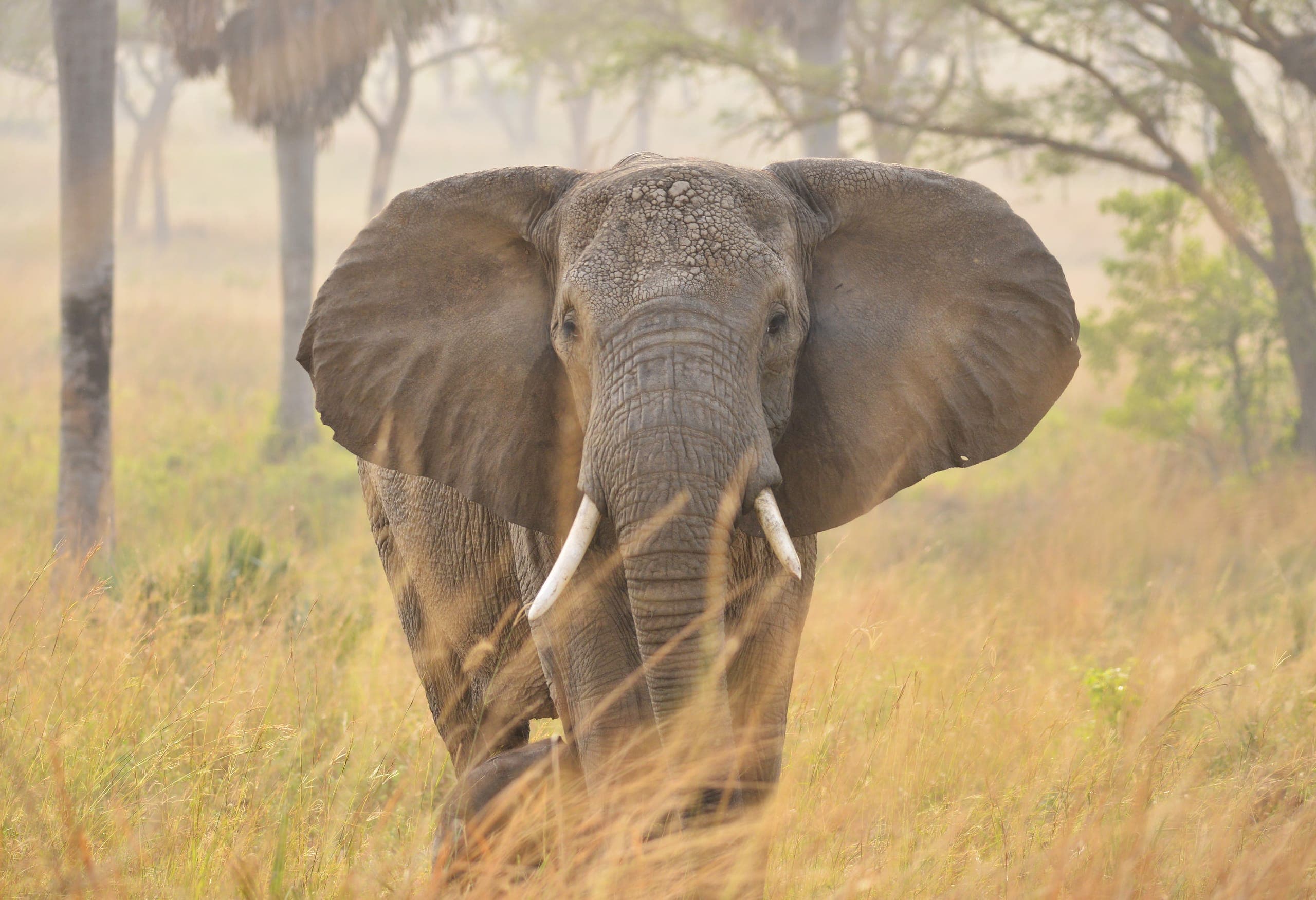
Elephant. Large herds use the river intensively during the dry season. Ruaha holds a significant elephant population and the river-margin sightings, large herds drinking, bathing, and moving along the sand banks, are among the best in Tanzania.
Sable antelope. A miombo-specialist and one of Ruaha's most distinctive species. The adult males are visually striking, with long curved horns and bold contrasting colouration. They favour the more wooded areas away from the main river and reward a game-drive day specifically targeting the woodland interior.
Roan antelope. Less commonly encountered than sable, but present in the open woodland areas. One of the larger antelope species in Africa and found in fewer parks than the better-known species.
Greater kudu. Consistent throughout the riverine and rocky terrain. Males with long spiral horns are reliable sightings in the denser woodland near the river.
Hippo and crocodile. The Great Ruaha River supports strong populations of both. Hippo are concentrated in the deeper pools during the dry season and Nile crocodile reach impressive sizes in the slower-moving sections.
Birdlife. Over 570 species recorded, one of the highest counts of any African national park. The miombo woodland holds several range-restricted species including Stierling's woodpecker and miombo rock thrush. The river system adds a strong waterbird component.
On the Ground
Safari Experiences
Game drives. Morning and evening drives cover the riverine circuit and the plains areas. Full-day drives into more remote sections are available from most camps and reward those willing to take the extra time.
Guided walking safaris. Some of the finest walking available in Tanzania. The terrain around the river, rocky outcrops, and open woodland makes for productive and varied conditions on foot. All walks are with an experienced guide and armed ranger.
Night drives. Available from certain camps with appropriate permits. The miombo woodland at night produces a range of nocturnal species difficult to find on day drives, including African civet, porcupine, and small cats.
Boat safaris. Unlike Nyerere, Ruaha does not offer regular boat safaris. The river is too shallow and unpredictable during the dry season for sustained boat activity. The focus remains on drives and walking.
Regions of the Park
Eastern river zone (main accessible area). The Great Ruaha River forms the backbone of this section. All camps are located here and the game-drive circuits for most properties cover the river margin, the Ndoha Plains, and the surrounding miombo. This is where lion, elephant, and wild dog are most consistently encountered.
Mwagusi and Jongomero area. The Mwagusi and Jongomero sand rivers join the Great Ruaha in this section and form micro-ecosystems of their own during the dry season. Camps positioned here access both the main river and the sand rivers, which have their own distinct wildlife character.
Remote western interior. Very rarely accessed by visitors. The western sections of the park are roadless and are effectively wilderness. Some specialist operators offer deep-bush fly-camping or exploration here for clients with specific experience requirements.
Planning Your Visit
Best Time to Visit
June to October (dry season). The only practical period for visiting. As the dry season progresses from June toward September, wildlife concentration along the river intensifies. July to September is the peak window. The landscape is dry and vegetation thins to give open sightlines.
October. Late dry season. Wildlife concentration is at its highest as water becomes scarce, but the terrain is very parched. Dust levels are significant. Some camps close in late October to prepare for the rains.
Outside dry season. Most camps close from approximately November to May. The park becomes largely inaccessible during the rains and immediate post-rain period. First-time visitors should plan for June to October without exception.
Getting There
By air. The primary access route. Charter flights from Dar es Salaam, Arusha, or directly from Nyerere National Park connect to Msembe airstrip within the park. Flight time from Dar es Salaam is approximately 1.5 to 2 hours. Iringa airstrip south of the park serves larger aircraft.
By road. Road access from Iringa is possible but takes 3 to 4 hours on variable road surfaces. Road conditions deteriorate after rain. Most operators organise fly-in transfers as standard.
Connections. Ruaha pairs naturally with Nyerere for a southern Tanzania circuit. Charter connections between the two airstrips are available and take approximately 1 hour.
How Many Nights
Three nights minimum. Three days provides enough time for the main river circuit, a walking safari, and meaningful predator tracking. Lion and wild dog sightings in Ruaha often improve as guides build up picture of current movements.
Four nights. The stronger recommendation. A fourth day allows for a deeper exploration of the woodland interior, a full-day game drive to more remote sections, and a more relaxed pace without feeling rushed.
Five nights or more. Justified for photographers targeting specific subjects, walkers who want to cover significant ground, or those combining a main camp with a remote fly-camp extension in the western areas.
Where to Stay
Camps are concentrated along the Great Ruaha River in the eastern accessible zone. Properties tend to be small, with fewer than 20 guests, which contributes to the sense of space.
Luxury Lodges and Camps
Jongomero Camp, set on the Jongomero sand river, is one of the most respected luxury camps in southern Tanzania. Kwihala Camp (Asilia Africa) and Mwagusi Camp are well-positioned on the Great Ruaha River and known for strong guiding programmes. These camps prioritise walking alongside game drives and suit travelers wanting substance over amenity.
Midrange Lodges and Camps
Ruaha River Lodge is a long-established option with a riverfront position and reliable guiding. Several smaller camps operate in the accessible zone at lower price points. These offer good access to the same game areas as the luxury camps while reducing overall journey cost.
Combining With Other Destinations
Nyerere National Park. The natural pairing and the most coherent southern Tanzania circuit. Ruaha provides the river, the lion, and the miombo woodland; Nyerere adds boat safaris and the lake system. Together they form one of Tanzania's strongest two-park combinations.
Zanzibar. A logical extension after a southern Tanzania safari. Charter to Dar es Salaam, then connect to Zanzibar for three to four nights. The contrast between bush and beach is a well-established format in Tanzania.
Katavi National Park. For travelers who want to add genuine remoteness to a southern circuit, Katavi in western Tanzania can be combined with Ruaha via a charter flight. The addition adds time and cost but makes sense for experienced travelers who want to cover ground beyond the standard routes.
Photography
The Great Ruaha River provides strong compositional conditions during the dry season. Early morning light on the water, large predator prides at drinking locations, and elephant movements along the sandy riverbed all work well with medium to long telephoto lenses.
Walking safaris create a different type of photographic opportunity: close encounters with smaller wildlife, the texture of miombo woodland in dry conditions, and the environmental detail that game drives tend to miss. A 24-70mm lens is useful on foot alongside the longer telephoto.
The miombo bird list rewards a dedicated camera trap or a patient session in the woodland interior. Stierling's woodpecker and related miombo specialists require time and a guide familiar with their locations.
Ruaha Questions
How big is Ruaha compared to other Tanzanian parks?
Ruaha is Tanzania's largest national park. Its scale and connection with surrounding protected areas create a broad wildlife landscape, while visitor numbers are lower than on the northern circuit. Size and low traffic shape the experience, but neither guarantees a particular sighting.
Why is Ruaha renowned for lions and leopards?
Lion, leopard, and cheetah are present in Ruaha, with riverine habitat and open country offering different search conditions. Recent animal movement, water availability, season, and time in the field affect visibility. Travellers should choose Ruaha for the wider ecosystem and lower vehicle density, not for a promised predator encounter.
Is Ruaha accessible or is it genuinely remote?
Ruaha is genuinely remote. Light aircraft is the practical mode of access for most safari travellers: the flight from Dar es Salaam takes approximately ninety minutes. There are airstrips at Msembe and within the park boundary. Overland access from Iringa takes approximately three to four hours by four-wheel drive on good roads, which is used by some operators for combined road and fly itineraries. Importantly, the remoteness is part of the appeal: roads are quiet, sightings are rarely shared with other vehicles, and the bush has a rawness that parks with easier access cannot maintain.
How does Ruaha compare to the Serengeti?
The Serengeti and Ruaha offer different planning choices. The Serengeti has the Great Migration, a wider accommodation range, and heavier visitor traffic in its busiest sectors. Ruaha has lower visitor density and a landscape of riverine forest, baobab-dotted miombo woodland, and rocky outcrops. It suits travellers prepared for more complex access in exchange for quieter game drives.
Are wild dogs present in Ruaha?
Yes. Ruaha has a well-established wild dog population and is consistently rated as one of the best places in Africa to see African painted wolves. The dogs have large pack ranges and are not always in the same area, but camps with current tracking intelligence have a strong probability of locating packs over a three to four night stay. Ruaha alongside Nyerere constitutes the southern Tanzania wild dog circuit and is a specific draw for travellers with wild dog as a priority.
What is the best time to visit Ruaha?
June to October is the prime period. The Great Ruaha River drops during the dry season, concentrating elephant, buffalo, and predators along the banks. Game drives along the river produce dense wildlife encounters, and the dry vegetation opens sight lines across the landscape. The park is usually closed or inaccessible by vehicle during the peak of the long rains (April to May). November and December are an underrated period: accessible, green, with excellent game viewing and virtually no visitors.
What is the accommodation quality like in Ruaha?
Ruaha has a small collection of high-quality camps that define the premium fly-in safari market. Jongomero, Kwihala, and Jabali Ridge are among the finest tented camps in Tanzania, combining exceptional guiding with design that suits the remote environment. Asanja Africa's properties offer excellent guiding at a more accessible price point. The limited number of camps means Ruaha never feels overbuilt, and several properties have exclusive or semi-exclusive areas within the park that reduce vehicle numbers further.
Can I combine Ruaha with Nyerere and Zanzibar?
Yes. The southern Tanzania circuit (Ruaha (3–4 nights) combined with Nyerere (3–4 nights)) is one of the most highly regarded alternatives to the northern Tanzania safari. Both parks connect via charter aircraft, typically routing through Dar es Salaam or via direct connections. The circuit is completed with three to four nights on Zanzibar, creating a bush-and-beach journey that covers Tanzania's most remote parks and one of the Indian Ocean's most compelling island destinations. Total journey length of ten to twelve nights is typical.
Does Ruaha have the elephant population it is known for?
Ruaha has one of the largest elephant populations in Tanzania, with an estimated 12,000 to 15,000 individuals across the wider ecosystem. The Great Ruaha River in the dry season draws large herds to the water's edge and produces some of the most dramatic elephant encounters in East Africa: breeding herds of fifty or more, bulls competing at waterholes, and the constant movement of animals through the riverine vegetation. Elephant poaching severely impacted the population in the early 2010s but numbers have recovered significantly under improved protection.
Zorani Expeditions
Plan Your Ruaha Safari
Every Journey we design is built around your goals, not a standard route.
Speak to a Specialist