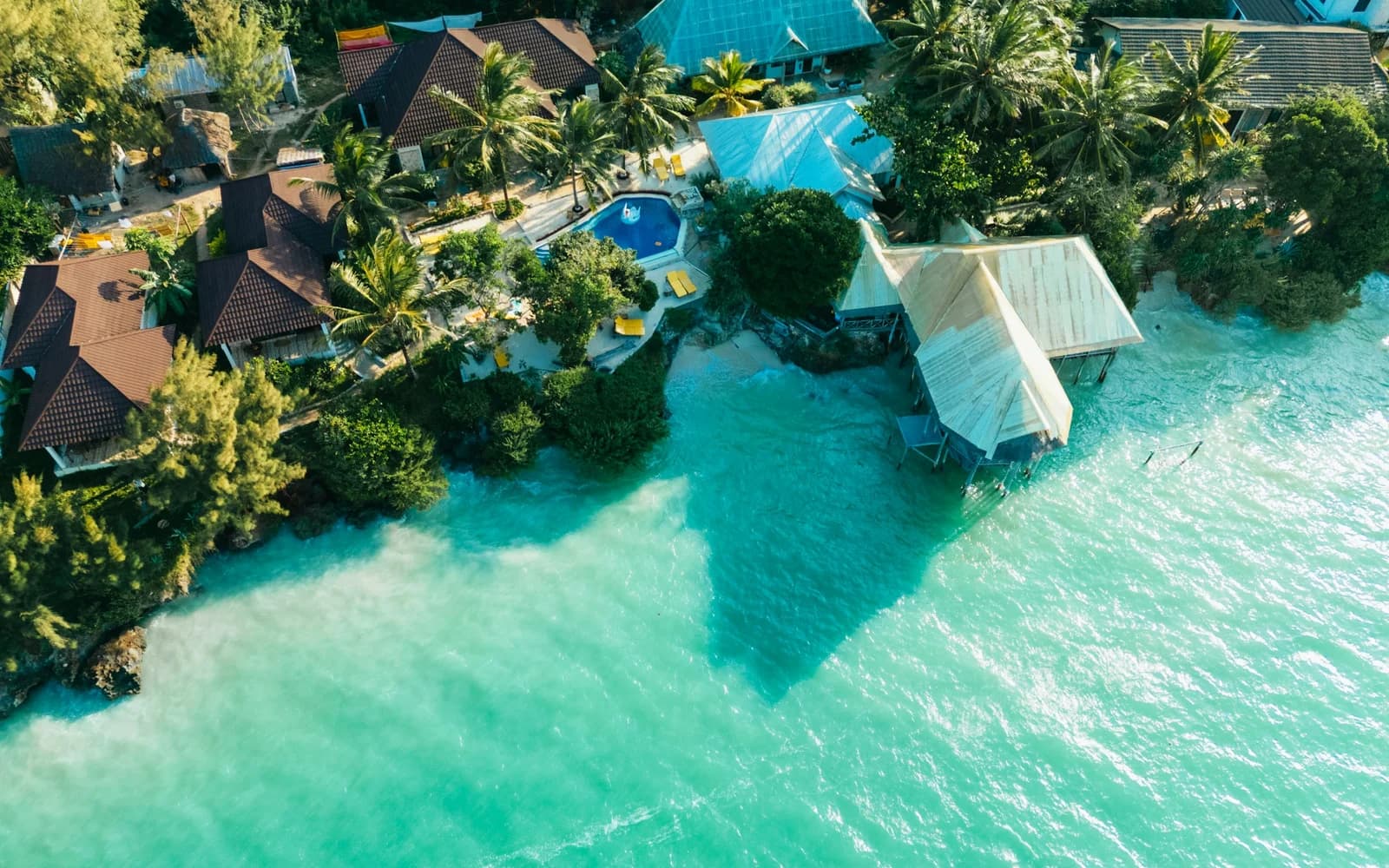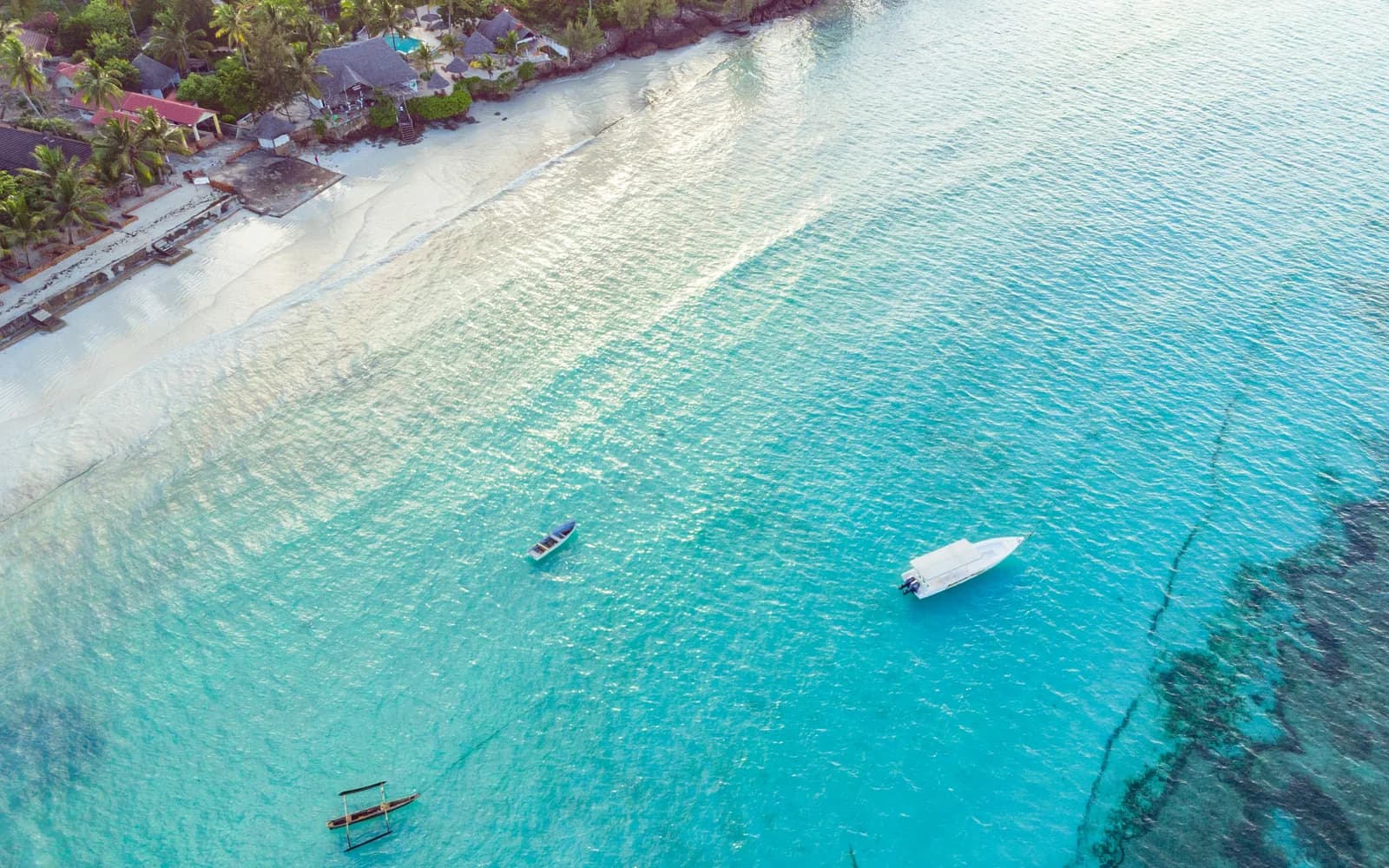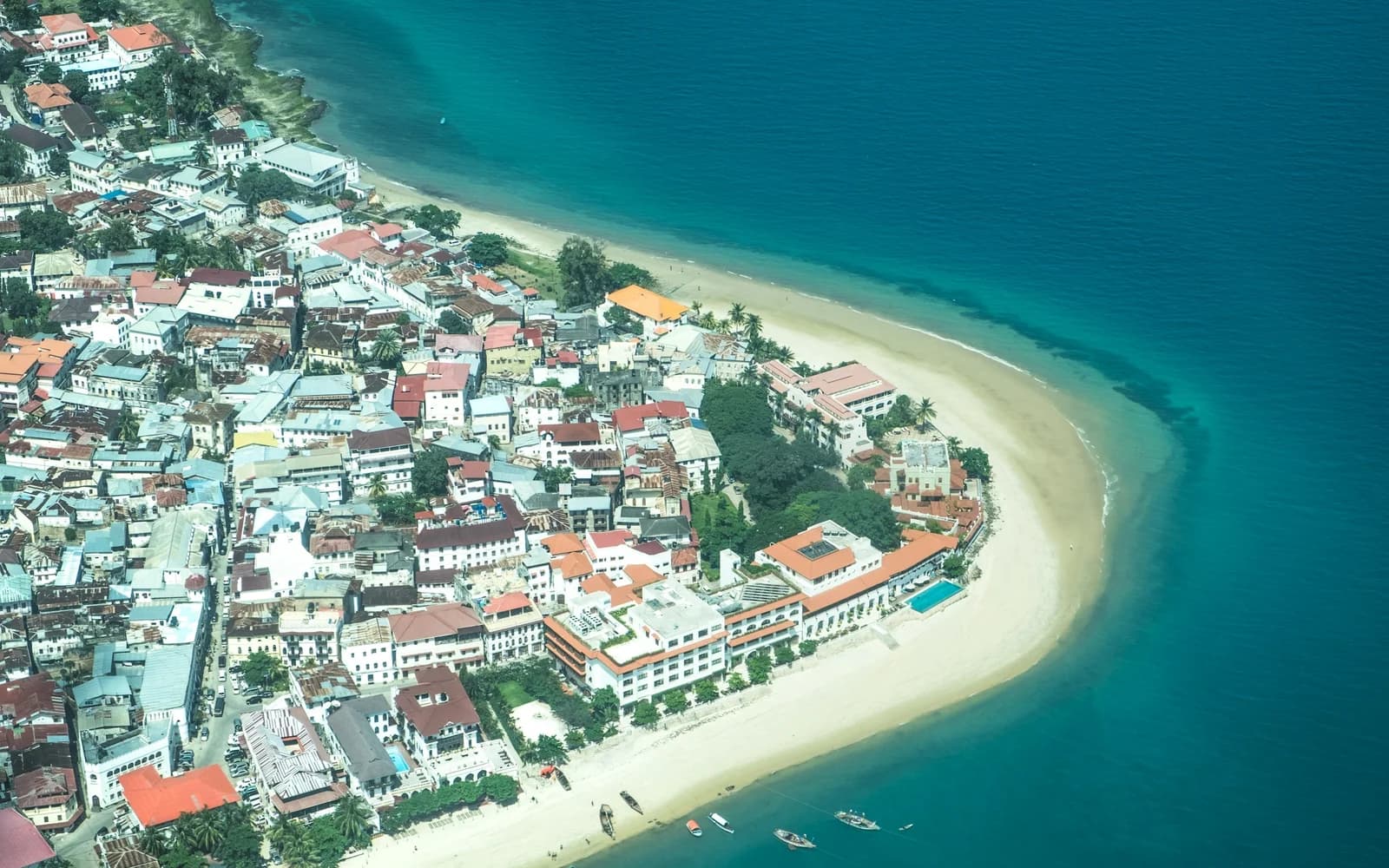

How many days should you spend in Zanzibar?
A useful Zanzibar stay depends on whether the island is the main destination or part of a longer Journey.
Three to four nights
A short stay works best when Zanzibar follows a safari.
It allows time to settle into a coastal property, enjoy the beach and include one or two selected activities.
The main compromise is limited flexibility. Weather, transfers and excursions can easily consume a significant share of the available time.
Five to seven nights
This is a more comfortable length for travellers who want both relaxation and island experiences.
Several days can remain free for the beach, with time for Stone Town, marine activities and other excursions.
A single well-chosen beach property is usually sufficient.
Eight nights or more
A longer Zanzibar holiday creates room to experience different parts of the island.
Travellers could combine Stone Town with a coastal stay or divide their time between two beach areas with distinct characteristics.
An extended itinerary may also make Pemba worth considering.
Moving hotels should still have a clear purpose. Changing resorts simply to see another beach often adds unnecessary logistics.

Essential Zanzibar travel information
Getting to Zanzibar
Zanzibar is reached by air and sea.
Abeid Amani Karume International Airport on Unguja receives international and domestic services.
Travellers combining Zanzibar with a mainland safari may use domestic flights, although routes, operating days and connections depend on the departure location and season.
Passenger ferries also connect Dar es Salaam with Zanzibar. Travellers using this option should allow for port procedures, weather and the arrangements needed on arrival.
Once on the island, private road transfers are often the most straightforward way to reach coastal accommodation.
Visas and entry requirements
Zanzibar is part of Tanzania. There is no separate tourist visa for Zanzibar: travellers use the entry permission applicable to the United Republic of Tanzania, whether arriving on the islands or on the mainland.
A standard tourist visa costs USD 50 and generally permits a stay of up to 90 days. US passport holders visiting for tourism must normally apply for a multiple-entry visa costing USD 100, even for a single visit. These are government visa fees, not agency charges.
Visitors from visa-exempt countries, including Kenya, Uganda and Rwanda, do not pay a tourist visa fee. Eligibility is determined by nationality, not by where a traveller lives. Check the official visa-exemption list before applying. French, German and British passport holders generally require the USD 50 tourist visa.
To apply, open the Tanzania Immigration eVisa website, start an application, enter your passport and travel details, upload the required photograph and documents, pay the fee, and submit the form. Track the application through the same portal and download the Visa Grant Notice once approved. A Tanzania eVisa can cover mainland Tanzania and Zanzibar, subject to its validity.
Your passport should have at least six months of validity and one blank visa page, and immigration may request evidence of a return or onward ticket. Tanzania Immigration asks ordinary visa applicants to apply at least 10 days before travel. Travellers in the referral-visa category should apply at least two months ahead and wait for approval before travelling. See the official visa guidelines and application terms.
Mandatory travel insurance
Foreign visitors are subject to mandatory inbound travel insurance rules. This is separate from a visa and, where required, must be purchased even if you already hold private international travel insurance.
If Zanzibar is your first entry point, buy the policy through the official Zanzibar Insurance Corporation portal. The published price is USD 44 per adult; USD 22 rates are shown for children and qualifying travellers from East African Community (EAC) or Southern African Development Community (SADC) countries. Confirm the rate for each traveller and the applicable eligibility category in the official application before paying.
If you enter mainland Tanzania first, the mandatory policy is generally issued through the National Insurance Corporation (NIC) portal. Its published premium is the Tanzanian-shilling equivalent of USD 44 per person. Qualifying residents of EAC and SADC partner states are exempt from the mainland NIC requirement, but that exemption does not automatically remove Zanzibar’s insurance requirement.
Apply online before departure: select the appropriate policy, enter each traveller’s details and dates, pay through the official portal, then save the insurance certificate and QR code. Carry a digital or printed copy for entry checks. The published cover period is up to 92 days; its precise terms and exclusions should be reviewed before purchase.
For a Journey combining mainland Tanzania and Zanzibar, a valid applicable mandatory policy should not need to be bought twice. The Zanzibar Insurance Corporation notice of 7 October 2026 confirms that a valid policy may be used when moving between the mainland and the islands during its coverage period. The first point of entry determines which insurer to use.
Health and travel preparation
Check health requirements for the exact route, including any transit countries, before departure. Tanzania may require a yellow-fever vaccination certificate for travellers aged one year or older arriving from a country with a yellow-fever transmission risk, including an airport transit there lasting more than 12 hours. Direct travel from countries without that risk generally does not trigger this entry requirement. See the CDC Tanzania travel-health guidance and confirm the current entry position for your itinerary.
Discuss routine and travel vaccinations, malaria prevention and other personal health considerations with a qualified travel-health professional. Recommendations depend on medical history, the travel route and activities planned.
The compulsory inbound insurance is not necessarily a substitute for comprehensive personal cover. Travellers planning scuba diving or specialist activities should check medical, evacuation and activity-specific exclusions in their own policy.
Zanzibar accommodation tax
Zanzibar charges an infrastructure tax to guests staying in hotels. Under the published tariff, it is USD 5 per person per day at four- and five-star hotels, USD 4 at two- and three-star hotels, and USD 2 at one-star hotels and other establishments. Specified accommodation on smaller islands within Zanzibar has a USD 10 per-person daily rate.
The charge is normally collected by the accommodation provider. It may be quoted separately from the room rate, so check whether it is already included when comparing hotel prices or reviewing a Journey quotation.
These are Zanzibar government charges, not a Zorani fee. The current legal tariff is available from the Zanzibar Revenue Authority.
Currency and payments
The Tanzanian shilling is the local currency.
Some tourism businesses quote accommodation and activities in US dollars, while smaller local purchases are commonly made in Tanzanian shillings.
Payment methods vary. Travellers should confirm accepted currencies and card facilities with their accommodation or activity operator and keep some local currency available for smaller expenses.
Local customs and respectful travel
Zanzibar has a predominantly Muslim population, and local customs are particularly relevant away from beach resorts.
Modest clothing is appropriate when visiting Stone Town, villages, markets and religious or community spaces.
Beachwear is generally suited to resort and beach environments rather than public streets or residential areas.
Travellers should ask permission before photographing people, follow local guidance at cultural sites and respect the communities whose daily lives continue alongside tourism.
Travel information reviewed 19 October 2026. Confirm requirements with the linked official authorities before departure.